Orchard Science Tuition | How Small-Group Scientific Reasoning Should Work

Orchard Science tuition in a small group should not feel like a lecture with fewer chairs.

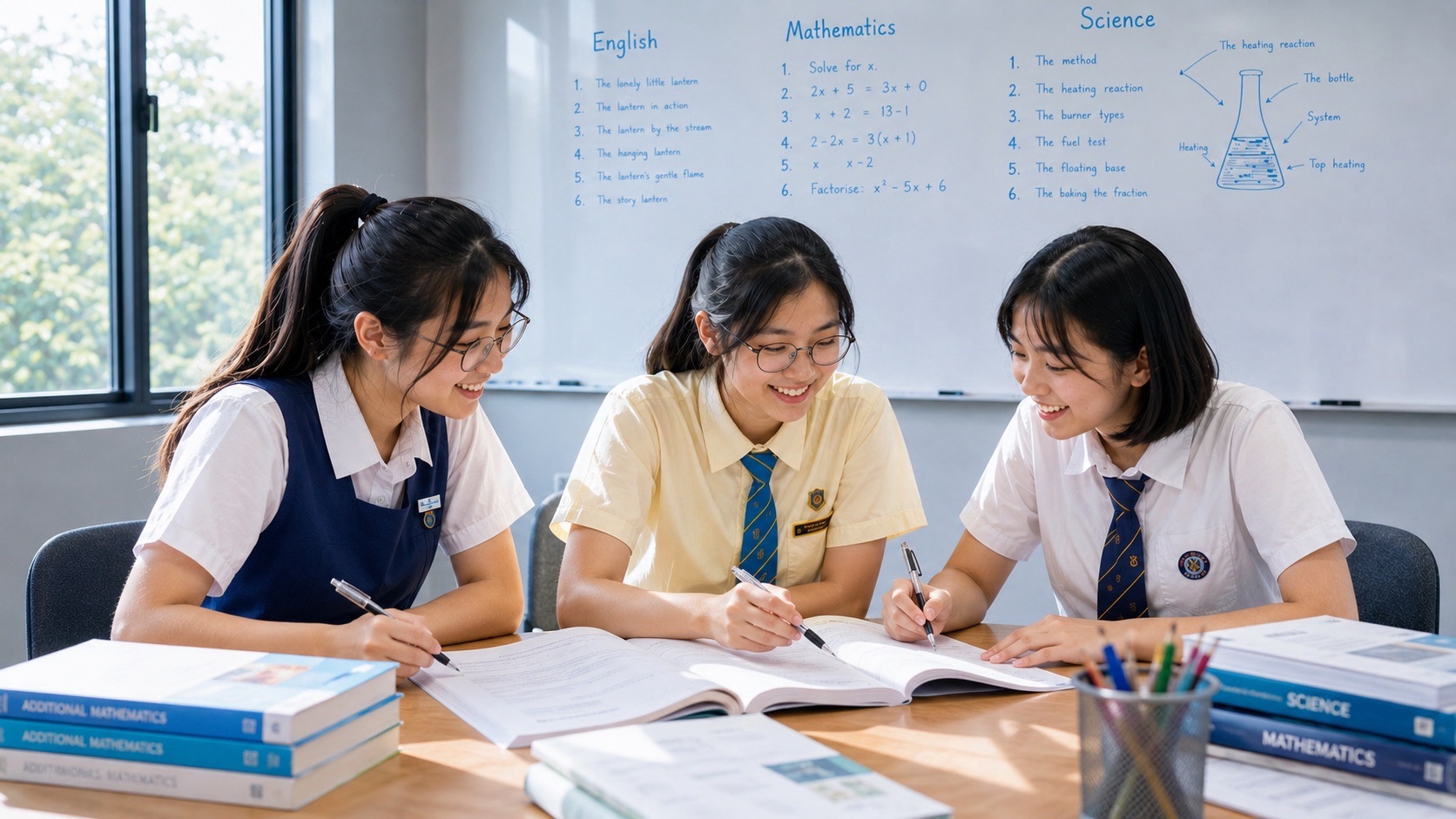
The advantage of a small group is that student thinking can stay visible. A tutor can hear different explanations, notice different misconceptions and choose the next question with more precision. That matters in Science because two students can give the same wrong answer for very different reasons.

This page is for families searching from Orchard. It does not state that eduKate currently operates an Orchard Road branch. Current class locations and availability are maintained on the eduKate Singapore Contact page.

Small groups should reveal thinking

Students should be asked to explain why they chose an answer, not only state the answer. That gives the tutor access to the reasoning underneath the response.

Use comparison carefully

When students hear another explanation, they can compare approaches and identify what makes one answer stronger. This is especially useful for open-ended Science, where precision and completeness matter.

Correct the cause, not only the sentence

A weak answer may come from missing knowledge, a misconception, weak vocabulary, poor evidence use or incomplete causal reasoning. Good feedback targets the cause.

Evidence should stay central

Science questions often include a diagram, table, graph or experiment. Students learn to begin with what the evidence shows before selecting the scientific concept that explains it.

Vary the context

After a concept is taught, the question changes. This tests whether the student understands the underlying Science or only recognises a familiar format.

Small-group independence

The tutor may initially model and prompt heavily. Over time, support should fade. Students should explain more, correct more and decide more independently.

What progress looks like

We do not promise a fixed result. The goal is to use the small-group format to make learning more observable and feedback more precise.

Current Orchard enquiries

This page has been fully rebuilt for 2026. The old Orchard/The Sail Marina Bay positioning, historical programme list, obsolete pathway terminology, tutor-roster claims, old telephone number and every photograph have been removed.

For current Science class availability, use the eduKate Singapore Contact page.

Explore the connected learning guides

Choose the question that brought you here. Open one useful guide, try a small task, and stop when you have what you need.

Take one question further

The same learning habit can travel across subjects, while each subject keeps its own methods. These routes help you notice a difficulty, understand one part of it, and return to something you can do.

A word is familiar, but using it is difficult.

Move from recognising a word to retrieving it in a new context. Understand vocabulary plateaus.

Try it without the guide: Choose one word you already know. Close the guide and use it in a new sentence. Explain why it fits; try another context tomorrow.

A piece of writing has ideas, but the reader loses the thread.

Make the order of events and the links between sentences clear. Explore composition writing.

Try it without the guide: Choose one short paragraph. Read the relevant explanation, close it, and revise the paragraph. Ask someone to tell you what happened and why.

The Mathematics seems familiar, but marks still disappear.

Find the first point where the working stops being reliable. Find Secondary 4 A-Math mark leakage.

Try it without the guide: For a Secondary 4 A-Math question you have attempted, locate the first uncertain line. Repair that step, then try a comparable question without the worked answer.

A Science fact is remembered, but the explanation is incomplete.

Connect the evidence to a scientific idea and the resulting change. Follow the Primary Science learning route.

Try it without the guide: Choose a familiar Primary Science example. Explain the evidence, the idea and the result without notes. Then change one condition and explain your prediction.

Two accounts of the world seem to disagree.

Check the question, source, date and evidence before combining claims. Explore the World Knowledge research library.

Try it without the guide: Take one claim. Find the source best placed to support it, note its date, and state what remains uncertain. Return to your original question.

There is plenty of help, but independence is hard to see.

Check what the learner can understand and do after support is removed. Understand how education works.

Try it without the guide: Choose one small task the child has practised. Agree on a calm, brief attempt without prompts. Use what happens to choose one next step, then stop.

For the structure behind these connections, read the eduKateSingapore runtime manifest and the eduKate ecosystem boot contract. The reader map describes public navigation; those manifests preserve the wider ownership and return rules.

Discover more from eduKate Singapore

Subscribe now to keep reading and get access to the full archive.

Continue reading