This page is a historical archive of an eduKate English enrichment page published in 2017. It originally described an English enrichment programme for Punggol families. It is not a current programme schedule and should not be used as a present-day location or enrolment page.
Its modern value is architectural. The old page shows an earlier stage of eduKate, when enrichment was mainly described as an additional class. Today, the stronger idea is broader: a learner should be able to move through a connected library of reading, writing, grammar, oral communication, world knowledge and study support according to the problem they actually have.
What “English enrichment” used to mean
Older tuition pages often treated enrichment as a product category: another class, another worksheet set, another subject label. That description was useful commercially, but it did not tell a parent what new capability the child should gain.
A more useful definition starts with the learner. Enrichment should widen what the child can understand, express, connect and do independently.
A programme should route by need
English is not one skill. A child who struggles with comprehension may not need the same intervention as a child whose writing lacks structure or whose oral responses are thoughtful but hesitant.
- Reading route: fluency, inference, evidence, text structure.
- Writing route: relevance, causality, paragraph jobs, sentence control, revision.
- Language route: grammar, vocabulary, register and precision.
- Oral route: reading aloud, explanation, response and recovery.
- Knowledge route: background knowledge that makes new texts easier to understand.
- Independence route: planning, retrieval, checking and self-correction.
One student may need several routes over time, but the route should be chosen because of evidence rather than because every learner receives the same enrichment package.
Why a library is stronger than a pile of articles
A large website can become difficult to use if every page behaves like an isolated destination. A learning library works differently. Pages have clear jobs, connect to broader directories and help the reader move from a question to the next useful piece of knowledge.
This historical page therefore no longer tries to own all of “Punggol English enrichment”. It records the old programme and routes current readers into the modern English architecture.
Enrichment should increase connection
A strong learner does not keep grammar, reading, vocabulary and writing in separate boxes. Reading supplies models and knowledge. Vocabulary sharpens distinctions. Grammar stabilises expression. Writing forces ideas into order. Oral discussion reveals whether the student can explain the relationship clearly.
Enrichment becomes valuable when those systems begin to reinforce one another.
The world itself can become English material
English is also the language through which students encounter science, history, cities, institutions, culture, technology and public life. World Knowledge therefore belongs naturally beside language learning.
A student reading about transport, housing or the MICHELIN Guide is not “leaving English”. They are using English to understand how something works, then using that knowledge to explain, compare and argue.
A small group can become a routing environment
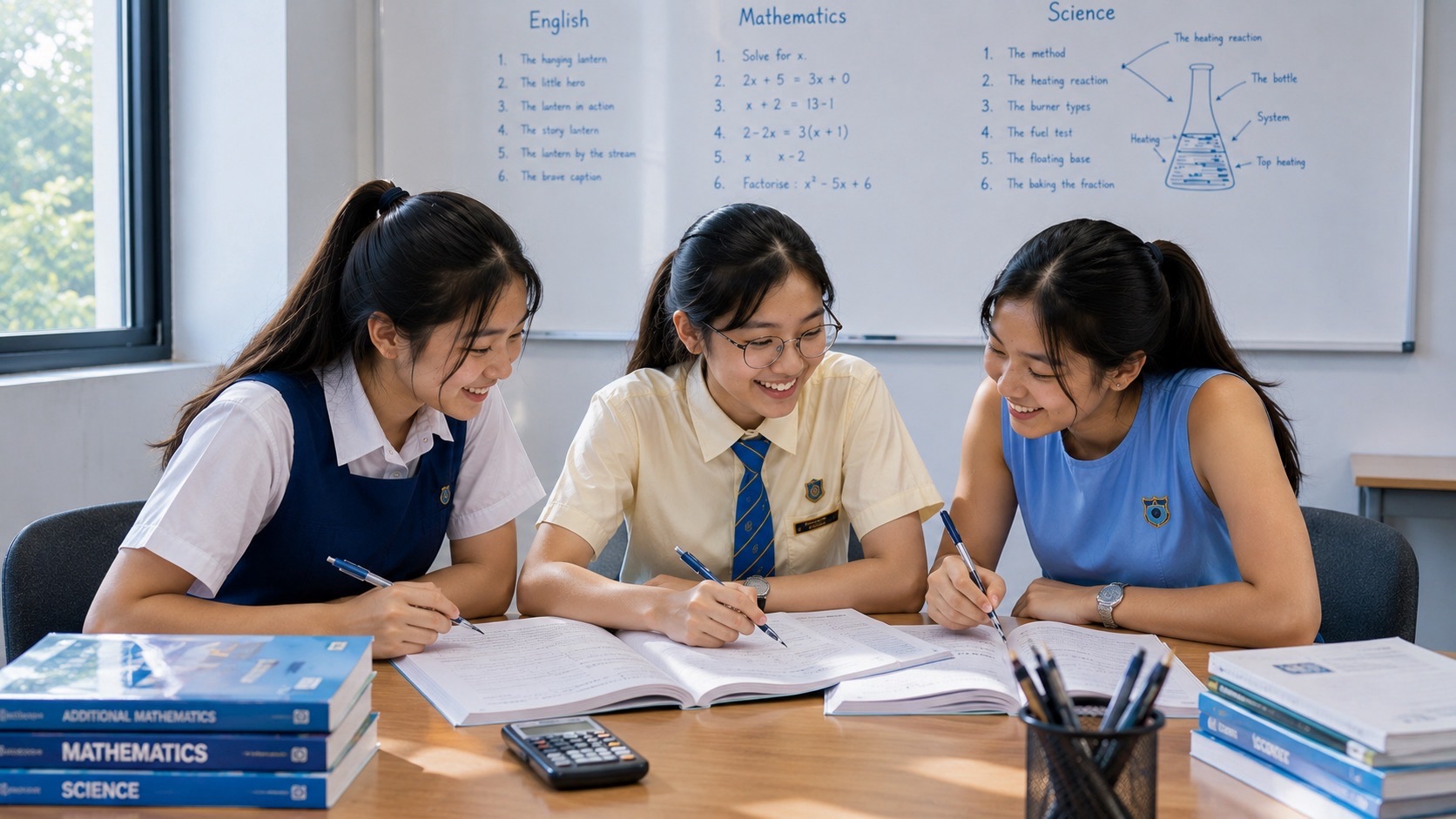
In eduKate’s current typical three-student class, all three learners may begin from one shared text and then branch. One may need vocabulary clarification, another evidence-based inference, another a writing response. The class can reconnect afterwards when students explain what they learned.
This makes the small group more than a smaller lecture. It becomes a place where different learning routes can coexist.
Why this Punggol page is now historical
The original page belonged to an earlier locality-led publishing model. Current programme and location information should come from current directories rather than a 2017 page.
For current Punggol and north-east location information, use the North-East Singapore Tuition Directory. For current English resources, use the English Article Directory. For the wider estate, use the eduKateSingapore Learning Library and World Knowledge Hub.
What progress looks like
- students can identify the kind of English problem they are facing;
- skills connect across reading, writing, oral and language use;
- background knowledge increasingly supports comprehension;
- students know where to look for the next useful resource;
- practice becomes more selective;
- independence grows because the learner can navigate rather than wait for the tutor to supply everything.
This historical Punggol URL now records a transition in eduKate itself: from describing enrichment as an extra class to building a connected learning library that routes each learner toward the work they actually need.