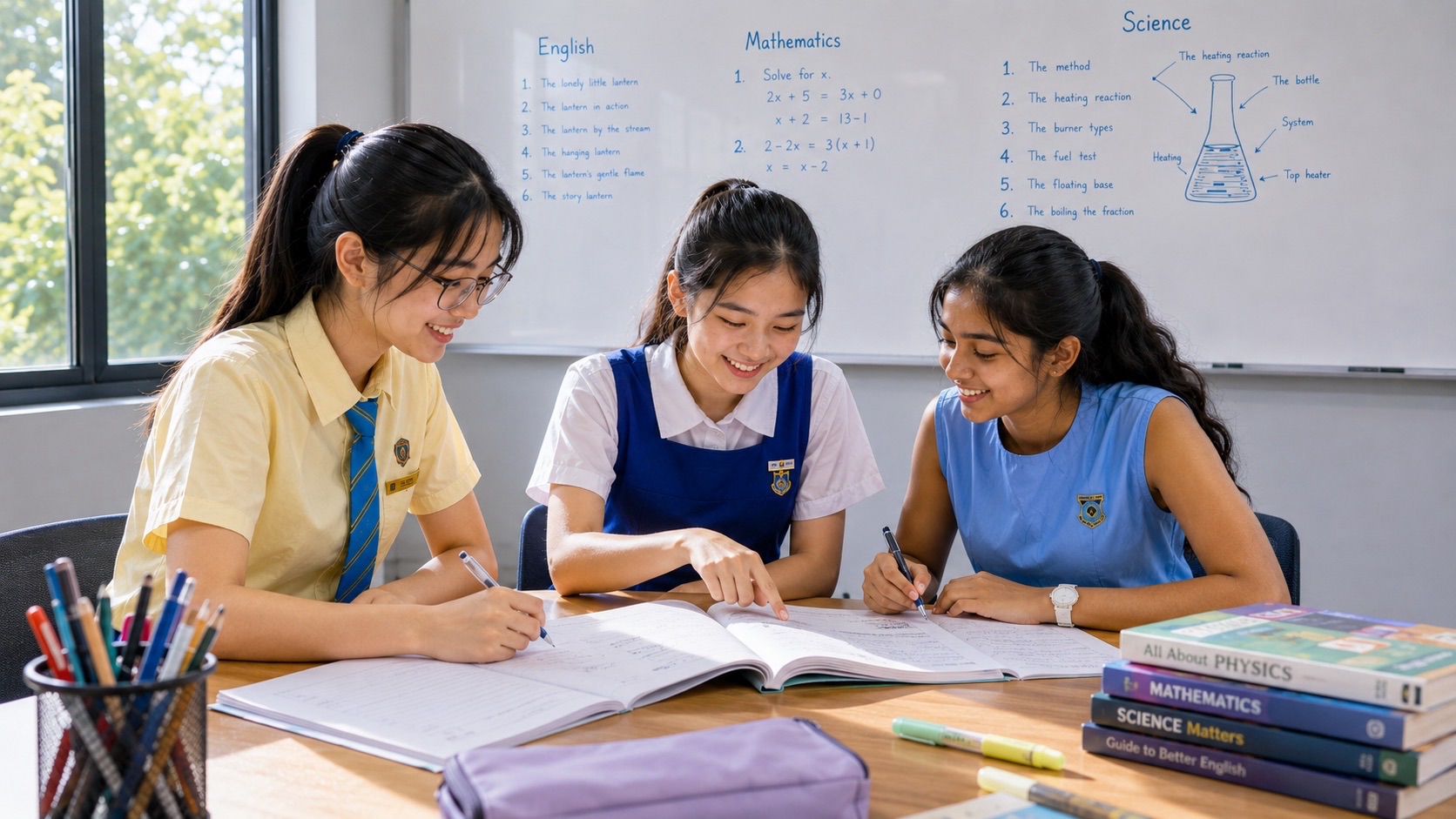
Bukit Merah Creative Writing classes for Primary P3 P4 P5 P6 PSLE English. This 2017 page reflects an earlier arrangement at The Sail, Marina Bay; current eduKate class locations and availability are confirmed on the Contact page. The programme follows relevant current MOE/SEAB requirements and uses picture-based and other composition tasks as appropriate.
This course trains students to be comfortable writing in their examinations, gain confidence in their execution and complete their task in time. The other objective of the course is to have students develop a deeper appreciation of the writing process, giving them a glimpse into the literary world. Progress is measured through actual writing quality, revision and transfer rather than a fixed grade promise.
For current Bukit Merah-area class information and contact details, use the eduKate Singapore Contact page.


Engaging Bukit Merah students to attain the education that will help them become a well balanced remarkable individual, we believe in doing things that work, and we know that not every student studies the same way. So, we customise our Bukit Merah English Creative Writing tuition classes to the individual needs of each and every student. If something does not work for that particular student, we will change our methods to one which does work.
We help you understand the topics, improve your study skills, and gain detailed insight into the subject matter to properly master and have the best answers for your examination.
Our Bukit Merah English Creative Writing class are conducted:
- by qualified female tutors with experience in improving students for the crucial PSLE
- by discerning tutors that can detect weaknesses, solve student’s problems during class
- in a safe, comfortable air con environment with properly equipped classes
- in a small group format of 3 students
- to build stronger examination control by understanding assessment requirements
- increase general knowledge and all necessary skills needed for the PSLE
Being flexible and have the patience to understand our students are tenets of our English tutorial classes.
Also, we help them understand the core reason they are learning English topics in the curriculum. This helps Bukit Merah students feel relevant to the needs of society, aligned to the mercurial demands of the 21st Century and have the passion in their pursuit of a quality education.
Some photos of our Tutor Yuet Ling, Marina Bay Creative Writing classes


 Who is Tutor Yuet Ling?


Aftermath and Consequence: What Happens After the Big Moment?
Many student stories invest heavily in the climax and rush the aftermath. The character confesses, wins, loses, falls, discovers or decides—and then the story ends two sentences later. This Bukit Merah Creative Writing Enrichment archive now owns that craft problem: aftermath and consequence.
Aftermath is where the story proves that the climax mattered. The writer shows what changed physically, emotionally, socially or practically after the decisive event. Without aftermath, the climax may feel loud but weightless.
Climax Is Action; Aftermath Is Meaning
The climax answers the immediate dramatic question: will the character confess, catch the bus, return the item, speak up or finish the task? The aftermath answers a second question: what does that outcome now change?
Types of Consequence
| Consequence type | Example |
|---|---|
| Physical | object remains broken, injury limits movement |
| Practical | deadline is missed, replacement is needed |
| Social | trust changes, group responds differently |
| Emotional | relief, embarrassment, doubt, confidence |
| Moral | character accepts responsibility or revises a value |
Immediate Consequence
Immediate consequences happen within moments: silence after a confession, papers scattering after a fall, a friend stepping away after learning the truth. These consequences should usually appear before the story moves to reflection.
Short-Term Consequence
Some effects take hours or days: staying back to repair a project, avoiding a friend at recess, waiting for a parent’s response, practising again after failure. A short summary can show these without extending the story excessively.
Longer-Term Consequence
Occasionally the ending benefits from a later glimpse: weeks later, trust has partly returned; the repaired object is still used; the character now checks carefully before leaving. A time jump can show durable change, but it should remain connected to the central conflict.
Consequence Should Match Cause
Small mistakes should not always produce enormous punishment, and serious betrayals should not disappear instantly. Proportion matters. The consequence should fit the event, character relationships and context.
The Aftermath Chain
- Climax action happens.
- Immediate physical or social response occurs.
- Character understands what changed.
- Repair, acceptance or further choice follows.
- Ending shows the new state.
Avoid the Instant Reset
A story should not return immediately to normal after a meaningful event. If the protagonist lies publicly, breaks trust or causes damage, the ending needs enough consequence to show the event mattered.
Avoid the Punishment Ending
Some compositions end with punishment because the writer wants a clear moral. Punishment can be realistic, but it should not replace deeper consequence. The character may also need to repair damage, face another person, or change future behaviour.
Avoid the Moral Summary
“I learnt my lesson and never did it again” is weaker than showing the changed behaviour. If the character later checks the borrowed item twice before returning it, responsibility becomes visible.
Worked Example: Broken Project
Climax: the character admits causing the damage. Weak aftermath: teacher forgives and everyone goes home. Stronger aftermath: group is disappointed, character stays to rebuild, and later earns back trust through contribution. The consequence matches the social and practical damage.
Worked Example: Competition Loss
Climax: result is announced. Aftermath can show the character’s response to a winning friend, the team’s reaction and the next practice session. The story may be about losing well rather than about the competition itself.
Worked Example: Missed Promise
A character arrives late after promising to help. The event is over, but the aftermath determines meaning: does the character make excuses, apologise, help repair the missed work, or recognise that reliability takes action rather than words?
Worked Example: Lost Item Returned
Finding the item is not necessarily the whole resolution. If the loss caused worry or blame, the aftermath may require admitting what happened, thanking the helper, or changing how the item is handled next time.
The Consequence Audit
- What changed immediately?
- Who reacts?
- What practical problem remains?
- What relationship changed?
- What must be repaired?
- What behaviour is different at the end?
Historical Programme Boundary
This 2017 Bukit Merah page comes from an earlier locality-based publishing period. It is not a current class-location statement. Its present role in eduKateSingapore is a creative-writing reference on aftermath, consequence and post-climax control.
Aftermath Begins With Reaction
After a climax, the reader usually needs a reaction before reflection. Someone goes silent, laughs from relief, steps away, checks the damage or looks at another person. Reaction shows the event landing in the story world.
Aftermath and Repair
If the climax caused damage, aftermath should consider repair. Repair may be practical—replace, rebuild, clean, return—or relational—admit, apologise, explain, rebuild trust. Repair demonstrates responsibility through action.
Aftermath and Acceptance
Not every consequence can be repaired immediately. Losing a competition, missing an opportunity or hearing disappointing news may require acceptance rather than solution. The ending can show how the character responds to something that cannot be undone.
Aftermath and Changed Routine
Durable consequence often appears through routine. A student now checks the bag before leaving. Two friends no longer sit together every day. A character begins arriving early. Changed routine can communicate aftermath without lengthy reflection.
Aftermath and Relationship State
When the climax affects trust, the ending should show the new relationship state. Full repair, partial repair, caution, distance or renewed closeness are all possible. The writer should match the state to the seriousness of the event.
Aftermath and Practical Cost
Actions have practical cost: time spent replacing an item, staying back to finish work, missing another activity, using savings, explaining to an adult. Practical aftermath helps ground moral or emotional lessons in real consequence.
Aftermath and Reputation
Public events can affect reputation. A character who admits fault may lose face briefly but gain trust later. A character who hides a mistake may preserve appearance temporarily but create larger damage if the truth emerges. Aftermath can show these trade-offs.
Aftermath and Relief
Relief is a consequence too. After tension, the body and scene may loosen: shoulders drop, conversation resumes, people sit down, breath slows. Relief should follow the actual reduction of threat or uncertainty.
Aftermath and Regret
Regret becomes meaningful when it changes future action. Repeating “I regretted it” is weaker than showing the character returning to repair, avoiding the same shortcut next time, or accepting a consequence without excuse.
Aftermath and Reflection
Reflection should emerge after consequence, not replace it. A character who reflects on honesty after being caught should first face the person affected. Reflection becomes credible when the story has already shown the cost.
Aftermath and Time Jumps
A brief jump forward can show whether change lasted. “Two weeks later, I still checked the label before handing over any borrowed book.” This is stronger than claiming “I never made the mistake again” because it gives one concrete behaviour.
The Immediate–Short–Later Model
- Immediate: first physical, emotional or social reaction.
- Short-term: repair, conversation or practical consequence.
- Later: one sign of durable change where useful.
Worked Diagnostic: Climax and Stop
Draft ends the moment the protagonist admits the truth.
Repair: add reaction, practical consequence and one sign of the new relationship state. The confession is the climax, not the whole ending.
Worked Diagnostic: Punishment Equals Lesson
Draft ends with detention and a moral sentence.
Repair: show what the character does with the consequence. Does the student repair the damaged project, apologise, or change future behaviour? Punishment alone does not prove growth.
Worked Diagnostic: Instant Forgiveness
Draft resolves a serious betrayal with one apology and immediate laughter.
Repair: allow partial repair. A friend may accept the apology while still needing time. This creates proportional social consequence.
Worked Diagnostic: Endless Aftermath
After the main problem is resolved, the story continues for several unrelated paragraphs.
Repair: choose only the consequences needed to show what changed. Aftermath should close the central arc, not start another story.
Aftermath in P3–P6 Writing
| Stage | Useful target |
|---|---|
| P3 | simple reaction and clear resolution |
| P4 | practical consequence and visible repair |
| P5 | relationship aftermath, proportion and changed behaviour |
| P6 | efficient immediate/short/later consequence under time pressure |
The Three-Layer Ending Exercise
Write exactly three aftermath lines: one immediate reaction, one practical or relational consequence, and one changed behaviour. The exercise teaches closure without overextension.
The Repair Exercise
Give the protagonist a mistake that cannot be solved with apology alone. Require one concrete repair action. This shifts the ending from words to responsibility.
The Proportion Exercise
Write three possible consequences for one event: too small, proportionate and too large. Discuss why the middle version feels most believable.
The Later-Sign Exercise
Jump forward one week and show one changed habit without explaining the lesson. This develops understated closure.
Teacher Feedback Vocabulary
- Climax stop: story ends before consequence lands.
- Instant reset: significant event leaves no lasting effect.
- Over-punishment: consequence exceeds event without support.
- Under-repair: apology replaces necessary action.
- Controlled aftermath: reaction, consequence and changed state are proportionate.
Student Self-Editing Checklist
- What happens immediately after the climax?
- Who reacts?
- What still needs repair?
- Does the relationship return fully, partly or not yet?
- What behaviour proves the event mattered?
- Have I stopped once the central arc is closed?
Aftermath Under Timed Conditions
Under examination pressure, reserve enough time for consequence. A concise ending with reaction, repair and changed state is stronger than a long buildup followed by “I learnt my lesson.”
Parent or Tutor Review
If a child’s ending feels rushed, ask what changed after the climax. If nothing remains different, the story probably needs aftermath rather than more description earlier.
Aftermath and Narrative Focus
Aftermath should remain connected to the central story. Once the main consequence has been shown, the writer should stop. A new problem introduced after the climax weakens closure unless it is part of the same consequence chain.
Aftermath and Stakes
The aftermath proves whether the earlier stakes were real. If the story warned that trust might be lost, the ending should show the new trust state. If time stakes mattered, the ending should show what was missed or preserved.
Aftermath and Character Agency
Agency continues after the climax. A character can choose how to respond to consequence: repair, apologise, accept, deny, avoid, try again. The ending should not turn the protagonist passive after a decisive action.
Aftermath and Responsibility
Responsibility is visible when the character takes ownership without being forced through every step. This may mean returning, replacing, explaining or accepting a reasonable consequence. The action matters more than a statement such as “I became responsible.”
Aftermath and Repetition With Change
A repeated situation can demonstrate lasting change. The character who once forgot a borrowed item later checks before leaving. The character who once avoided speaking up later asks a clear question. Repetition turns consequence into behavioural evidence.
Aftermath and Partial Success
Not every ending needs complete success. The character may repair the practical problem but not the friendship fully. May lose the competition but gain confidence. May tell the truth and still face punishment. Partial success often feels more believable than perfect restoration.
Aftermath and Failure
A story can end meaningfully even when the character fails to achieve the original goal. The aftermath can show what was learned, preserved or changed despite the failure. Failure should create a new state rather than simply disappoint.
Aftermath and Relief vs Resolution
Relief is emotional release. Resolution is structural closure. A character may feel relieved when an object is found, but the story may still need to address who was blamed or what damage occurred. Do not confuse feeling better with resolving the whole conflict.
Aftermath and Reflection Economy
Reflection should be proportionate. One precise thought after visible consequence is often enough. Long moral paragraphs can repeat what the actions already showed.
Aftermath and Symbolic Return
An object or setting from earlier can return in the aftermath with changed meaning. The repaired trophy, empty chair or returned key can provide closure if the story has earned that change.
Aftermath and Social Memory
Groups remember public events. A mistake may affect reputation beyond the moment. A kind act may change how others respond later. The writer can show one small sign of social memory rather than narrate weeks of aftermath.
Aftermath and Environment
The environment can carry physical consequence: wet floor after a spill, scattered papers after a rush, silence after an alarm, damaged object awaiting repair. These traces make the climax feel connected to the ending.
Worked Diagnostic: Reflection Before Reaction
Draft jumps from confession directly to a long lesson about honesty.
Repair: first show the other person’s response, then practical consequence, then any brief reflection. Meaning should emerge from lived aftermath.
Worked Diagnostic: Everyone Forgives
Every affected character immediately accepts the protagonist’s apology.
Repair: differentiate reactions. One may accept, another remain disappointed. Social aftermath becomes more believable.
Worked Diagnostic: Consequence Disappears After Time Jump
Story jumps forward a week and everything is normal.
Repair: show one trace of the event—changed habit, repaired object, cautious relationship or missed opportunity. Time passing is not the same as consequence disappearing.
Worked Diagnostic: Aftermath Becomes a Second Story
After resolving the main conflict, another unrelated incident begins.
Repair: stop after the new state is clear. Closure needs selectivity.
The Aftermath Map
- Climax action.
- Immediate reaction.
- Practical consequence.
- Relationship consequence.
- Repair or acceptance.
- Changed behaviour.
- Final state.
The One-Trace Exercise
Jump forward one week and show exactly one trace of the climax. The trace must prove that something changed. This teaches economical aftermath.
The No-Moral Exercise
Write the ending without words such as “lesson”, “realised”, “learnt”, “never again” or “importance”. Show the changed state through action and consequence.
The Proportion Exercise
Take one event and write three aftermaths: too little consequence, proportionate consequence and excessive consequence. Compare why the middle version feels credible.
The Partial-Repair Exercise
Write an ending where the practical problem is solved but the relationship remains cautious. This develops nuanced closure.
The Failure Ending Exercise
Let the protagonist fail at the original goal but still make one meaningful choice in the aftermath. This teaches that resolution is not the same as victory.
Final Aftermath Audit
- Does the climax produce an immediate reaction?
- Is practical damage addressed?
- Do relationships reflect the event?
- Is repair proportionate?
- Does changed behaviour prove the event mattered?
- Does the story stop once the central arc is closed?
Final Independent Standard
The skill is secure when the learner can end a new story by tracing consequence from climax to changed state, without relying on instant forgiveness, punishment-only endings or generic moral summaries.
End State: The Climax Leaves a Trace
The mature writer understands that endings are built from consequence. What happened cannot simply disappear. The aftermath shows what the action cost, what was repaired, what remained changed and who the character has become afterward.
Advanced Aftermath: Consequence Has a Shape
Aftermath is not one final paragraph added after the climax. It has its own shape: reaction, consequence, response, repair or acceptance, then a stable enough new state to end. The exact number of steps varies, but the sequence should feel causal.
The Consequence Curve
Immediate consequence is often sharp: shock, relief, silence, damage. Short-term consequence becomes more organised: explanation, repair, changed routine. Longer-term consequence is selective: one sign that the event still matters. The curve moves from impact toward integration.
Aftermath and Character Values
How a character responds after the climax reveals values. A responsible character repairs. A defensive character blames. A courageous character accepts an uncomfortable truth. Aftermath is therefore another character test, not only cleanup.
Aftermath and Choice
The climax may solve one question but create a final choice: confess fully or partly, return or keep, repair now or delay, forgive or set a boundary. This final choice can reveal whether growth is real.
Aftermath and Cost
Consequences should preserve cost where appropriate. If the protagonist damages an item, replacing it may cost savings or time. If trust is damaged, repair may require repeated reliability. Cost keeps consequence from becoming symbolic only.
Aftermath and Repair Limits
Some damage cannot be fully repaired. A missed performance cannot be replayed exactly. A secret once shared cannot become unknown again. Strong aftermath accepts irreversibility and focuses on what the character can still do.
Aftermath and Boundaries
Relationship repair may include new boundaries. A friend forgives but does not share another secret immediately. A parent allows independence again gradually. Boundaries can create mature closure without requiring permanent conflict.
Aftermath and Changed Interpretation
An event may change how the character understands earlier moments. What seemed like strictness becomes concern; what seemed like confidence becomes insecurity. Reflection is strongest when new interpretation emerges from consequence.
Aftermath and Witnesses
Other people may remember the event differently. A witness can shape reputation, support repair or challenge the protagonist’s version. Social aftermath becomes more believable when the world does not reset around one character’s reflection.
Aftermath and Group Dynamics
When a conflict involved a group, aftermath can show whether roles change. Someone regains trust slowly, another steps back, responsibilities are redistributed. One specific group response is often enough.
Aftermath and Objects
Objects can carry consequence. A repaired book, cracked trophy, replaced glass or folded note remains a physical trace. Object aftermath can provide closure without extended moral reflection.
Aftermath and Place
Returning to the location of the climax later can reveal change. The place may look the same while the character behaves differently. This combines aftermath with framing.
Aftermath and Silence
Silence can be aftermath when it means something specific: shock, unresolved tension, relief, distance. The writer should provide enough context that silence is interpretable rather than empty.
Aftermath and Humour
Humour can release tension after a stressful event, but it should not erase consequence. A light line can show closeness returning while practical repair still remains.
Aftermath and Hope
A hopeful ending need not guarantee perfection. It can show a first step: one honest conversation, one changed habit, one repaired object, one renewed attempt. Hope becomes credible when rooted in action.
Worked Diagnostic: Consequence Happens Off-Page
Draft jumps from climax to “Everything was fine after that.”
Repair: show at least one concrete response or repair action. The reader needs evidence of the new state.
Worked Diagnostic: Endless Regret
Draft spends several paragraphs repeating guilt.
Repair: convert regret into action or acceptance. Emotional repetition without changed behaviour stalls the ending.
Worked Diagnostic: Repair Erases Cost
The character replaces a damaged object immediately and the conflict disappears.
Repair: check whether relationship or responsibility consequences remain even after practical repair.
The Aftermath Workshop Sequence
- State the climax result.
- Write one immediate reaction.
- Identify practical or social damage.
- Give the protagonist one response choice.
- Show repair, acceptance or boundary.
- End with one stable sign of the new state.
The Repair-Action Exercise
Ban apology as the main solution. The protagonist must demonstrate repair through action. Dialogue can remain, but action must carry the proof.
The Irreversible-Loss Exercise
Give the character a consequence that cannot be undone. The ending must focus on response and adaptation rather than restoration. This develops mature closure.
The Changed-Routine Exercise
Jump forward several days and show one routine difference caused by the climax. Do not explain the lesson. Let the behaviour carry it.
The Partial-Trust Exercise
Write a repair scene where the apology is accepted but trust is not fully restored. The student must show a believable middle state.
Teacher Feedback Vocabulary for Aftermath
- Climax-only ending: consequence is missing.
- Reset ending: story returns to normal too quickly.
- Repair without cost: practical solution erases all consequence.
- Reflection loop: emotion repeats without action.
- Durable consequence: one later sign proves the event mattered.
Final Aftermath Transfer Check
Give the learner a new climax and require three aftermath layers: immediate reaction, repair or acceptance, and one later trace. If the student can calibrate them without a moral template, aftermath control has transferred.
Aftermath and Examination Economy
Timed composition often fails at the ending because too much time was spent on setup. Students should protect a small aftermath budget before drafting. Even a concise ending needs enough room for reaction, consequence and changed state.
The Ending Budget
- one immediate reaction;
- one practical or relational consequence;
- one repair, acceptance or boundary action;
- one final sign of the new state.
Not every ending needs all four as separate sentences, but the writer should know which functions are being covered.
Aftermath and Final Image
A final image can carry consequence efficiently: the repaired model drying on a table, an empty seat beside the protagonist, a returned key placed carefully in someone’s hand. The image should emerge from the story’s existing objects or setting rather than appear only for symbolism.
Aftermath and Final Action
A final action often communicates growth better than a final lesson. The character checks, returns, waits, asks, admits, shares or leaves differently from before. Behaviour shows what the climax changed.
Final Aftermath Diagnostic: What Remains Different?
After reading the ending, name one thing that is now different in the world, one thing that is different between people, or one thing that is different in the protagonist’s behaviour. If none can be named, the climax may not have left enough consequence.
Final Transfer Standard
The learner should be able to take an unfamiliar climax and build a proportionate aftermath without relying on punishment, instant forgiveness or “I learnt my lesson”. The ending should trace consequence into action and a believable new state.
When that becomes independent, the student no longer treats the ending as a place to stop. It becomes the part of the story that proves the climax mattered.
One Final Aftermath Practice Routine
- Write the climax in one sentence.
- Write the first visible reaction.
- Name the practical or relational damage.
- Choose one repair or acceptance action.
- Show one sign of lasting change.
- Stop once the central arc is closed.
This routine gives the ending enough architecture to feel complete without turning aftermath into another full story.
Aftermath and Reader Satisfaction
Readers do not need every future consequence explained. They need enough evidence to believe the important change will continue beyond the page. One repaired object, one altered routine or one cautious relationship can provide that confidence.
Final Consequence Independence Check
Give the student a new climax and ban the phrases “I learnt”, “never again”, “we became friends again” and “everything returned to normal”. If the learner can still create closure through reaction, repair and changed state, aftermath has become genuine craft rather than a memorised ending formula.
Final Aftermath Calibration Check
Before submission, compare the seriousness of the climax with the seriousness of the ending. A minor mistake should not produce lifelong consequences without strong setup. A serious betrayal should not vanish after one apology. The aftermath should feel proportionate.
Next, separate repair from restoration. Replacing a damaged object repairs the practical problem; rebuilding trust may take longer. Winning back confidence may require another attempt. Strong endings recognise which parts can be fixed immediately and which parts need time.
Finally, look for one visible trace of change. The character now checks, returns, waits, asks, admits, shares or sets a boundary differently. That final behaviour is often enough to show the story has moved beyond the climax into consequence.
When the learner can create this kind of proportionate aftermath on a new prompt without relying on punishment, instant forgiveness or moral explanation, the ending system is genuinely independent.
The transfer test is to give the learner a new climax with a different kind of consequence. The student should still build immediate reaction, proportionate cost, repair or acceptance, and one durable sign of change. If the ending closes the central arc without a stock moral, aftermath control has become portable.
Final Ending Economy Check
Before submission, mark the exact sentence where the climax ends. Everything after that sentence should belong to aftermath: reaction, consequence, repair, changed relationship or durable behaviour. If a paragraph introduces a new unrelated conflict, remove it. If several sentences repeat the same reflection, compress them into one visible action.
The best aftermath is therefore neither rushed nor prolonged. It stays only long enough to prove that the climax changed something that will matter beyond the page.
The final transfer standard is not “writes a longer ending”. It is “shows the right consequence for this climax”. A student who can calibrate reaction, repair and lasting change across unfamiliar prompts understands that endings are systems of consequence rather than moral summaries.
One last check is to compare the ending before and after revision. If the revised version uses fewer explanations but shows clearer reaction, repair and changed behaviour, the aftermath is stronger. Closure comes from visible consequence, not from telling the reader that the character has changed.
A controlled aftermath therefore leaves the reader with evidence of change, not merely a summary of intention. That is what makes the ending feel earned.
That control is the final goal.
Clearly and independently.