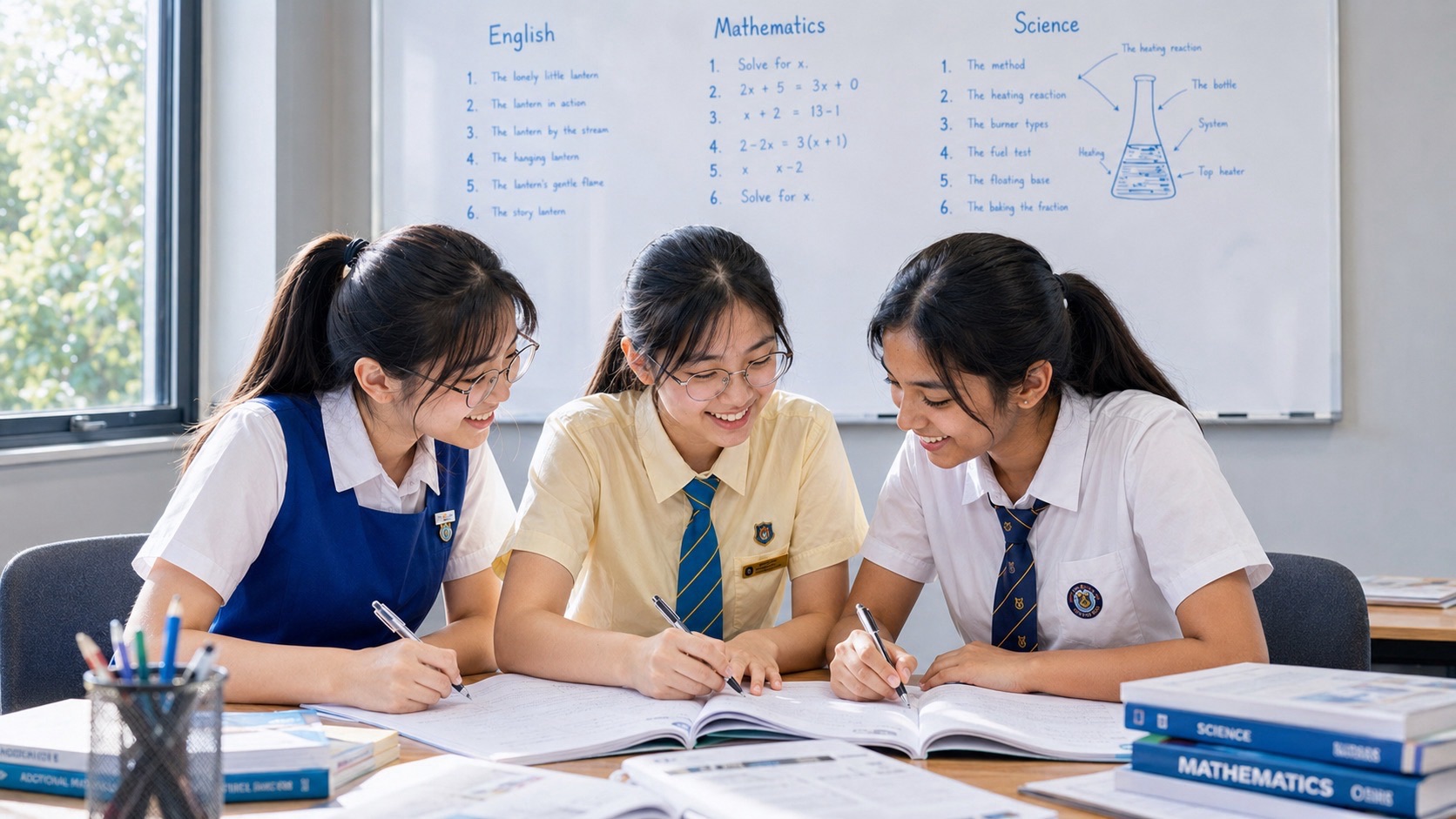
Bukit Gombak Creative Writing classes for Primary P3 P4 P5 P6 PSLE English. This 2017 page reflects an earlier arrangement at The Sail, Marina Bay; current eduKate class locations and availability are confirmed on the Contact page. The programme follows relevant current MOE/SEAB requirements and uses picture-based and other composition tasks as appropriate. Progress is measured through actual writing quality, revision and transfer rather than a fixed grade promise.
For current Bukit Gombak-area class information and contact details, use the eduKate Singapore Contact page.

Engaging Bukit Gombak students to attain the education that will help them become a well balanced remarkable individual, we believe in doing things that work, and we know that not every student studies the same way. So, we customise our English Creative Writing tuition classes to the individual needs of each and every student. If something does not work for that particular student, we will change our methods to one which does work.
We help you understand the topics, improve your study skills, and gain detailed insight into the subject matter to properly master and have the best answers for your examination.
Our Bukit Gombak English Creative Writing class are conducted:
- by qualified female tutors with experience in improving students for the crucial PSLE
- by discerning tutors that can detect weaknesses, solve student’s problems during class
- in a safe, comfortable air con environment with properly equipped classes
- in a small group format of 3 students
- to build stronger examination control by understanding assessment requirements
- increase general knowledge and all necessary skills needed for the PSLE
Being flexible and have the patience to understand our students are tenets of our English tutorial classes.
Also, we help them understand the core reason they are learning English topics in the curriculum. This helps Bukit Gombak students feel relevant to the needs of society, aligned to the mercurial demands of the 21st Century and have the passion in their pursuit of a quality education.
Some photos of our Tutor Yuet Ling, Marina Bay Creative Writing classes


 Who is Tutor Yuet Ling?


Plausibility: Make the Story Feel Earned
A creative story does not have to be ordinary, but it does need internal logic. Readers will accept unusual events when the story prepares them, when characters act in ways that fit what we know about them, and when consequences grow from earlier choices. This Bukit Gombak Creative Writing Enrichment archive now owns that craft problem: plausibility and coincidence control.
Young writers often use coincidence because it solves a difficult plotting problem quickly. A missing wallet is found by the exact person who can return it. A teacher appears at the precise second a conflict needs to end. A long-lost object drops from a bag just when the truth must be revealed. One coincidence can happen in real life. The writing problem begins when coincidence replaces cause.
Plausibility Is Not the Same as Realism
A story can be unrealistic in the everyday sense and still be plausible inside its own rules. A talking animal can work if the story establishes that animals speak. A child can make an unusually brave choice if earlier scenes show courage developing. Plausibility means the reader understands why this event could happen in this story.
| Question | Plausibility check |
|---|---|
| Could this happen in the story world? | The rules established so far allow it. |
| Would this character do it? | The action fits motive, pressure or growth. |
| Could the event happen now? | The timing has been prepared. |
| Does the consequence follow? | The result grows from the action rather than author convenience. |
Coincidence Can Start a Story More Easily Than It Can Finish One
A chance meeting, unexpected discovery or sudden change can be a perfectly useful trigger. The reader is often willing to accept coincidence at the beginning because it creates the problem. Coincidence becomes weaker when it solves the problem at the end. If chance creates the conflict, character decisions should usually resolve it.
A useful rule for Primary writers is: coincidence may open the door; the character should still have to walk through it.
The Preparation Principle
Important events feel earned when the story prepares them. Preparation does not mean announcing the future. It means placing facts, skills, objects, habits or relationships earlier so that a later action becomes possible.
- A character who later climbs a fence may earlier be shown as physically confident.
- A torch used during a blackout may be introduced naturally in a camping bag.
- A friend who gives useful first aid may earlier mention a school training session.
- A key that solves the final problem should exist before the final paragraph.
Seed, Develop, Pay Off
- Seed: introduce the relevant capability, object or relationship lightly.
- Develop: let it remain part of the story without forcing attention onto it.
- Pay off: use it later when the story needs it.
This pattern creates satisfaction because the ending feels connected to the beginning. The reader can look back and see that the solution was available, even if its importance was not obvious at first.
Coincidence vs Consequence
| Weak move | Stronger move |
|---|---|
| A stranger suddenly returns the lost bag. | The character retraces the route and notices a clue that leads back to the bag. |
| A teacher appears and stops the argument. | A classmate seeks the teacher because the argument has escalated. |
| The rain stops exactly when the character must leave. | The character decides whether to wait, borrow shelter or accept getting wet. |
| A phone regains battery for one important call. | The character plans around the dead phone or finds a believable charging option. |
Character Motivation Protects Plausibility
Events do not feel believable when characters act only because the plot needs them to. A cautious child does not suddenly enter a dangerous place without a reason. A proud character does not confess immediately unless the pressure or value conflict is strong enough. A generous friend does not become cruel for one paragraph merely to create conflict.
The writer should ask: what does the character want, what are they afraid of, and what changed enough to make this action possible?
A Choice Should Cost Something
Plausible stories often become stronger when decisions have cost. Telling the truth may risk punishment. Helping a stranger may mean missing a bus. Returning to fix a mistake may require admitting responsibility. When a choice costs nothing, it can feel too easy and the plot may lose weight.
Avoid the Convenient Expert
A common Primary-writing shortcut introduces a new adult who knows exactly what to do. A doctor appears, a police officer happens to be nearby, or a teacher solves the misunderstanding. Adults can appear naturally, but if they resolve the central conflict without preparation, the protagonist loses agency.
A better question is: what can the main character reasonably do first? Even if an adult later helps, the child’s decision to seek help can remain the important action.
Avoid the Perfectly Timed Object
Objects should not materialise when needed. If the plot depends on a rope, umbrella, charger, map or key, establish why it is available. The introduction can be brief. Plausibility depends less on the amount of explanation than on whether the story world remembers its own objects.
The Plausibility Ladder
- Possible: the event could happen.
- Prepared: the story has established conditions that make it possible.
- Motivated: character action has a believable reason.
- Consequential: the result follows from what happened.
- Integrated: earlier story elements support the later event.
Worked Example: The Missing Wallet
Weak version: a student loses a wallet in a park. At the end, a stranger knocks on the door and returns it. Nothing in the story explains how the stranger found the address. The event solves the plot but feels manufactured.
Stronger version: the wallet contains a library card with the student’s name. Earlier, the story establishes that the child visited the nearby library. The finder hands the wallet to library staff, and the student later receives a call from the library. The solution is still fortunate, but the chain is visible.
Stronger still: the student has to admit the loss to a parent, retrace the route, contact the library and learn something about responsibility before the wallet is recovered. The resolution now depends on action as well as chance.
Worked Example: The Sudden Rainstorm
Rain can be a useful event, but it should not exist only to force characters together or end an outdoor activity. If the weather matters, the setting can prepare it: darkening clouds, a weather warning, humidity, distant thunder. The character can also make choices because of it.
Plausibility grows when the environment has continuity. Weather does not need a meteorological explanation; it needs enough preparation that the reader does not feel the author changed the sky solely to rescue the plot.
Worked Example: The Last-Minute Rescue
A child is locked inside a classroom after everyone leaves. Weak version: a cleaner opens the door immediately. Stronger version: earlier, the child noticed a cleaner working on the same floor; the child now knocks, calls out and uses the established route of help. Stronger still: the child first attempts sensible actions, controls panic and only then receives help.
The rescue remains external, but the main character still demonstrates agency.
The Coincidence Audit
- Did chance create the problem, solve the problem, or both?
- Could the solution have been prepared earlier?
- Does the protagonist still make an important decision?
- Would the event still happen if the writer were not trying to end the story quickly?
- Does the story establish how the right person, object or information arrives?
Historical Programme Boundary
This 2017 Bukit Gombak page comes from an earlier locality-based publishing period. It is not a current class-location or timetable statement. Its present role in eduKateSingapore is a creative-writing reference on plausibility, preparation, coincidence and earned consequence.
Plausibility Begins With Rules
Every story establishes rules, even when the writer never states them directly. A school story follows ordinary school routines. A fantasy story may allow impossible events, but it still needs consistent limits. The reader accepts unusual events when they fit the rules already established.
Students should therefore ask not only, “Could this happen in real life?” but also, “Could this happen here, to these people, under these conditions?” Internal consistency is the deeper standard.
The Story-Rule Ledger
- World rule: what can and cannot happen in this setting?
- Character rule: what actions fit this person’s habits, skills and values?
- Object rule: where are important items and what can they realistically do?
- Time rule: how long do actions, travel and recovery take?
- Social rule: what are the expectations, authority limits and consequences in this group?
A contradiction in any one of these rules can make the reader feel that the writer is changing the story whenever convenient.
Preparation Can Be Invisible
Preparation does not need to look like foreshadowing. If a character later uses a first-aid kit, a passing mention that the family keeps one in the car may be enough. If a student later knows how to repair a bicycle chain, an earlier hobby or prior attempt can establish the capability.
The best preparation is often ordinary when first encountered and useful only later.
The Cost of Unprepared Competence
One of the least believable story moves is sudden expertise. A character who has never shown confidence in water suddenly swims across a strong current; a child who has never used tools repairs complex equipment; a shy student suddenly delivers a perfect speech with no preparation. Growth is possible, but the story must show enough of the path.
Students should distinguish courage from competence. A brave decision does not automatically create the skill required to carry it out.
Plausibility and Character Growth
Character change becomes believable when pressure, feedback and consequence accumulate. A timid character can act bravely at the climax if earlier scenes show smaller acts of courage. A careless character can become responsible if the story gives them a reason to recognise the cost of carelessness.
- Establish the starting pattern.
- Apply pressure that exposes the weakness.
- Let the character experience consequence.
- Show a revised choice.
- Test the new behaviour in a harder situation.
Coincidence Density
One unlikely event can be accepted. Several unlikely events in sequence strain belief. Writers should therefore think about coincidence density: how many important story turns depend on chance rather than action or prior conditions?
| Coincidence density | Reader effect |
|---|---|
| Low | story feels controlled and causal |
| Moderate | can create surprise if consequences remain character-driven |
| High | story begins to feel arranged by the author rather than lived by the characters |
The Rescue Problem
Rescue is not automatically weak. The key question is what the protagonist does before and after help arrives. If the main character recognises danger, chooses to seek help, communicates clearly and accepts consequence, the rescue can still preserve agency.
Weak rescue removes the need for the protagonist to think. Strong rescue may remain external while still rewarding sensible action.
The Lucky Escape Problem
A character avoids consequence because the teacher forgets, the parent never checks, the broken object happens to be replaced, or the victim decides not to care. Luck can occur, but if it removes the central moral or practical cost, the story may feel unfinished.
A stronger ending lets the character face enough consequence that the earlier choice still matters.
The Convenient Misunderstanding
Misunderstandings are common in student stories. They become implausible when one simple question would solve everything but no character asks it. The writer should explain why communication fails: embarrassment, fear, limited time, a missing person, incomplete evidence, or a relationship that makes direct questioning difficult.
The obstacle to clarification should be as believable as the misunderstanding itself.
The Convenient Silence
Characters sometimes stay silent solely because the plot needs a secret. Ask what silence costs and why the character accepts that cost. If the student can say, “She stayed silent because admitting the truth would also reveal her friend’s private problem,” the silence has motive. If the answer is “because otherwise the story would end,” the structure needs repair.
Plausibility Through Specificity
Specific details can make ordinary events more believable: a school gate closes at a stated time, a bus route requires a transfer, a teacher follows a known procedure, a child has only a certain amount of money. Specificity creates constraints. Constraints make choices feel real.
The goal is not to overload the story with factual detail. Use only the specifics that affect decisions or consequences.
Plausibility Through Limitation
Perfect characters reduce tension. A believable child may lack money, time, authority, knowledge, physical strength or confidence. Limits create the need for planning and help-seeking. They also prevent the protagonist from solving every problem instantly.
A strong short story often becomes better when the writer asks, “What can this character not do easily?”
Worked Diagnostic: Sudden Adult Solution
Draft: two children argue over a damaged project. The principal suddenly appears, checks a security camera and proves what happened. The resolution is efficient but weak because the children do nothing.
Repair: establish earlier that the classroom has a camera only if that matters, but more importantly, let the students compare evidence, speak to the teacher or decide whether to tell the truth. Authority may confirm the outcome, but the student choice remains central.
Worked Diagnostic: Impossible Travel
Draft: a child leaves school, cycles home, searches for an item, returns to school and still catches a bus that departed ten minutes after dismissal. The plot is physically impossible.
Repair: change the route, delay the bus for a believable reason, move the item search to a nearby location, or change the deadline. Plausibility sometimes requires structural rewriting rather than better wording.
Worked Diagnostic: Instant Friendship Repair
Draft: one friend deliberately shares a secret. After an apology, both laugh and become closer than before.
Repair: the apology can begin repair, but the relationship may remain cautious. A later action can show trust rebuilding. Emotional plausibility matters as much as physical plausibility.
Worked Diagnostic: Convenient Memory
Draft: the protagonist suddenly remembers a crucial password at the exact climax despite never thinking about it earlier.
Repair: plant an earlier partial memory, note, habit or clue. The final recall can still happen under pressure, but the reader has evidence that the information existed in the character’s mind.
The Plausibility Workshop Sequence
- State the story rule: what must remain true?
- Mark every coincidence: what happens mainly by chance?
- Mark every rescue: who solves each problem?
- Trace preparation: where was the needed skill, object or information established?
- Check limits: what can the protagonist realistically do?
- Repair the weakest link: add cause, preparation, motive or consequence.
Plausibility in P3–P6 Writing
| Stage | Useful target |
|---|---|
| P3 | clear cause-and-effect and believable everyday actions |
| P4 | prepared solutions, consistent character behaviour and simple continuity |
| P5 | coincidence control, relationship consequence and stronger motive |
| P6 | efficient preparation, nuanced decisions and plausibility under time pressure |
The ‘Because’ Test
For each major event, complete the sentence: “This happens because…” If the answer is “because the story needs it”, repair the event. Strong narrative causality usually allows a specific answer based on character, setting or prior action.
The ‘Therefore’ Test
After each major event, complete: “Therefore…” This reveals whether the event creates consequence. A story with many events but few ‘therefore’ relationships may be episodic rather than causal.
The ‘Could They Have Known?’ Test
Check important decisions against available information. Characters should not act on facts the reader knows but they do not. If the decision depends on information not yet learned, either move the discovery earlier or change the action into a guess.
The ‘Could They Have Done It?’ Test
Check capability. Does the character have the time, skill, access and physical ability required? If not, the story needs preparation, help or a different solution.
The ‘Would They Have Done It?’ Test
Capability is not motive. A character may be able to confess and still choose not to because of fear. A character may be able to help but hesitate because of anger. The action should fit the person and pressure.
This test is particularly useful when a student writes a climax in which the protagonist suddenly becomes unusually noble, clever or fearless.
Parent or Tutor Review
- Can the student identify where the story depends on chance?
- Can the learner explain why the protagonist chooses the climax action?
- Are solutions prepared before they are needed?
- Do physical and emotional consequences last realistically?
- Can the learner revise an implausible event structurally, not just reword it?
Transfer Task: Same Problem, Fewer Coincidences
Give the student an existing draft and require a rewrite in which only one major coincidence is allowed. Every other turning point must come from earlier choice, preparation or consequence. This forces the learner to build a stronger causal system.
Transfer Task: Make the Solution Harder but Fairer
Take an easy rescue ending and remove the rescuing adult or lucky object. The student must solve the story using resources already established. The new solution does not need to be spectacular. It needs to be earned.
End State: The Reader Believes the Story’s Logic
Plausibility succeeds when the reader stops noticing the author’s hand. Events feel possible within the story, character actions have motives, useful objects and skills are prepared, and consequences grow from choices. Surprise remains possible, but it feels earned rather than convenient.
Plausibility and Character Knowledge
A character should act only on information they have actually received. If the reader knows something that the character does not, the character cannot behave as though they share the reader’s knowledge. This is one of the most common hidden plausibility errors in young writing.
Knowledge-State Check
- What does the character know now?
- How did they learn it?
- What are they only guessing?
- What does the reader know that the character does not?
- Does the next decision fit that knowledge state?
Plausibility and Physical Limits
Characters cannot be everywhere at once, carry impossible loads or recover instantly from injury. Physical plausibility matters even in a simple Primary composition. A child running across a large park takes time. Heavy rain affects visibility. A sprained ankle changes movement. The story should remember those conditions after introducing them.
Plausibility and Social Behaviour
Social reactions also need proportion. A small mistake should not cause an entire school to turn against a character unless the story explains why. A minor misunderstanding should not destroy a long friendship instantly. Consequences feel earned when they match the scale of the event and the relationship involved.
The Proportion Test
Ask whether the consequence is proportionate to the action. If the event is small but the consequence is enormous, the story may need more context. If the event is serious but everyone reacts casually, the stakes may be underwritten.
Plausibility and Probability
Stories can include unlikely events. The writer should simply avoid stacking unlikely events until the plot depends on repeated luck. One chance meeting may be acceptable. Three perfect coincidences in a row make the author’s hand too visible.
The Coincidence Budget
A useful Primary rule is to spend coincidence carefully. If one unlikely event starts the story, try to let later events grow from choice, evidence and consequence. This preserves the sense that the protagonist is living the story rather than being carried through it.
Convenient Technology
Phones, messages and online searches can solve many modern story problems too easily. If technology is available, the writer should acknowledge it. If a child is lost but has a working phone, the story needs a reason the phone does not immediately end the conflict: no signal, no battery, no contact number, or a different problem altogether.
Convenient Adults
Adults should not disappear from stories solely so children can face danger, nor appear solely to solve it. Their presence should follow the setting. A school story naturally includes teachers. A shopping-centre story likely includes staff. The protagonist can still have agency by deciding when and how to seek help.
Plausibility and Setting Rules
Every place has constraints. A school gate may lock after a certain time. A library has staff and borrowing systems. A lift has buttons and cameras. A sports hall has exits. Using real setting rules often produces better plot than inventing arbitrary obstacles.
Plausibility and Weather
Weather should remain consistent. If rain has soaked the ground, later movement should reflect slippery surfaces or wet belongings where relevant. If the sun appears minutes later, that can happen, but the story should not behave as though the earlier conditions never existed.
Plausibility and Objects
Objects carry history. A bottle that was left on a bench cannot appear in a bag unless someone retrieves it. A torn note remains torn unless replaced. A locked box cannot be opened without a key, code or believable alternative. Object continuity is one of the simplest ways to improve story logic.
Plausibility and Character Change
Character growth should have preparation too. A selfish character can become generous, but the change needs pressure, reflection or consequence. One lecture at the end is rarely enough. The writer should show at least one moment where the character sees the cost of the old behaviour and chooses differently.
The Change-Evidence Test
- What was the character like before?
- What event challenged that pattern?
- What did the character notice or understand?
- What later action proves the change?
Worked Diagnostic: The Impossible Confession
A normally defensive character admits a serious mistake immediately after being confronted. If the story has not shown fear, guilt, respect for the other person or prior growth, the confession may feel like a convenient ending. The repair is to build the pressure earlier or let the confession become a harder choice.
Worked Diagnostic: The Convenient Witness
A misunderstanding is resolved because an unnoticed witness suddenly appears and explains everything. The witness may be plausible if their presence was established earlier. Otherwise, the solution feels imported. A stronger version lets existing evidence or a known character resolve the misunderstanding.
Worked Diagnostic: The Perfect Memory
A character remembers a tiny detail from weeks ago exactly when the plot requires it. That can work if the detail was striking or meaningful. If it was ordinary, the memory may feel too convenient. The writer can prepare it by showing why the detail stood out originally.
The Plausibility Workshop Sequence
- Identify the central event and solution.
- Trace every major cause backward.
- Check whether objects, people and information were introduced before use.
- Check whether reactions are proportionate.
- Replace convenient coincidence with character action where possible.
- Retest the story under a changed prompt.
Teacher Feedback Vocabulary for Plausibility
- Convenient rescue: problem is solved by an unprepared helper.
- Knowledge leak: character acts on information not yet learned.
- Continuity break: object, setting or physical condition changes without explanation.
- Reaction mismatch: emotional or social response is too large or too small for the event.
- Unprepared solution: key skill or object appears only when needed.
- Character jump: behaviour changes without enough motive or development.
Student Self-Editing Checklist
- Does every solution have an earlier cause or preparation?
- Do characters know only what they have learned?
- Are travel, injury and recovery believable?
- Are adult and technology roles realistic for the setting?
- Do consequences match the seriousness of the action?
- Does the protagonist still make meaningful choices?
Transfer Exercise: Remove the Coincidence
Take a draft and remove the biggest coincidence. The student must rebuild the solution using established characters, objects, information or skills. This quickly shows whether the story’s causal system is strong enough to survive without luck.
Transfer Exercise: Change the Setting
Move the same conflict from school to a park, library or shopping centre. The learner must adjust available help, rules, travel, objects and social behaviour. This teaches that plausibility belongs to context.
Plausibility Under Timed Writing Conditions
Under time pressure, simple causal chains are safer than elaborate coincidence-heavy plots. Students should prefer one strong problem, a few established resources and a solution driven by character choice. Control usually produces stronger writing than spectacle.
Parent or Tutor Review
If a child’s story feels “too convenient”, ask where the solution came from. Was the person, object, skill or information available earlier? Did the character earn the result through action? These questions are more useful than simply saying the plot is unrealistic.
End State: The Reader Believes the Story’s Logic
The mature writer can use surprise, luck and unusual events without making the plot feel arbitrary. Preparation, motive, continuity and proportion allow the reader to accept the story world and focus on what the events mean.
Plausibility in Openings
An opening should establish enough of the normal world that later disruption can be measured against it. If the story begins with a character running from a problem, the reader still needs quick clues about where they are, what they expected and why the problem matters. Plausibility begins with orientation.
Plausibility in Endings
Endings are where weak convenience appears most often. The lost object is found, the adult forgives instantly, the weather improves, the injury disappears and everyone understands the lesson. A stronger ending accepts that some consequences remain. Resolution means the central problem has reached a meaningful state, not that every difficulty vanishes.
Plausibility and Suspense
Suspense is stronger when the reader believes the available options are real. A deadline only creates tension if travel times, rules and character limits make it difficult. An escape only matters if the obstacles are established. Plausibility gives suspense its weight.
Plausibility and Setting
Settings create practical rules. A crowded train changes movement and privacy. A school laboratory changes what equipment is available. A rainy field changes footing and visibility. Writers should use setting as a source of believable possibilities and limits rather than as background decoration.
Plausibility and Social Rules
Stories also operate inside social rules. Students cannot usually enter staff rooms freely. A child may hesitate to challenge an adult publicly. A friend may avoid revealing private information. These social constraints are useful because they make simple problems harder without inventing random accidents.
Plausibility and Evidence
If a story depends on accusation, misunderstanding or discovery, evidence should be proportionate. One vague clue should not prove a serious claim. Stronger stories distinguish suspicion from certainty and let characters revise beliefs when new evidence appears.
The Coincidence Replacement Drill
- Circle every important event caused mainly by luck.
- Choose the most necessary coincidence and keep it.
- Replace the others with preparation, character decision or consequence.
- Check whether the protagonist gains more agency.
- Retest whether the ending still feels surprising enough without being convenient.
The Character-Consistency Drill
Write three adjectives or habits that describe the protagonist at the start. For every major decision, ask whether the action fits those traits, challenges them or shows believable growth. If the answer is none of these, the action may be serving plot rather than character.
The Resource Audit
- Which objects are available?
- Which people can realistically help?
- What information does the character possess?
- How much time remains?
- What rules or physical limits apply?
The climax should emerge from resources the story has already established or from a believable decision to seek new help.
The Consequence Audit
After each major action, ask what changes physically, socially, emotionally or practically. If nothing changes, the action may be decorative. If the consequence is much larger than the action supports, the story may feel melodramatic. Plausibility often lives in proportion.
Plausibility Under Timed Conditions
During timed writing, students should favour a smaller number of well-prepared events over an elaborate plot requiring many explanations. A simple conflict with believable motives, useful constraints and earned consequence is easier to control than a chain of spectacular accidents.
A Parent or Tutor Plausibility Review
- Can the learner explain why each major event happens?
- Can the learner identify which parts depend on luck?
- Are character choices consistent with motive and pressure?
- Do objects and skills appear before they become crucial?
- Do consequences match the seriousness of the action?
- Can an implausible ending be repaired without adding another coincidence?
Final Transfer Check
Give the learner a completely new prompt and ban convenient rescue. The student must establish the character’s resources, limits and motives before drafting the climax. If the solution grows from those earlier elements, plausibility has become a reusable planning system.
Final Standard: Surprise With Support
A believable story does not need to be predictable. The best surprise is one the reader did not fully expect but can understand in retrospect. Earlier details, motives and constraints support the outcome. The ending feels both fresh and earned.
A plausible story earns its ending because earlier choices, objects, knowledge and relationships make that ending possible. The reader may still be surprised, but the surprise remains consistent with the world the writer has built.