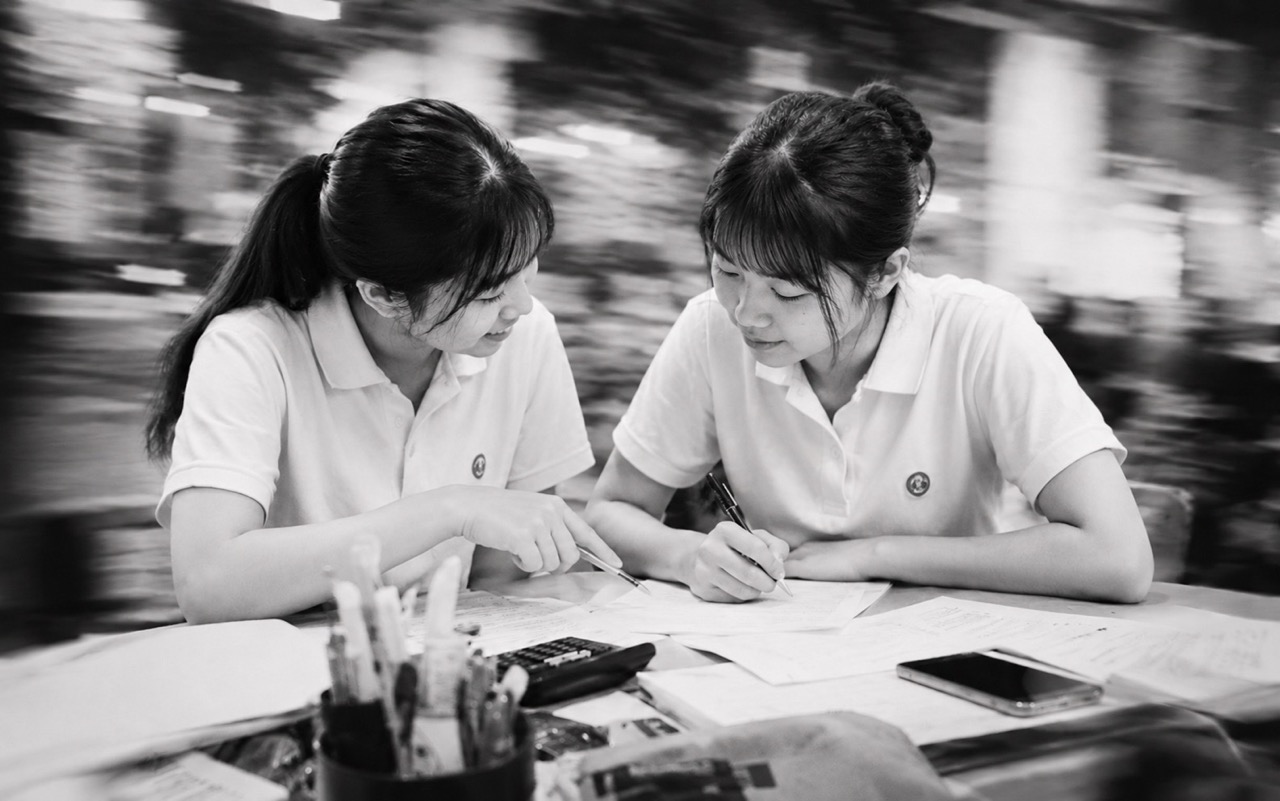
The original five tips were not bad.
They were written in 2014 for a different PSLE era, and some of the explanations now need repair.
The five ideas were:
- Build a dedicated study station.
- Treat school examinations seriously.
- Improve memory.
- Learn to manage time.
- Ask for help.
All five still matter.
The stronger 2026 version is less about “studying harder” and more about making the learner’s system easier to inspect.
PSLE preparation works when the child can retrieve what was learned, recognise when it applies, execute under time and recover when something goes wrong.
SEAB describes PSLE as a national placement exercise at the end of primary school. It is not a moral verdict on the child. Current PSLE Scores range from 4 to 32 and are used for secondary-school placement. SEAB — About PSLE.
Tip 1: Build a study station that reduces friction
The 2014 article recommended a dedicated desk with books and stationery within reach.
The idea survives because starting has a cost.
If every study session begins with:
- clearing a table;
- finding a charger;
- looking for worksheets;
- deciding which subject to do;
- searching for a calculator;
- negotiating where the phone should go;
then attention is being spent before learning begins.
A good study station makes the desired behaviour easier to start.
What belongs in the 2026 study station?
- current revision plan;
- recent marked papers;
- error ledger or correction notebook;
- the subject material needed this week;
- working stationery;
- approved calculator where required;
- a clock or timer;
- water;
- a charging point if a device is genuinely needed.
What does not need to sit directly in the attention path is anything that repeatedly converts a five-minute break into a forty-minute distraction.
A study station is not a prison cell
Students need movement, food, conversation and rest.
The point is not to make the child remain at one desk for as long as possible.
The point is that when the child chooses to study, the environment does not create unnecessary setup work.
Tip 2: Treat school assessments as diagnostic rehearsals
The 2014 article said to treat every school examination as though it were PSLE.
The modern version needs nuance.
Not every school assessment has the same format, weighting or purpose as PSLE.
But every meaningful assessment can provide evidence about the child’s current operating state.
A marked paper tells us:
- what the child could retrieve;
- what disappeared under time;
- what was misread;
- what was understood but expressed incompletely;
- which old error returned;
- where the child became stuck;
- which sections consumed too much time.
The score is only the compressed output.
The marked work underneath the score is the richer dataset.
Build an error ledger, not just a stack of papers
After an assessment, classify repeated mistakes.
| Category | Example | Likely repair |
|---|---|---|
| Knowledge | Science concept not known | Re-teach concept |
| Retrieval | Formula forgotten | Spaced retrieval |
| Selection | Wrong Math method chosen | Mixed practice |
| Evidence | English inference unsupported | Evidence-first routine |
| Execution | Correct method, arithmetic error | Accuracy/checking practice |
| Time | Last page unfinished | Timed section and move-on rule |
Now the next week’s study can target the mechanism rather than vaguely “revise harder”.
Full papers should come after enough component repair
A full paper integrates knowledge, attention, timing and recovery.
That makes it useful.
It also makes it expensive.
If the child already has one obvious weak component, doing another full paper immediately may simply reproduce the same evidence.
paper → classify → repair → retrieve → transfer → next paper
is a stronger learning loop than:
paper → score → another paper.
Tip 3: Improve memory by retrieving, spacing and connecting
The old article described memory mainly as repeating something often enough that it is not forgotten.
Repetition matters.
The type and timing of repetition matter too.
The Institute of Education Sciences practice guide on study and instruction recommends spacing learning over time and using active retrieval. It also supports connecting abstract and concrete representations and using deep explanatory questions. IES What Works Clearinghouse — Organizing Instruction and Study.
Retrieval
Close the notes and pull the answer from memory.
- blank-page recall;
- short quizzes;
- flashcards used actively;
- explaining a Science process aloud;
- solving a Math problem without looking at the worked example;
- summarising a comprehension passage from memory.
Spacing
Return after time has passed.
Same-day success is useful but does not tell us whether the learning will still be available next week.
Connection
Facts become easier to retrieve when they belong to a meaningful network.
- Why does this formula work?
- How is this Science process connected to the diagram?
- How is this new vocabulary different from a near-synonym?
- What older topic is this built on?
Understanding and memory reinforce each other.
Do not confuse familiarity with memory
A highlighted page can feel familiar.
The student may genuinely recognise everything.
Then the book closes.
If the explanation disappears, the knowledge was supported by the page.
PSLE requires more independent access.
Interleave after the basics are secure
When students first learn a method, several similar questions help make the procedure visible.
Later, questions should be mixed.
Why?
Because an examination does not normally announce:
Use ratio now.
The student has to discriminate between methods.
IES describes interleaving as useful because students must choose the correct strategy among related problem types. IES — Interleaved practice.
Tip 4: Practise time control—but retire the one-mark-per-minute rule
The original 2014 page proposed a broad rule of one mark per minute.
That should not be treated as an official PSLE rule.
Different components have different reading, planning and response demands.
The stronger method is personal calibration.
- How long does this child normally need for each section?
- Where does time drift?
- Which questions create a long stall?
- When should the student move on?
- How much final checking time is useful?
Use the current official paper format as the constraint, then test a personal plan inside it.
SEAB maintains current 2026 formats at PSLE Formats Examined in 2026.
Speed is usually a systems output
A student can be slow for many reasons.
- weak reading fluency;
- uncertain number facts;
- too many method options;
- poor question recognition;
- perfectionism;
- excessive checking;
- handwriting or production speed;
- getting stuck and refusing to move.
Telling all of these students to “work faster” treats different causes as one problem.
Practise a move-on rule
Students often know in theory that they should leave a difficult question and return later.
Under stress, they stay.
Practise the behaviour before the real paper:
- Notice that progress has stalled.
- Mark the question clearly.
- Move to the next useful task where permitted.
- Return later with a fresh state.
This protects the rest of the paper from one local failure.
Checking should be personalised
“Check your work” is not a procedure.
Use the error ledger to create a high-probability check.
- units;
- copied numbers;
- unanswered pages;
- English task requirements;
- Science comparison words;
- personal spelling or grammar errors;
- answers that are obviously unreasonable.
A targeted check is faster and more useful than rereading everything equally.
Tip 5: Ask for help before the question becomes a wall
This was the best original tip.
Teachers, tutors and parents cannot directly see what a child does not understand.
They see evidence.
The child has to surface the unknown.
A useful help request is specific.
“I understand how to find the percentage, but I do not know why this question needs reverse percentage.”
is more useful than:
“I don’t get Math.”
Teach students to narrow the question
- What is the last step I understand?
- What changed after that?
- Which word is confusing?
- Which part of the diagram do I not understand?
- Which method did I choose and why?
- Can I show one example of the problem?
This turns help-seeking into a cognitive skill.
Good help should reduce future help
A tutor can make a child look successful by supplying the right prompt at every step.
PSLE is independent.
The support therefore has to fade.
- Model the thinking.
- Guide one attempt.
- Give a smaller prompt.
- Ask for independent retrieval.
- Change the question.
- Retest later.
The goal is not a child who always knows whom to ask.
It is a child who increasingly knows what to do next.
The five tips form one system
They are stronger together.
low-friction environment → useful assessment evidence → durable retrieval → calibrated time control → precise help-seeking.
A weak environment makes starting hard.
Without assessment evidence, revision becomes generic.
Without retrieval, knowledge feels familiar but remains inaccessible.
Without time control, known material may remain unattempted.
Without help-seeking, small gaps can remain hidden until they become prerequisites.
How the five tips change across the year
| Stage | Main use of the five tips |
|---|---|
| Early P6 | Build systems and identify prerequisite gaps |
| Mid-year | Use school evidence to repair and consolidate |
| Prelims period | Increase mixed retrieval and timed components |
| Final weeks | Protect reliability, sleep and exam execution |
Do not use the same revision mode all year
Early in the year, a student can spend more time building understanding.
Closer to PSLE, integration and execution take a larger role.
That does not mean learning stops and drilling begins.
It means the representation of learning becomes more examination-like.
What parents should measure
Marks matter.
They are not the only leading indicators.
- Does study start with less resistance?
- Can the child retrieve without notes?
- Do old errors stay corrected?
- Can the student explain why an answer was wrong?
- Is time drift becoming smaller?
- Does the child ask more precise questions?
- Can help be reduced?
These are signs that the mechanism beneath the score is changing.
What students should measure
- Which topic still disappears after three days?
- Which question type creates the most time loss?
- Which error keeps returning?
- Which subject needs help before I can practise independently?
- Which strong subject only needs maintenance?
- What can I now do without a prompt?
This is more actionable than “I studied three hours”.
The sixth hidden tip: sleep and recovery
The original Top 5 did not include sleep, although another 2014 eduKate PSLE article did.
Sleep belongs in the system because attention and memory operate through a body.
Do not build a revision plan that requires the child to sacrifice the very attention needed to execute it.
This is especially important in the final weeks, when anxiety can turn “one more paper” into a nightly habit.
Frequently asked questions
Should a Primary 6 student have a timetable?
Yes, if it makes priorities visible without becoming an unrealistic minute-by-minute prison. The timetable should include school work, revision, CCA, meals, sleep and recovery.
How many hours should my child study?
There is no universal useful number. Study quality, current gaps, school load and proximity to PSLE matter. Track completed learning jobs rather than hours alone.
Should we do more assessment books?
Only when more questions address a defined need. A new book is not automatically a new intervention.
Is one mark per minute a good PSLE rule?
It can be a rough old classroom heuristic, but it is not an official universal rule. Use the actual current paper format and calibrate time from the student’s real performance.
When should we get tuition?
When there is a clear job that school and independent study are not currently solving: a prerequisite gap, unstable performance, transition need, examination-execution problem or appropriate extension. Tuition should not exist simply because PSLE exists.
The 2014 Top 5 still works—after the mechanisms are corrected
Have a place that makes starting easy.
Use assessments as feedback, not only judgement.
Build memory through active return.
Practise timing as a personal system.
Ask before confusion compounds.
The five tips are not five tricks. They are five ways of reducing the distance between what the child learned and what the child can independently do when PSLE arrives.
Current sources and related guides
- SEAB — About PSLE
- SEAB — PSLE Formats Examined in 2026
- IES — Organizing Instruction and Study to Improve Student Learning
- eduKate — A Crash Course in Surviving PSLE
- eduKate — Understanding Lag Time in Studies
Historical note: first published in November 2014 as five practical PSLE tips. Rebuilt in 2026 to preserve the five original ideas while replacing outdated examination assumptions and simplistic memory/time heuristics with current PSLE information and evidence-based learning principles.