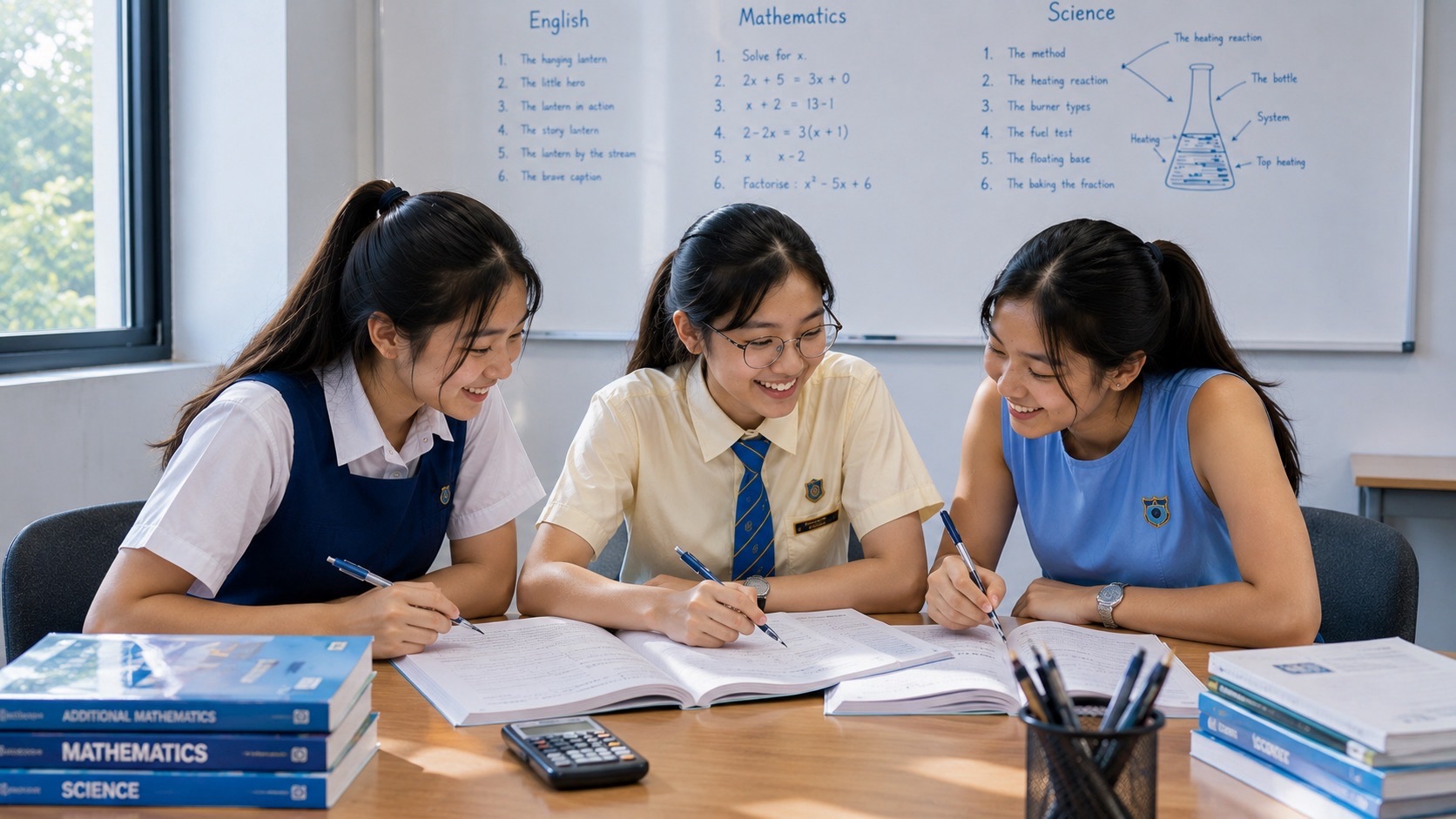
Secondary 2 vocabulary technology work becomes much more useful when students can discuss not only gadgets, but the systems, evidence, risks and social consequences behind them. This guide builds a Secondary 2 vocabulary theme around technology and science in society: innovation, data, privacy, automation, evidence, reliability, access, misinformation, sustainability and the trade-offs that appear when new tools enter everyday life.
Students searching for Secondary 2 vocabulary technology, science vocabulary, technology essay words, Secondary English vocabulary or words for technology in society need a bridge from concrete description to analytical language. “Phones are useful” is too broad. Secondary writing asks what they are useful for, what risks follow, who gains access, how information is verified, what happens to privacy, and whether a benefit is short-term, widespread, unequal or sustainable.
This page therefore teaches technology and science vocabulary through relationships: cause and consequence, evidence and claim, access and inequality, innovation and risk, convenience and dependence, efficiency and sustainability. Use it with the Singapore Vocabulary Guide, the Academic Word List for Sec 1 to 4 and the O-Level vocabulary route.
Quick Read
- Level: Secondary 2, with transfer into Secondary 3 discursive writing.
- Themes: technology, science, data, privacy, innovation, access, risk and sustainability.
- Goal: explain trade-offs and consequences, not merely name devices.
- Method: meaning → collocation → evidence → sentence → contrast → transfer.
- Best practice: use the same vocabulary in English, Science, Geography and current-affairs reading.
120 Secondary 2 vocabulary words for technology and science in society
Technology and innovation
1. automation
Learn automation through the relationship it helps express. Define it plainly, add one natural collocation and write one sentence connected to technology and innovation. Then write a second sentence from another domain—school, family, public services, environment or work. Transfer is the test that the word has become more than a one-topic label.
2. device
Learn device through the relationship it helps express. Define it plainly, add one natural collocation and write one sentence connected to technology and innovation. Then write a second sentence from another domain—school, family, public services, environment or work. Transfer is the test that the word has become more than a one-topic label.
3. digital
Learn digital through the relationship it helps express. Define it plainly, add one natural collocation and write one sentence connected to technology and innovation. Then write a second sentence from another domain—school, family, public services, environment or work. Transfer is the test that the word has become more than a one-topic label.
4. efficient
Learn efficient through the relationship it helps express. Define it plainly, add one natural collocation and write one sentence connected to technology and innovation. Then write a second sentence from another domain—school, family, public services, environment or work. Transfer is the test that the word has become more than a one-topic label.
5. innovation
Learn innovation through the relationship it helps express. Define it plainly, add one natural collocation and write one sentence connected to technology and innovation. Then write a second sentence from another domain—school, family, public services, environment or work. Transfer is the test that the word has become more than a one-topic label.
6. network
Learn network through the relationship it helps express. Define it plainly, add one natural collocation and write one sentence connected to technology and innovation. Then write a second sentence from another domain—school, family, public services, environment or work. Transfer is the test that the word has become more than a one-topic label.
7. platform
Learn platform through the relationship it helps express. Define it plainly, add one natural collocation and write one sentence connected to technology and innovation. Then write a second sentence from another domain—school, family, public services, environment or work. Transfer is the test that the word has become more than a one-topic label.
8. software
Learn software through the relationship it helps express. Define it plainly, add one natural collocation and write one sentence connected to technology and innovation. Then write a second sentence from another domain—school, family, public services, environment or work. Transfer is the test that the word has become more than a one-topic label.
9. system
Learn system through the relationship it helps express. Define it plainly, add one natural collocation and write one sentence connected to technology and innovation. Then write a second sentence from another domain—school, family, public services, environment or work. Transfer is the test that the word has become more than a one-topic label.
10. technology
Learn technology through the relationship it helps express. Define it plainly, add one natural collocation and write one sentence connected to technology and innovation. Then write a second sentence from another domain—school, family, public services, environment or work. Transfer is the test that the word has become more than a one-topic label.
11. upgrade
Learn upgrade through the relationship it helps express. Define it plainly, add one natural collocation and write one sentence connected to technology and innovation. Then write a second sentence from another domain—school, family, public services, environment or work. Transfer is the test that the word has become more than a one-topic label.
12. virtual
Learn virtual through the relationship it helps express. Define it plainly, add one natural collocation and write one sentence connected to technology and innovation. Then write a second sentence from another domain—school, family, public services, environment or work. Transfer is the test that the word has become more than a one-topic label.
Science and evidence
13. analysis
Learn analysis through the relationship it helps express. Define it plainly, add one natural collocation and write one sentence connected to science and evidence. Then write a second sentence from another domain—school, family, public services, environment or work. Transfer is the test that the word has become more than a one-topic label.
14. data
Learn data through the relationship it helps express. Define it plainly, add one natural collocation and write one sentence connected to science and evidence. Then write a second sentence from another domain—school, family, public services, environment or work. Transfer is the test that the word has become more than a one-topic label.
15. evidence
Learn evidence through the relationship it helps express. Define it plainly, add one natural collocation and write one sentence connected to science and evidence. Then write a second sentence from another domain—school, family, public services, environment or work. Transfer is the test that the word has become more than a one-topic label.
16. experiment
Learn experiment through the relationship it helps express. Define it plainly, add one natural collocation and write one sentence connected to science and evidence. Then write a second sentence from another domain—school, family, public services, environment or work. Transfer is the test that the word has become more than a one-topic label.
17. hypothesis
Learn hypothesis through the relationship it helps express. Define it plainly, add one natural collocation and write one sentence connected to science and evidence. Then write a second sentence from another domain—school, family, public services, environment or work. Transfer is the test that the word has become more than a one-topic label.
18. method
Learn method through the relationship it helps express. Define it plainly, add one natural collocation and write one sentence connected to science and evidence. Then write a second sentence from another domain—school, family, public services, environment or work. Transfer is the test that the word has become more than a one-topic label.
19. observation
Learn observation through the relationship it helps express. Define it plainly, add one natural collocation and write one sentence connected to science and evidence. Then write a second sentence from another domain—school, family, public services, environment or work. Transfer is the test that the word has become more than a one-topic label.
20. reliable
Learn reliable through the relationship it helps express. Define it plainly, add one natural collocation and write one sentence connected to science and evidence. Then write a second sentence from another domain—school, family, public services, environment or work. Transfer is the test that the word has become more than a one-topic label.
21. research
Learn research through the relationship it helps express. Define it plainly, add one natural collocation and write one sentence connected to science and evidence. Then write a second sentence from another domain—school, family, public services, environment or work. Transfer is the test that the word has become more than a one-topic label.
22. result
Learn result through the relationship it helps express. Define it plainly, add one natural collocation and write one sentence connected to science and evidence. Then write a second sentence from another domain—school, family, public services, environment or work. Transfer is the test that the word has become more than a one-topic label.
23. variable
Learn variable through the relationship it helps express. Define it plainly, add one natural collocation and write one sentence connected to science and evidence. Then write a second sentence from another domain—school, family, public services, environment or work. Transfer is the test that the word has become more than a one-topic label.
24. verify
Learn verify through the relationship it helps express. Define it plainly, add one natural collocation and write one sentence connected to science and evidence. Then write a second sentence from another domain—school, family, public services, environment or work. Transfer is the test that the word has become more than a one-topic label.
Information and media
25. algorithm
Learn algorithm through the relationship it helps express. Define it plainly, add one natural collocation and write one sentence connected to information and media. Then write a second sentence from another domain—school, family, public services, environment or work. Transfer is the test that the word has become more than a one-topic label.
26. content
Learn content through the relationship it helps express. Define it plainly, add one natural collocation and write one sentence connected to information and media. Then write a second sentence from another domain—school, family, public services, environment or work. Transfer is the test that the word has become more than a one-topic label.
27. database
Learn database through the relationship it helps express. Define it plainly, add one natural collocation and write one sentence connected to information and media. Then write a second sentence from another domain—school, family, public services, environment or work. Transfer is the test that the word has become more than a one-topic label.
28. information
Learn information through the relationship it helps express. Define it plainly, add one natural collocation and write one sentence connected to information and media. Then write a second sentence from another domain—school, family, public services, environment or work. Transfer is the test that the word has become more than a one-topic label.
29. misinformation
Learn misinformation through the relationship it helps express. Define it plainly, add one natural collocation and write one sentence connected to information and media. Then write a second sentence from another domain—school, family, public services, environment or work. Transfer is the test that the word has become more than a one-topic label.
30. source
Learn source through the relationship it helps express. Define it plainly, add one natural collocation and write one sentence connected to information and media. Then write a second sentence from another domain—school, family, public services, environment or work. Transfer is the test that the word has become more than a one-topic label.
31. search
Learn search through the relationship it helps express. Define it plainly, add one natural collocation and write one sentence connected to information and media. Then write a second sentence from another domain—school, family, public services, environment or work. Transfer is the test that the word has become more than a one-topic label.
32. signal
Learn signal through the relationship it helps express. Define it plainly, add one natural collocation and write one sentence connected to information and media. Then write a second sentence from another domain—school, family, public services, environment or work. Transfer is the test that the word has become more than a one-topic label.
33. stream
Learn stream through the relationship it helps express. Define it plainly, add one natural collocation and write one sentence connected to information and media. Then write a second sentence from another domain—school, family, public services, environment or work. Transfer is the test that the word has become more than a one-topic label.
34. viral
Learn viral through the relationship it helps express. Define it plainly, add one natural collocation and write one sentence connected to information and media. Then write a second sentence from another domain—school, family, public services, environment or work. Transfer is the test that the word has become more than a one-topic label.
35. accurate
Learn accurate through the relationship it helps express. Define it plainly, add one natural collocation and write one sentence connected to information and media. Then write a second sentence from another domain—school, family, public services, environment or work. Transfer is the test that the word has become more than a one-topic label.
36. bias
Learn bias through the relationship it helps express. Define it plainly, add one natural collocation and write one sentence connected to information and media. Then write a second sentence from another domain—school, family, public services, environment or work. Transfer is the test that the word has become more than a one-topic label.
Privacy and security
37. access
Learn access through the relationship it helps express. Define it plainly, add one natural collocation and write one sentence connected to privacy and security. Then write a second sentence from another domain—school, family, public services, environment or work. Transfer is the test that the word has become more than a one-topic label.
38. account
Learn account through the relationship it helps express. Define it plainly, add one natural collocation and write one sentence connected to privacy and security. Then write a second sentence from another domain—school, family, public services, environment or work. Transfer is the test that the word has become more than a one-topic label.
39. consent
Learn consent through the relationship it helps express. Define it plainly, add one natural collocation and write one sentence connected to privacy and security. Then write a second sentence from another domain—school, family, public services, environment or work. Transfer is the test that the word has become more than a one-topic label.
40. data breach
Learn data breach through the relationship it helps express. Define it plainly, add one natural collocation and write one sentence connected to privacy and security. Then write a second sentence from another domain—school, family, public services, environment or work. Transfer is the test that the word has become more than a one-topic label.
41. identity
Learn identity through the relationship it helps express. Define it plainly, add one natural collocation and write one sentence connected to privacy and security. Then write a second sentence from another domain—school, family, public services, environment or work. Transfer is the test that the word has become more than a one-topic label.
42. password
Learn password through the relationship it helps express. Define it plainly, add one natural collocation and write one sentence connected to privacy and security. Then write a second sentence from another domain—school, family, public services, environment or work. Transfer is the test that the word has become more than a one-topic label.
43. permission
Learn permission through the relationship it helps express. Define it plainly, add one natural collocation and write one sentence connected to privacy and security. Then write a second sentence from another domain—school, family, public services, environment or work. Transfer is the test that the word has become more than a one-topic label.
44. privacy
Learn privacy through the relationship it helps express. Define it plainly, add one natural collocation and write one sentence connected to privacy and security. Then write a second sentence from another domain—school, family, public services, environment or work. Transfer is the test that the word has become more than a one-topic label.
45. protect
Learn protect through the relationship it helps express. Define it plainly, add one natural collocation and write one sentence connected to privacy and security. Then write a second sentence from another domain—school, family, public services, environment or work. Transfer is the test that the word has become more than a one-topic label.
46. secure
Learn secure through the relationship it helps express. Define it plainly, add one natural collocation and write one sentence connected to privacy and security. Then write a second sentence from another domain—school, family, public services, environment or work. Transfer is the test that the word has become more than a one-topic label.
47. surveillance
Learn surveillance through the relationship it helps express. Define it plainly, add one natural collocation and write one sentence connected to privacy and security. Then write a second sentence from another domain—school, family, public services, environment or work. Transfer is the test that the word has become more than a one-topic label.
48. track
Learn track through the relationship it helps express. Define it plainly, add one natural collocation and write one sentence connected to privacy and security. Then write a second sentence from another domain—school, family, public services, environment or work. Transfer is the test that the word has become more than a one-topic label.
Benefits and efficiency
49. accessible
Learn accessible through the relationship it helps express. Define it plainly, add one natural collocation and write one sentence connected to benefits and efficiency. Then write a second sentence from another domain—school, family, public services, environment or work. Transfer is the test that the word has become more than a one-topic label.
50. convenient
Learn convenient through the relationship it helps express. Define it plainly, add one natural collocation and write one sentence connected to benefits and efficiency. Then write a second sentence from another domain—school, family, public services, environment or work. Transfer is the test that the word has become more than a one-topic label.
51. efficient
Learn efficient through the relationship it helps express. Define it plainly, add one natural collocation and write one sentence connected to benefits and efficiency. Then write a second sentence from another domain—school, family, public services, environment or work. Transfer is the test that the word has become more than a one-topic label.
52. enable
Learn enable through the relationship it helps express. Define it plainly, add one natural collocation and write one sentence connected to benefits and efficiency. Then write a second sentence from another domain—school, family, public services, environment or work. Transfer is the test that the word has become more than a one-topic label.
53. improve
Learn improve through the relationship it helps express. Define it plainly, add one natural collocation and write one sentence connected to benefits and efficiency. Then write a second sentence from another domain—school, family, public services, environment or work. Transfer is the test that the word has become more than a one-topic label.
54. productivity
Learn productivity through the relationship it helps express. Define it plainly, add one natural collocation and write one sentence connected to benefits and efficiency. Then write a second sentence from another domain—school, family, public services, environment or work. Transfer is the test that the word has become more than a one-topic label.
55. rapid
Learn rapid through the relationship it helps express. Define it plainly, add one natural collocation and write one sentence connected to benefits and efficiency. Then write a second sentence from another domain—school, family, public services, environment or work. Transfer is the test that the word has become more than a one-topic label.
56. reduce
Learn reduce through the relationship it helps express. Define it plainly, add one natural collocation and write one sentence connected to benefits and efficiency. Then write a second sentence from another domain—school, family, public services, environment or work. Transfer is the test that the word has become more than a one-topic label.
57. save
Learn save through the relationship it helps express. Define it plainly, add one natural collocation and write one sentence connected to benefits and efficiency. Then write a second sentence from another domain—school, family, public services, environment or work. Transfer is the test that the word has become more than a one-topic label.
58. simplify
Learn simplify through the relationship it helps express. Define it plainly, add one natural collocation and write one sentence connected to benefits and efficiency. Then write a second sentence from another domain—school, family, public services, environment or work. Transfer is the test that the word has become more than a one-topic label.
59. support
Learn support through the relationship it helps express. Define it plainly, add one natural collocation and write one sentence connected to benefits and efficiency. Then write a second sentence from another domain—school, family, public services, environment or work. Transfer is the test that the word has become more than a one-topic label.
60. useful
Learn useful through the relationship it helps express. Define it plainly, add one natural collocation and write one sentence connected to benefits and efficiency. Then write a second sentence from another domain—school, family, public services, environment or work. Transfer is the test that the word has become more than a one-topic label.
Risks and dependence
61. addiction
Learn addiction through the relationship it helps express. Define it plainly, add one natural collocation and write one sentence connected to risks and dependence. Then write a second sentence from another domain—school, family, public services, environment or work. Transfer is the test that the word has become more than a one-topic label.
62. dependence
Learn dependence through the relationship it helps express. Define it plainly, add one natural collocation and write one sentence connected to risks and dependence. Then write a second sentence from another domain—school, family, public services, environment or work. Transfer is the test that the word has become more than a one-topic label.
63. distraction
Learn distraction through the relationship it helps express. Define it plainly, add one natural collocation and write one sentence connected to risks and dependence. Then write a second sentence from another domain—school, family, public services, environment or work. Transfer is the test that the word has become more than a one-topic label.
64. harmful
Learn harmful through the relationship it helps express. Define it plainly, add one natural collocation and write one sentence connected to risks and dependence. Then write a second sentence from another domain—school, family, public services, environment or work. Transfer is the test that the word has become more than a one-topic label.
65. misuse
Learn misuse through the relationship it helps express. Define it plainly, add one natural collocation and write one sentence connected to risks and dependence. Then write a second sentence from another domain—school, family, public services, environment or work. Transfer is the test that the word has become more than a one-topic label.
66. overuse
Learn overuse through the relationship it helps express. Define it plainly, add one natural collocation and write one sentence connected to risks and dependence. Then write a second sentence from another domain—school, family, public services, environment or work. Transfer is the test that the word has become more than a one-topic label.
67. risk
Learn risk through the relationship it helps express. Define it plainly, add one natural collocation and write one sentence connected to risks and dependence. Then write a second sentence from another domain—school, family, public services, environment or work. Transfer is the test that the word has become more than a one-topic label.
68. vulnerable
Learn vulnerable through the relationship it helps express. Define it plainly, add one natural collocation and write one sentence connected to risks and dependence. Then write a second sentence from another domain—school, family, public services, environment or work. Transfer is the test that the word has become more than a one-topic label.
69. exposure
Learn exposure through the relationship it helps express. Define it plainly, add one natural collocation and write one sentence connected to risks and dependence. Then write a second sentence from another domain—school, family, public services, environment or work. Transfer is the test that the word has become more than a one-topic label.
70. manipulate
Learn manipulate through the relationship it helps express. Define it plainly, add one natural collocation and write one sentence connected to risks and dependence. Then write a second sentence from another domain—school, family, public services, environment or work. Transfer is the test that the word has become more than a one-topic label.
71. unsafe
Learn unsafe through the relationship it helps express. Define it plainly, add one natural collocation and write one sentence connected to risks and dependence. Then write a second sentence from another domain—school, family, public services, environment or work. Transfer is the test that the word has become more than a one-topic label.
72. unintended
Learn unintended through the relationship it helps express. Define it plainly, add one natural collocation and write one sentence connected to risks and dependence. Then write a second sentence from another domain—school, family, public services, environment or work. Transfer is the test that the word has become more than a one-topic label.
Access and inequality
73. affordable
Learn affordable through the relationship it helps express. Define it plainly, add one natural collocation and write one sentence connected to access and inequality. Then write a second sentence from another domain—school, family, public services, environment or work. Transfer is the test that the word has become more than a one-topic label.
74. accessibility
Learn accessibility through the relationship it helps express. Define it plainly, add one natural collocation and write one sentence connected to access and inequality. Then write a second sentence from another domain—school, family, public services, environment or work. Transfer is the test that the word has become more than a one-topic label.
75. barrier
Learn barrier through the relationship it helps express. Define it plainly, add one natural collocation and write one sentence connected to access and inequality. Then write a second sentence from another domain—school, family, public services, environment or work. Transfer is the test that the word has become more than a one-topic label.
76. digital divide
Learn digital divide through the relationship it helps express. Define it plainly, add one natural collocation and write one sentence connected to access and inequality. Then write a second sentence from another domain—school, family, public services, environment or work. Transfer is the test that the word has become more than a one-topic label.
77. equal
Learn equal through the relationship it helps express. Define it plainly, add one natural collocation and write one sentence connected to access and inequality. Then write a second sentence from another domain—school, family, public services, environment or work. Transfer is the test that the word has become more than a one-topic label.
78. inequality
Learn inequality through the relationship it helps express. Define it plainly, add one natural collocation and write one sentence connected to access and inequality. Then write a second sentence from another domain—school, family, public services, environment or work. Transfer is the test that the word has become more than a one-topic label.
79. infrastructure
Learn infrastructure through the relationship it helps express. Define it plainly, add one natural collocation and write one sentence connected to access and inequality. Then write a second sentence from another domain—school, family, public services, environment or work. Transfer is the test that the word has become more than a one-topic label.
80. opportunity
Learn opportunity through the relationship it helps express. Define it plainly, add one natural collocation and write one sentence connected to access and inequality. Then write a second sentence from another domain—school, family, public services, environment or work. Transfer is the test that the word has become more than a one-topic label.
81. resource
Learn resource through the relationship it helps express. Define it plainly, add one natural collocation and write one sentence connected to access and inequality. Then write a second sentence from another domain—school, family, public services, environment or work. Transfer is the test that the word has become more than a one-topic label.
82. rural
Learn rural through the relationship it helps express. Define it plainly, add one natural collocation and write one sentence connected to access and inequality. Then write a second sentence from another domain—school, family, public services, environment or work. Transfer is the test that the word has become more than a one-topic label.
83. urban
Learn urban through the relationship it helps express. Define it plainly, add one natural collocation and write one sentence connected to access and inequality. Then write a second sentence from another domain—school, family, public services, environment or work. Transfer is the test that the word has become more than a one-topic label.
84. exclude
Learn exclude through the relationship it helps express. Define it plainly, add one natural collocation and write one sentence connected to access and inequality. Then write a second sentence from another domain—school, family, public services, environment or work. Transfer is the test that the word has become more than a one-topic label.
Environment and sustainability
85. energy
Learn energy through the relationship it helps express. Define it plainly, add one natural collocation and write one sentence connected to environment and sustainability. Then write a second sentence from another domain—school, family, public services, environment or work. Transfer is the test that the word has become more than a one-topic label.
86. electronic waste
Learn electronic waste through the relationship it helps express. Define it plainly, add one natural collocation and write one sentence connected to environment and sustainability. Then write a second sentence from another domain—school, family, public services, environment or work. Transfer is the test that the word has become more than a one-topic label.
87. emission
Learn emission through the relationship it helps express. Define it plainly, add one natural collocation and write one sentence connected to environment and sustainability. Then write a second sentence from another domain—school, family, public services, environment or work. Transfer is the test that the word has become more than a one-topic label.
88. resource
Learn resource through the relationship it helps express. Define it plainly, add one natural collocation and write one sentence connected to environment and sustainability. Then write a second sentence from another domain—school, family, public services, environment or work. Transfer is the test that the word has become more than a one-topic label.
89. renewable
Learn renewable through the relationship it helps express. Define it plainly, add one natural collocation and write one sentence connected to environment and sustainability. Then write a second sentence from another domain—school, family, public services, environment or work. Transfer is the test that the word has become more than a one-topic label.
90. recycle
Learn recycle through the relationship it helps express. Define it plainly, add one natural collocation and write one sentence connected to environment and sustainability. Then write a second sentence from another domain—school, family, public services, environment or work. Transfer is the test that the word has become more than a one-topic label.
91. sustainable
Learn sustainable through the relationship it helps express. Define it plainly, add one natural collocation and write one sentence connected to environment and sustainability. Then write a second sentence from another domain—school, family, public services, environment or work. Transfer is the test that the word has become more than a one-topic label.
92. consumption
Learn consumption through the relationship it helps express. Define it plainly, add one natural collocation and write one sentence connected to environment and sustainability. Then write a second sentence from another domain—school, family, public services, environment or work. Transfer is the test that the word has become more than a one-topic label.
93. waste
Learn waste through the relationship it helps express. Define it plainly, add one natural collocation and write one sentence connected to environment and sustainability. Then write a second sentence from another domain—school, family, public services, environment or work. Transfer is the test that the word has become more than a one-topic label.
94. carbon
Learn carbon through the relationship it helps express. Define it plainly, add one natural collocation and write one sentence connected to environment and sustainability. Then write a second sentence from another domain—school, family, public services, environment or work. Transfer is the test that the word has become more than a one-topic label.
95. durable
Learn durable through the relationship it helps express. Define it plainly, add one natural collocation and write one sentence connected to environment and sustainability. Then write a second sentence from another domain—school, family, public services, environment or work. Transfer is the test that the word has become more than a one-topic label.
96. efficient
Learn efficient through the relationship it helps express. Define it plainly, add one natural collocation and write one sentence connected to environment and sustainability. Then write a second sentence from another domain—school, family, public services, environment or work. Transfer is the test that the word has become more than a one-topic label.
Ethics and responsibility
97. accountability
Learn accountability through the relationship it helps express. Define it plainly, add one natural collocation and write one sentence connected to ethics and responsibility. Then write a second sentence from another domain—school, family, public services, environment or work. Transfer is the test that the word has become more than a one-topic label.
98. ethical
Learn ethical through the relationship it helps express. Define it plainly, add one natural collocation and write one sentence connected to ethics and responsibility. Then write a second sentence from another domain—school, family, public services, environment or work. Transfer is the test that the word has become more than a one-topic label.
99. fairness
Learn fairness through the relationship it helps express. Define it plainly, add one natural collocation and write one sentence connected to ethics and responsibility. Then write a second sentence from another domain—school, family, public services, environment or work. Transfer is the test that the word has become more than a one-topic label.
100. harm
Learn harm through the relationship it helps express. Define it plainly, add one natural collocation and write one sentence connected to ethics and responsibility. Then write a second sentence from another domain—school, family, public services, environment or work. Transfer is the test that the word has become more than a one-topic label.
101. responsibility
Learn responsibility through the relationship it helps express. Define it plainly, add one natural collocation and write one sentence connected to ethics and responsibility. Then write a second sentence from another domain—school, family, public services, environment or work. Transfer is the test that the word has become more than a one-topic label.
102. regulate
Learn regulate through the relationship it helps express. Define it plainly, add one natural collocation and write one sentence connected to ethics and responsibility. Then write a second sentence from another domain—school, family, public services, environment or work. Transfer is the test that the word has become more than a one-topic label.
103. transparent
Learn transparent through the relationship it helps express. Define it plainly, add one natural collocation and write one sentence connected to ethics and responsibility. Then write a second sentence from another domain—school, family, public services, environment or work. Transfer is the test that the word has become more than a one-topic label.
104. trust
Learn trust through the relationship it helps express. Define it plainly, add one natural collocation and write one sentence connected to ethics and responsibility. Then write a second sentence from another domain—school, family, public services, environment or work. Transfer is the test that the word has become more than a one-topic label.
105. consent
Learn consent through the relationship it helps express. Define it plainly, add one natural collocation and write one sentence connected to ethics and responsibility. Then write a second sentence from another domain—school, family, public services, environment or work. Transfer is the test that the word has become more than a one-topic label.
106. bias
Learn bias through the relationship it helps express. Define it plainly, add one natural collocation and write one sentence connected to ethics and responsibility. Then write a second sentence from another domain—school, family, public services, environment or work. Transfer is the test that the word has become more than a one-topic label.
107. rights
Learn rights through the relationship it helps express. Define it plainly, add one natural collocation and write one sentence connected to ethics and responsibility. Then write a second sentence from another domain—school, family, public services, environment or work. Transfer is the test that the word has become more than a one-topic label.
108. duty
Learn duty through the relationship it helps express. Define it plainly, add one natural collocation and write one sentence connected to ethics and responsibility. Then write a second sentence from another domain—school, family, public services, environment or work. Transfer is the test that the word has become more than a one-topic label.
Change and society
109. adapt
Learn adapt through the relationship it helps express. Define it plainly, add one natural collocation and write one sentence connected to change and society. Then write a second sentence from another domain—school, family, public services, environment or work. Transfer is the test that the word has become more than a one-topic label.
110. behaviour
Learn behaviour through the relationship it helps express. Define it plainly, add one natural collocation and write one sentence connected to change and society. Then write a second sentence from another domain—school, family, public services, environment or work. Transfer is the test that the word has become more than a one-topic label.
111. change
Learn change through the relationship it helps express. Define it plainly, add one natural collocation and write one sentence connected to change and society. Then write a second sentence from another domain—school, family, public services, environment or work. Transfer is the test that the word has become more than a one-topic label.
112. community
Learn community through the relationship it helps express. Define it plainly, add one natural collocation and write one sentence connected to change and society. Then write a second sentence from another domain—school, family, public services, environment or work. Transfer is the test that the word has become more than a one-topic label.
113. employment
Learn employment through the relationship it helps express. Define it plainly, add one natural collocation and write one sentence connected to change and society. Then write a second sentence from another domain—school, family, public services, environment or work. Transfer is the test that the word has become more than a one-topic label.
114. future
Learn future through the relationship it helps express. Define it plainly, add one natural collocation and write one sentence connected to change and society. Then write a second sentence from another domain—school, family, public services, environment or work. Transfer is the test that the word has become more than a one-topic label.
115. impact
Learn impact through the relationship it helps express. Define it plainly, add one natural collocation and write one sentence connected to change and society. Then write a second sentence from another domain—school, family, public services, environment or work. Transfer is the test that the word has become more than a one-topic label.
116. influence
Learn influence through the relationship it helps express. Define it plainly, add one natural collocation and write one sentence connected to change and society. Then write a second sentence from another domain—school, family, public services, environment or work. Transfer is the test that the word has become more than a one-topic label.
117. replace
Learn replace through the relationship it helps express. Define it plainly, add one natural collocation and write one sentence connected to change and society. Then write a second sentence from another domain—school, family, public services, environment or work. Transfer is the test that the word has become more than a one-topic label.
118. reshape
Learn reshape through the relationship it helps express. Define it plainly, add one natural collocation and write one sentence connected to change and society. Then write a second sentence from another domain—school, family, public services, environment or work. Transfer is the test that the word has become more than a one-topic label.
119. skill
Learn skill through the relationship it helps express. Define it plainly, add one natural collocation and write one sentence connected to change and society. Then write a second sentence from another domain—school, family, public services, environment or work. Transfer is the test that the word has become more than a one-topic label.
120. trend
Learn trend through the relationship it helps express. Define it plainly, add one natural collocation and write one sentence connected to change and society. Then write a second sentence from another domain—school, family, public services, environment or work. Transfer is the test that the word has become more than a one-topic label.
Technology vocabulary should answer five questions
What does the technology do?
Use function words such as enable, automate, process, connect, analyse, store or distribute.
Who benefits?
Use access, opportunity, convenience, productivity, support, affordability and inclusion.
What could go wrong?
Use risk, misuse, dependence, exposure, vulnerability, misinformation and unintended consequence.
What evidence supports the claim?
Use data, source, research, reliable, verify, result, observation and analysis.
What trade-off follows?
Use privacy, fairness, cost, sustainability, regulation, accountability and responsibility.
From simple statement to analytical statement
Technology is good.
Stronger version: Technology can improve efficiency, but the benefit depends on access, reliability and responsible use. The upgrade comes from specifying mechanism, condition or trade-off, not from adding difficult vocabulary for its own sake.
AI can help students.
Stronger version: Automated tools can support learning by giving rapid feedback, although over-reliance may reduce independent judgement. The upgrade comes from specifying mechanism, condition or trade-off, not from adding difficult vocabulary for its own sake.
The internet has lots of information.
Stronger version: Digital platforms provide wide access to information, but users still need to verify sources and recognise misinformation. The upgrade comes from specifying mechanism, condition or trade-off, not from adding difficult vocabulary for its own sake.
Apps know a lot about us.
Stronger version: Digital services may collect personal data, which creates privacy and consent concerns. The upgrade comes from specifying mechanism, condition or trade-off, not from adding difficult vocabulary for its own sake.
Machines can replace jobs.
Stronger version: Automation may replace some routine tasks while increasing demand for different skills. The upgrade comes from specifying mechanism, condition or trade-off, not from adding difficult vocabulary for its own sake.
New technology is expensive.
Stronger version: High costs can create access barriers and widen the digital divide. The upgrade comes from specifying mechanism, condition or trade-off, not from adding difficult vocabulary for its own sake.
Technology helps the environment.
Stronger version: Some technologies improve energy efficiency, but production and electronic waste can create environmental costs. The upgrade comes from specifying mechanism, condition or trade-off, not from adding difficult vocabulary for its own sake.
People use phones too much.
Stronger version: Heavy device use can become a distraction or dependence when it disrupts sleep, attention or relationships. The upgrade comes from specifying mechanism, condition or trade-off, not from adding difficult vocabulary for its own sake.
Science tells us what is true.
Stronger version: Scientific claims become stronger when evidence is reliable, methods are clear and results can be checked. The upgrade comes from specifying mechanism, condition or trade-off, not from adding difficult vocabulary for its own sake.
Social media changes people.
Stronger version: Digital platforms can influence behaviour by shaping what information users repeatedly see. The upgrade comes from specifying mechanism, condition or trade-off, not from adding difficult vocabulary for its own sake.
The Fencing Method: technology words that are easy to blur
data / information
Data are recorded facts or measurements; information is data organised or interpreted for meaning. Write one sentence for each word and one sentence where confusing them changes the claim.
privacy / secrecy
Privacy concerns control over personal access; secrecy is broader deliberate concealment. Write one sentence for each word and one sentence where confusing them changes the claim.
accurate / reliable
Accurate means correct; reliable means consistently dependable. A source can be reliable yet still contain an occasional error. Write one sentence for each word and one sentence where confusing them changes the claim.
innovation / invention
Invention creates something new; innovation can also improve or apply ideas in new ways. Write one sentence for each word and one sentence where confusing them changes the claim.
automation / artificial intelligence
Automation performs processes with reduced human intervention; AI is a broader set of systems that can perform tasks associated with intelligence. Write one sentence for each word and one sentence where confusing them changes the claim.
bias / misinformation
Bias is a systematic slant or preference; misinformation is false or inaccurate information. Write one sentence for each word and one sentence where confusing them changes the claim.
access / ownership
Access means ability to use or reach; ownership means legal or practical possession. Write one sentence for each word and one sentence where confusing them changes the claim.
risk / harm
Risk is the possibility of harm; harm is the negative outcome itself. Write one sentence for each word and one sentence where confusing them changes the claim.
efficient / sustainable
Efficient uses resources well; sustainable can continue without unacceptable long-term environmental or social cost. Write one sentence for each word and one sentence where confusing them changes the claim.
transparent / public
Transparent means processes or decisions are understandable and open to scrutiny; public simply means available or visible to people. Write one sentence for each word and one sentence where confusing them changes the claim.
Collocations for technology and science writing
1. analyse data
Retrieve analyse data as a natural chunk. Then use it in one sentence that gives a benefit and one sentence that gives a limitation. This builds balanced secondary writing rather than one-sided slogan language.
2. reliable source
Retrieve reliable source as a natural chunk. Then use it in one sentence that gives a benefit and one sentence that gives a limitation. This builds balanced secondary writing rather than one-sided slogan language.
3. verify information
Retrieve verify information as a natural chunk. Then use it in one sentence that gives a benefit and one sentence that gives a limitation. This builds balanced secondary writing rather than one-sided slogan language.
4. protect privacy
Retrieve protect privacy as a natural chunk. Then use it in one sentence that gives a benefit and one sentence that gives a limitation. This builds balanced secondary writing rather than one-sided slogan language.
5. gain access
Retrieve gain access as a natural chunk. Then use it in one sentence that gives a benefit and one sentence that gives a limitation. This builds balanced secondary writing rather than one-sided slogan language.
6. digital platform
Retrieve digital platform as a natural chunk. Then use it in one sentence that gives a benefit and one sentence that gives a limitation. This builds balanced secondary writing rather than one-sided slogan language.
7. scientific evidence
Retrieve scientific evidence as a natural chunk. Then use it in one sentence that gives a benefit and one sentence that gives a limitation. This builds balanced secondary writing rather than one-sided slogan language.
8. conduct research
Retrieve conduct research as a natural chunk. Then use it in one sentence that gives a benefit and one sentence that gives a limitation. This builds balanced secondary writing rather than one-sided slogan language.
9. ethical concern
Retrieve ethical concern as a natural chunk. Then use it in one sentence that gives a benefit and one sentence that gives a limitation. This builds balanced secondary writing rather than one-sided slogan language.
10. unintended consequence
Retrieve unintended consequence as a natural chunk. Then use it in one sentence that gives a benefit and one sentence that gives a limitation. This builds balanced secondary writing rather than one-sided slogan language.
11. rapid innovation
Retrieve rapid innovation as a natural chunk. Then use it in one sentence that gives a benefit and one sentence that gives a limitation. This builds balanced secondary writing rather than one-sided slogan language.
12. technical limitation
Retrieve technical limitation as a natural chunk. Then use it in one sentence that gives a benefit and one sentence that gives a limitation. This builds balanced secondary writing rather than one-sided slogan language.
13. security risk
Retrieve security risk as a natural chunk. Then use it in one sentence that gives a benefit and one sentence that gives a limitation. This builds balanced secondary writing rather than one-sided slogan language.
14. personal data
Retrieve personal data as a natural chunk. Then use it in one sentence that gives a benefit and one sentence that gives a limitation. This builds balanced secondary writing rather than one-sided slogan language.
15. digital divide
Retrieve digital divide as a natural chunk. Then use it in one sentence that gives a benefit and one sentence that gives a limitation. This builds balanced secondary writing rather than one-sided slogan language.
16. equal access
Retrieve equal access as a natural chunk. Then use it in one sentence that gives a benefit and one sentence that gives a limitation. This builds balanced secondary writing rather than one-sided slogan language.
17. sustainable technology
Retrieve sustainable technology as a natural chunk. Then use it in one sentence that gives a benefit and one sentence that gives a limitation. This builds balanced secondary writing rather than one-sided slogan language.
18. energy consumption
Retrieve energy consumption as a natural chunk. Then use it in one sentence that gives a benefit and one sentence that gives a limitation. This builds balanced secondary writing rather than one-sided slogan language.
19. electronic waste
Retrieve electronic waste as a natural chunk. Then use it in one sentence that gives a benefit and one sentence that gives a limitation. This builds balanced secondary writing rather than one-sided slogan language.
20. regulate technology
Retrieve regulate technology as a natural chunk. Then use it in one sentence that gives a benefit and one sentence that gives a limitation. This builds balanced secondary writing rather than one-sided slogan language.
21. transparent process
Retrieve transparent process as a natural chunk. Then use it in one sentence that gives a benefit and one sentence that gives a limitation. This builds balanced secondary writing rather than one-sided slogan language.
22. biased algorithm
Retrieve biased algorithm as a natural chunk. Then use it in one sentence that gives a benefit and one sentence that gives a limitation. This builds balanced secondary writing rather than one-sided slogan language.
23. misleading content
Retrieve misleading content as a natural chunk. Then use it in one sentence that gives a benefit and one sentence that gives a limitation. This builds balanced secondary writing rather than one-sided slogan language.
24. automated system
Retrieve automated system as a natural chunk. Then use it in one sentence that gives a benefit and one sentence that gives a limitation. This builds balanced secondary writing rather than one-sided slogan language.
25. improve efficiency
Retrieve improve efficiency as a natural chunk. Then use it in one sentence that gives a benefit and one sentence that gives a limitation. This builds balanced secondary writing rather than one-sided slogan language.
26. increase productivity
Retrieve increase productivity as a natural chunk. Then use it in one sentence that gives a benefit and one sentence that gives a limitation. This builds balanced secondary writing rather than one-sided slogan language.
27. reduce cost
Retrieve reduce cost as a natural chunk. Then use it in one sentence that gives a benefit and one sentence that gives a limitation. This builds balanced secondary writing rather than one-sided slogan language.
28. public trust
Retrieve public trust as a natural chunk. Then use it in one sentence that gives a benefit and one sentence that gives a limitation. This builds balanced secondary writing rather than one-sided slogan language.
29. responsible use
Retrieve responsible use as a natural chunk. Then use it in one sentence that gives a benefit and one sentence that gives a limitation. This builds balanced secondary writing rather than one-sided slogan language.
30. long-term impact
Retrieve long-term impact as a natural chunk. Then use it in one sentence that gives a benefit and one sentence that gives a limitation. This builds balanced secondary writing rather than one-sided slogan language.
How to write about evidence without overstating it
Technology and science topics tempt students to make large claims: “AI will replace all jobs”, “social media makes everyone addicted”, “technology saves the environment”. Stronger writing uses calibrated language: may, can, tends to, in some cases, evidence suggests, one risk is, a potential benefit is. These phrases control certainty and make the argument more credible.
Evidence vocabulary should match evidence strength. Suggests is weaker than demonstrates; associated with does not automatically mean caused by. This distinction is useful across English and Science.
How to write about trade-offs
A trade-off occurs when gaining one benefit creates a cost elsewhere. More convenience may require more data collection. Faster automation may improve productivity while disrupting jobs. Cheap devices may increase access while encouraging short replacement cycles and electronic waste. Students who can name trade-offs move beyond “good or bad” writing.
Use a simple frame: benefit → condition → cost → judgement. Example: “Online learning can improve access for students who cannot travel easily, but the benefit depends on reliable internet access and may disadvantage households without suitable devices.”
A 10-week Secondary 2 learning plan
Week 1: Technology systems
Core targets: automation, platform, network, device, software, system, digital, innovation. Build sentence pairs that show a benefit and a limitation. Retrieve older terms every session so the vocabulary becomes a system rather than ten separate weekly lists.
Week 2: Evidence
Core targets: data, evidence, reliable, verify, research, method, result, analysis. Build sentence pairs that show a benefit and a limitation. Retrieve older terms every session so the vocabulary becomes a system rather than ten separate weekly lists.
Week 3: Information
Core targets: source, misinformation, bias, algorithm, content, accurate, database, viral. Build sentence pairs that show a benefit and a limitation. Retrieve older terms every session so the vocabulary becomes a system rather than ten separate weekly lists.
Week 4: Privacy
Core targets: consent, access, privacy, surveillance, track, protect, secure, identity. Build sentence pairs that show a benefit and a limitation. Retrieve older terms every session so the vocabulary becomes a system rather than ten separate weekly lists.
Week 5: Benefits
Core targets: convenient, efficient, productivity, enable, improve, rapid, save, simplify. Build sentence pairs that show a benefit and a limitation. Retrieve older terms every session so the vocabulary becomes a system rather than ten separate weekly lists.
Week 6: Risks
Core targets: misuse, dependence, distraction, harmful, exposure, vulnerable, unintended, risk. Build sentence pairs that show a benefit and a limitation. Retrieve older terms every session so the vocabulary becomes a system rather than ten separate weekly lists.
Week 7: Inequality
Core targets: digital divide, affordable, barrier, access, inequality, infrastructure, opportunity, resource. Build sentence pairs that show a benefit and a limitation. Retrieve older terms every session so the vocabulary becomes a system rather than ten separate weekly lists.
Week 8: Environment
Core targets: sustainable, consumption, electronic waste, recycle, emission, renewable, durable, energy. Build sentence pairs that show a benefit and a limitation. Retrieve older terms every session so the vocabulary becomes a system rather than ten separate weekly lists.
Week 9: Ethics
Core targets: ethical, fairness, rights, accountability, regulate, transparent, trust, responsibility. Build sentence pairs that show a benefit and a limitation. Retrieve older terms every session so the vocabulary becomes a system rather than ten separate weekly lists.
Week 10: Mixed discussion
Core targets: combine benefits, evidence, risk, ethics and trade-offs in unfamiliar topics. Build sentence pairs that show a benefit and a limitation. Retrieve older terms every session so the vocabulary becomes a system rather than ten separate weekly lists.
30 transfer drills
Drill 1
Discuss AI in homework. Use one evidence word, one benefit word, one risk word and one ethics or access word. Then rewrite the paragraph from the opposite perspective without changing the factual vocabulary inaccurately.
Drill 2
Discuss facial recognition. Use one evidence word, one benefit word, one risk word and one ethics or access word. Then rewrite the paragraph from the opposite perspective without changing the factual vocabulary inaccurately.
Drill 3
Discuss social media recommendations. Use one evidence word, one benefit word, one risk word and one ethics or access word. Then rewrite the paragraph from the opposite perspective without changing the factual vocabulary inaccurately.
Drill 4
Discuss online shopping. Use one evidence word, one benefit word, one risk word and one ethics or access word. Then rewrite the paragraph from the opposite perspective without changing the factual vocabulary inaccurately.
Drill 5
Discuss self-driving vehicles. Use one evidence word, one benefit word, one risk word and one ethics or access word. Then rewrite the paragraph from the opposite perspective without changing the factual vocabulary inaccurately.
Drill 6
Discuss smart homes. Use one evidence word, one benefit word, one risk word and one ethics or access word. Then rewrite the paragraph from the opposite perspective without changing the factual vocabulary inaccurately.
Drill 7
Discuss medical technology. Use one evidence word, one benefit word, one risk word and one ethics or access word. Then rewrite the paragraph from the opposite perspective without changing the factual vocabulary inaccurately.
Drill 8
Discuss digital payments. Use one evidence word, one benefit word, one risk word and one ethics or access word. Then rewrite the paragraph from the opposite perspective without changing the factual vocabulary inaccurately.
Drill 9
Discuss remote learning. Use one evidence word, one benefit word, one risk word and one ethics or access word. Then rewrite the paragraph from the opposite perspective without changing the factual vocabulary inaccurately.
Drill 10
Discuss renewable energy. Use one evidence word, one benefit word, one risk word and one ethics or access word. Then rewrite the paragraph from the opposite perspective without changing the factual vocabulary inaccurately.
Drill 11
Discuss AI in homework. Use one evidence word, one benefit word, one risk word and one ethics or access word. Then rewrite the paragraph from the opposite perspective without changing the factual vocabulary inaccurately.
Drill 12
Discuss facial recognition. Use one evidence word, one benefit word, one risk word and one ethics or access word. Then rewrite the paragraph from the opposite perspective without changing the factual vocabulary inaccurately.
Drill 13
Discuss social media recommendations. Use one evidence word, one benefit word, one risk word and one ethics or access word. Then rewrite the paragraph from the opposite perspective without changing the factual vocabulary inaccurately.
Drill 14
Discuss online shopping. Use one evidence word, one benefit word, one risk word and one ethics or access word. Then rewrite the paragraph from the opposite perspective without changing the factual vocabulary inaccurately.
Drill 15
Discuss self-driving vehicles. Use one evidence word, one benefit word, one risk word and one ethics or access word. Then rewrite the paragraph from the opposite perspective without changing the factual vocabulary inaccurately.
Drill 16
Discuss smart homes. Use one evidence word, one benefit word, one risk word and one ethics or access word. Then rewrite the paragraph from the opposite perspective without changing the factual vocabulary inaccurately.
Drill 17
Discuss medical technology. Use one evidence word, one benefit word, one risk word and one ethics or access word. Then rewrite the paragraph from the opposite perspective without changing the factual vocabulary inaccurately.
Drill 18
Discuss digital payments. Use one evidence word, one benefit word, one risk word and one ethics or access word. Then rewrite the paragraph from the opposite perspective without changing the factual vocabulary inaccurately.
Drill 19
Discuss remote learning. Use one evidence word, one benefit word, one risk word and one ethics or access word. Then rewrite the paragraph from the opposite perspective without changing the factual vocabulary inaccurately.
Drill 20
Discuss renewable energy. Use one evidence word, one benefit word, one risk word and one ethics or access word. Then rewrite the paragraph from the opposite perspective without changing the factual vocabulary inaccurately.
Drill 21
Discuss AI in homework. Use one evidence word, one benefit word, one risk word and one ethics or access word. Then rewrite the paragraph from the opposite perspective without changing the factual vocabulary inaccurately.
Drill 22
Discuss facial recognition. Use one evidence word, one benefit word, one risk word and one ethics or access word. Then rewrite the paragraph from the opposite perspective without changing the factual vocabulary inaccurately.
Drill 23
Discuss social media recommendations. Use one evidence word, one benefit word, one risk word and one ethics or access word. Then rewrite the paragraph from the opposite perspective without changing the factual vocabulary inaccurately.
Drill 24
Discuss online shopping. Use one evidence word, one benefit word, one risk word and one ethics or access word. Then rewrite the paragraph from the opposite perspective without changing the factual vocabulary inaccurately.
Drill 25
Discuss self-driving vehicles. Use one evidence word, one benefit word, one risk word and one ethics or access word. Then rewrite the paragraph from the opposite perspective without changing the factual vocabulary inaccurately.
Drill 26
Discuss smart homes. Use one evidence word, one benefit word, one risk word and one ethics or access word. Then rewrite the paragraph from the opposite perspective without changing the factual vocabulary inaccurately.
Drill 27
Discuss medical technology. Use one evidence word, one benefit word, one risk word and one ethics or access word. Then rewrite the paragraph from the opposite perspective without changing the factual vocabulary inaccurately.
Drill 28
Discuss digital payments. Use one evidence word, one benefit word, one risk word and one ethics or access word. Then rewrite the paragraph from the opposite perspective without changing the factual vocabulary inaccurately.
Drill 29
Discuss remote learning. Use one evidence word, one benefit word, one risk word and one ethics or access word. Then rewrite the paragraph from the opposite perspective without changing the factual vocabulary inaccurately.
Drill 30
Discuss renewable energy. Use one evidence word, one benefit word, one risk word and one ethics or access word. Then rewrite the paragraph from the opposite perspective without changing the factual vocabulary inaccurately.
Frequently asked questions
Should Secondary 2 students learn technical computer terms?
Some are useful, but broad analytical vocabulary has greater cross-subject value than rapidly changing product jargon.
Is technology vocabulary only for English?
No. Data, evidence, systems, variables, reliability and sustainability recur across Science and Humanities.
How can students avoid one-sided essays?
Build every topic around benefits, limitations, evidence, affected groups and conditions.
Should students use words such as algorithm and automation if they cannot explain them?
No. A word is not ready for writing until the learner can explain it and use it accurately.
How do parents practise this?
Choose one everyday technology and ask five questions: function, benefit, risk, evidence and trade-off.
How do teachers diagnose weak vocabulary?
Check whether the student understands mechanism, certainty, collocation and the difference between related concepts.
What is the best revision method?
Short spaced retrieval plus current-affairs or subject-reading application.
What shows mastery?
The student can discuss an unfamiliar technology with precise, balanced language rather than a memorised topic paragraph.
Final principle
Secondary 2 technology vocabulary should help students think, not just label. The strongest words describe relationships: evidence supports a claim, systems process information, access creates opportunity, risks create conditions, regulation creates boundaries, and innovation creates both benefits and trade-offs. When students learn those relationships, they can handle new technologies even when the product names change.
Return to the Singapore Vocabulary Guide for the complete vocabulary map.