Primary 2 Science foundations should preserve curiosity while making it more disciplined.
A child already asks why. The next step is learning that a useful answer should be connected to what was observed, compared or tested.
This is not the year to compress upper-primary Science into younger children. It is a year to strengthen the habits that later make formal Science understandable.
Quick Read for Parents
- Primary 2 is best used to deepen Science-process foundations.
- Children can learn to distinguish observation, prediction and explanation.
- Comparisons become stronger when relevant properties are compared consistently.
- Simple investigations introduce the logic of changing one thing while observing another.
- Classification should always have an explainable rule.
- Scientific vocabulary should grow from meaning and evidence.
The One-Sentence Answer
Strong Primary 2 Science foundations should help a child move from “I noticed something” toward “I can describe what changed, compare the evidence and explain why I think this happened.”
Observation, Prediction and Explanation Do Different Jobs
“The ice cube is smaller” is an observation. “I think it will disappear” is a prediction. “It became liquid water because it warmed” is an explanation. Young children do not need sophisticated terminology to begin separating these jobs.
Six Primary 2 Science Habits Worth Developing
- Describe before explaining.
- Compare fairly.
- Classify and defend the boundary.
- Track change over time.
- Make a prediction that can be checked.
- Revise the explanation when evidence changes.
Simple Investigations: Change One Thing Deliberately
A young learner can begin understanding fair comparison through simple questions. What should change? What should stay similar? What should we observe?
Scientific Vocabulary Should Compress Understanding
Words such as property, observe, compare and classify are useful because they name ideas the child already experiences. Terminology becomes powerful when it compresses understanding rather than replacing it.
Why Three Students Works Well for Primary 2 Science Foundations
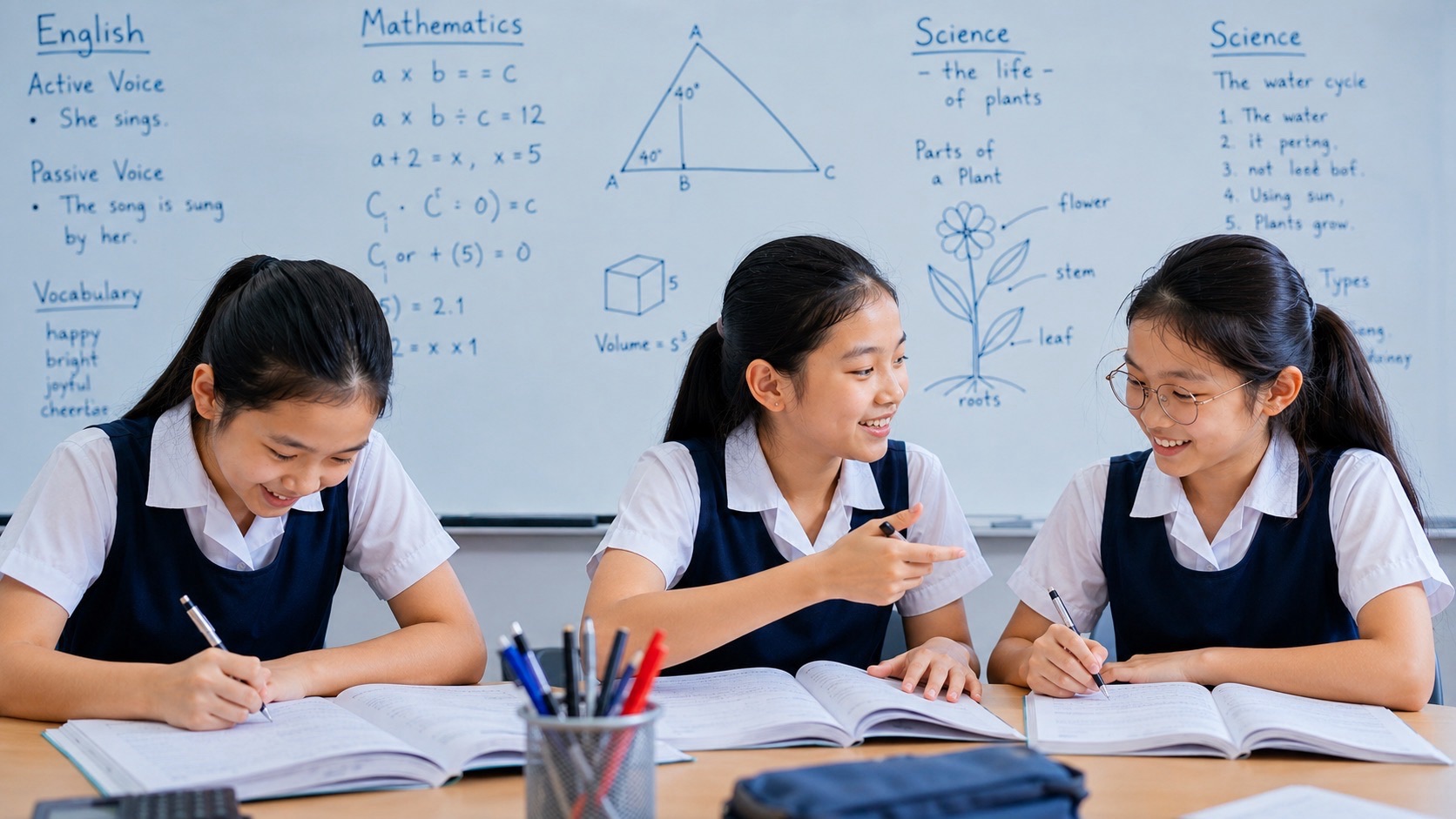
Three children may observe the same event and describe different details. Comparing those observations teaches that evidence can be checked and refined. The group remains small enough for every learner to justify a prediction or classification.
Choa Chu KangOS Carries the Local Context
The wider place story belongs in Choa Chu KangOS. This page remains deliberately focused on the pre-P3 scientific habits that support later formal Science.
What Improvement Should Look Like
Improvement should look like more disciplined curiosity. The child distinguishes what was seen from what was guessed, compares using the same property, makes checkable predictions and changes an explanation when evidence requires it.
Continue through the tuition network: Tuition Programmes Directory · Programmes & Locations · West Singapore Tuition Directory · eduKateSingapore Hub.