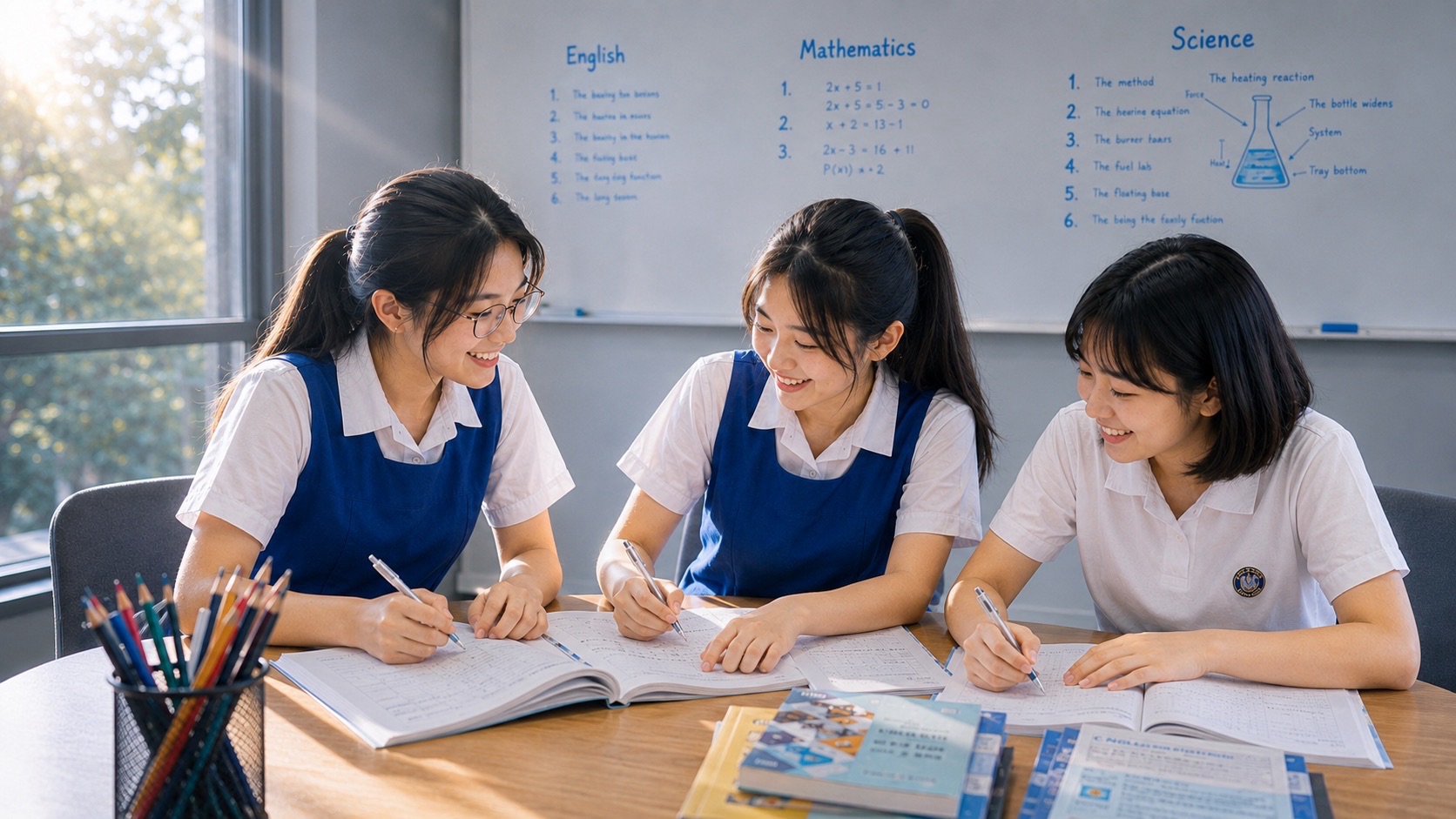
Primary 2 English Tuition

Primary 2 English Tuition

The advantages of Primary 2 English Tuition download free pdf here.

Primary 2 English Tuition is designed to build on the foundational skills acquired in Primary 1, further developing a child’s proficiency in the English language. At this stage, tuition focuses on enhancing vocabulary, grammar, reading comprehension, and writing skills, ensuring that students are well-prepared for more complex academic challenges ahead.

Key Areas of Focus:

  1. Vocabulary Expansion:
    • In Primary 2, students begin to expand their vocabulary, learning more words and their meanings. Tuition sessions often include exercises that help students understand and use new vocabulary in sentences, improving both their written and spoken English.
  2. Grammar and Sentence Structure:
    • Students are introduced to more complex sentence structures and grammar rules. Tuition helps reinforce these concepts, ensuring that students can form coherent sentences and understand the basics of English grammar, which are crucial for writing and comprehension.
  3. Reading Comprehension:
    • At this level, students work on understanding longer and more complex texts. Tuition sessions focus on reading comprehension strategies, helping students to identify key ideas, understand the context, and answer questions based on the text.
  4. Creative Writing:
    • Creative writing is an important part of the Primary 2 curriculum. Tuition provides students with opportunities to practice writing stories, descriptions, and essays, encouraging them to express their ideas clearly and creatively.
  5. Spelling and Phonics:
    • Continued emphasis on spelling and phonics helps students improve their reading and writing accuracy. Tuition often includes spelling tests, phonics exercises, and practice with tricky words to build confidence and proficiency.

Benefits of Primary 2 English Tuition:

  • Individualized Learning:
    • Tuition offers personalized attention, allowing tutors to focus on areas where the student may need additional help. This individualized approach ensures that each child progresses at their own pace, addressing specific challenges and strengths.
  • Preparation for Higher Levels:
    • By reinforcing key concepts and skills, Primary 2 English tuition prepares students for the increasing academic demands of the upper primary levels. It sets the stage for success in future exams and overall academic performance.
  • Boost in Confidence:
    • Regular practice and positive reinforcement in a tuition setting can significantly boost a child’s confidence. As they become more comfortable with English, they are more likely to participate actively in class and take on new challenges.

Primary 2 English Tuition is an essential step in a child’s education, helping to solidify their understanding of English and build the skills necessary for future success.

Overview

  • Enhancing English Skills
  • Effective Learning Methods
  • Preparing for Success
  • Constructive Actions
  • Underlying Reasons for Tuition
  • The transition from Primary 1 to Primary 2 marks a significant leap in a child’s academic journey.
  • Primary 2 English expands upon the fundamentals learned in Primary 1, introducing more complex grammatical structures, vocabulary, and reading and writing skills.
  • The curriculum in Primary 2 English is designed to lay a robust foundation for future learning, setting the stage for success in Primary and PSLE English.
  • Key learning objectives in Primary 2 English include enhanced reading comprehension, developing writing skills, improved spoken English proficiency, and deeper grammatical understanding.
  • Primary 2 English Tuition can support students by reinforcing school-taught concepts, providing additional practice, and addressing learning gaps early on.
  • Review from student Oliver from Anglo-Chinese School (Primary):
    English used to be hard. But my eduKate teacher makes it easy and fun! I feel smart now.
  • Review from parent Ms. Serene Tan, Parent of P2 Student from Kong Hwa School:
    The dedication of eduKate’s Primary 2 English Tutor is really heartwarming. They’ve turned my daughter’s fear of English into a newfound love. Big thanks!

Primary 2 English Tutors with eduKate Small Groups English Tutors: Mastering, Learning, and Preparing

Hi there! I’m Kate, and I’m excited to share my journey of mastering English with the help of my amazing tutors at eduKate Singapore. I’m a Primary 2 student at a top school in Singapore, and while school is super fun, it can sometimes be a bit overwhelming. But that’s where my small group English tuition with eduKate comes in. They’ve helped me not just learn but truly understand and master English. Let me take you through the steps that got me there.

It all started when I joined eduKate Singapore. My tutors introduced me to the Fencing Method, and at first, I was a bit confused. I thought fencing was just a sport! But then I learned that the Fencing Method in English is about building up our skills step by step, like putting up a strong fence. We started with simple sentences and gradually made them more complex, adding flair and detail as we went along. My tutors used AI tools to help me see where I could improve, giving me instant feedback and suggestions on how to make my sentences even better. This method made learning fun and engaging, and it helped me see how everything fits together, just like pieces of a puzzle.

As I continued my lessons, I realized that it wasn’t just about learning to write better sentences. My tutors encouraged me to really understand what I was learning. They taught me how to think critically and analyze the texts we were reading. For example, when we read a story, we didn’t just focus on the plot. We looked at the characters, their motivations, and the themes of the story. This deeper understanding helped me connect with the material in a way I never had before.

Once I had a good grasp of the material, it was time to memorise it. But memorisation at eduKate isn’t about cramming or repeating things over and over. My tutors showed me how to use mind maps and flashcards to remember important vocabulary and concepts. We even created songs and rhymes to make it easier to remember tricky words. This way, learning became something I could enjoy and look forward to.

Testing what I’ve learned was the final step in my journey. But instead of being scared of tests, I learned to see them as opportunities to showcase what I knew. eduKate Singapore taught me how to prepare for tests using the S-curve, which shows that learning starts slowly, then speeds up, and finally levels off as you master the material. Understanding this curve helped me stay motivated, especially when things felt difficult at first. My tutors also explained Metcalfe’s Law, which helped me see how every new thing I learned connected with what I already knew, making my overall knowledge stronger and more valuable.

One of the most important things I learned during my time at eduKate was the importance of studying hard for the future. My tutors often talked about how the world is changing rapidly, especially with AI and technology transforming everything around us. They emphasized that being prepared for these changes means mastering the skills we learn now. They helped me understand that studying hard isn’t just about passing exams; it’s about building a foundation for the future. By studying English with eduKate, I’m not just learning a language—I’m preparing myself for a world where communication and critical thinking are key.

Through this journey, I’ve also learned the importance of being a holistic learner. My tutors taught me to embrace every challenge with a positive attitude, to see mistakes as opportunities to grow, and to approach learning with curiosity and enthusiasm. They helped me see that education is not just about academics; it’s about developing as a person. I’ve learned to be resilient, adaptable, and fearless in the face of challenges, all thanks to the support and guidance I’ve received at eduKate.

As I continue my journey, I’m excited to keep building on what I’ve learned, using the Fencing MethodAI, the S-curve, and Metcalfe’s Law. I know that with these tools, I can face any challenge that comes my way. And most importantly, I’ve learned that studying hard today is the key to a bright and successful future tomorrow. So here’s to learning, growing, and mastering the art of English with eduKate Singapore!

Advantages of Primary 2 English Tuition in Small Groups

1. Personalized Attention with Social Interaction

  • Small group tuition strikes a balance between personalized learning and social interaction. Each student receives more individual attention than they would in a typical classroom, allowing the tutor to address specific learning needs. At the same time, students benefit from interacting with their peers, which can enhance their communication skills and encourage collaborative learning.

2. Increased Engagement and Participation

  • In a small group setting, students are more likely to participate actively in lessons. The smaller class size reduces the pressure of speaking up and allows each student to contribute more frequently. This active participation helps reinforce learning and builds confidence in using English, both in speaking and writing.

3. Targeted Support and Feedback

  • Small groups enable tutors to provide more detailed and timely feedback to each student. Whether it’s correcting grammar, refining writing techniques, or improving reading comprehension, the tutor can give focused support that directly addresses the student’s areas of difficulty. This targeted feedback is crucial for continuous improvement and helps students master English skills more effectively.

4. Fostering a Collaborative Learning Environment

  • Learning in small groups fosters a sense of camaraderie among students. They can work together on exercises, share ideas during creative writing tasks, and support each other in understanding challenging concepts. This collaborative environment not only makes learning more enjoyable but also encourages students to learn from each other, enhancing their overall understanding.

5. Building Confidence through Peer Support

  • The close-knit nature of small group tuition allows students to build strong relationships with their peers. This supportive environment can boost a child’s confidence as they receive encouragement not just from the tutor but also from their classmates. This mutual support helps students feel more secure in their learning, leading to increased participation and a willingness to take on new challenges.

6. Flexible Pacing

  • Small group tuition allows the tutor to adjust the pace of lessons according to the group’s overall progress. If the group grasps a concept quickly, they can move on to more advanced topics. Conversely, if the group needs more time to understand a particular concept, the tutor can slow down and ensure everyone is on the same page before proceeding. This flexibility ensures that no student is left behind.

7. Cost-Effective Option

  • Compared to one-on-one tutoring, small group tuition is often more affordable while still offering a high level of personalized attention. Parents can access quality tuition for their children without the higher costs associated with private lessons, making it a cost-effective solution for many families.

8. Preparation for Collaborative Learning in School

  • Small group tuition mirrors the collaborative learning environments that students will encounter in school and later in life. By learning to work effectively with others in a small group, students develop important teamwork skills that will be beneficial in their academic journey and beyond.

Overall, Primary 2 English Tuition in Small Groups offers a supportive, engaging, and cost-effective learning environment that combines the benefits of personalized attention with the advantages of peer interaction. This approach not only strengthens a child’s English skills but also prepares them for future academic and social success.

Integrating AI and The Fencing Method with Primary 2 English Tuition in Small Groups

Incorporating AI into Primary 2 English Tuition in Small Groups can significantly enhance the learning experience by making it more interactive, personalized, and effective. By leveraging AI tools like ChatGPT and integrating them with the Fencing Method and eduKate Singapore’s four steps of learning, we can create a robust learning process that not only improves language skills but also fosters critical thinking. Here’s how:

1. Enhancing The Fencing Method with AI and ChatGPT Prompts

The Fencing Method is a strategic approach to teaching English that involves gradually increasing the complexity of sentence structures. By integrating AI, specifically through ChatGPT prompts, tutors can generate personalized prompts that align with each student’s current learning level. For example, after a basic sentence structure is introduced, AI can provide prompts that encourage students to add descriptive words, conjunctions, or more complex clauses. This method helps students progressively master sentence construction, which is essential for both writing and comprehension.

For more on the Fencing Method, visit The Fencing Method for Primary English.

2. Applying the Four Steps of Learning with AI

eduKate Singapore emphasizes a structured approach to vocabulary and language learning through four key steps: Learn, Understand, Memorize, and Test. AI can significantly enhance each of these steps:

  • Learn: AI can introduce new vocabulary in context through interactive vocabulary lists, making the learning process more engaging. ChatGPT can generate sentences or short stories that incorporate these words, helping students understand how to use them effectively.
  • Understand: Through targeted exercises, AI can help students apply new vocabulary and sentence structures in various contexts. For instance, creative writing materials can be used to prompt students to write stories or essays that incorporate newly learned concepts.
  • Memorize: AI-driven quizzes can be tailored to focus on areas where students need more practice. These quizzes adapt to the student’s progress, ensuring that they retain the vocabulary and grammar rules they’ve learned.
  • Test: Finally, ChatGPT can simulate test scenarios by generating exam-style questions that help students prepare for assessments. This practice is crucial for reinforcing knowledge and building confidence.

Learn more about the four steps of vocabulary learning.

3. Leveraging the S-Curve and Metcalfe’s Law in Education

The S-curve, as explained by eduKate Singapore, represents how learning accelerates after an initial slow phase. By using AI, students can move up the S-curve more efficiently through personalized feedback and adaptive learning. For example, as students practice using new vocabulary or sentence structures, AI can identify areas where they excel and where they need more practice, allowing the tutor to adjust the pace of the lesson accordingly.

Explore more about the S-curve in education.

Metcalfe’s Law states that the value of a network increases as more connections are made. In an educational context, this means that as students make more connections between different pieces of knowledge, their overall understanding deepens. AI can facilitate these connections by linking new vocabulary or concepts to previously learned material, reinforcing the interconnectedness of language skills.

Read about Metcalfe’s Law in education.

4. Fostering Critical Thinking and a Strong Reason to Study Hard

By incorporating complex, real-world scenarios into learning, AI helps students apply their knowledge in new ways, fostering critical thinking. For example, ChatGPT can simulate debates or discussions on topics relevant to their curriculum, challenging students to think critically and articulate their thoughts clearly.

This approach not only prepares students for exams but also equips them with the skills needed for future challenges. Understanding the importance of studying hard, especially in the context of an AI-driven world, becomes clear. For a deeper dive into the reasons to study hard in this era, see Why it’s important to study hard.

Come join eduKate Primary 2 English Tuition

By integrating AI, the Fencing Method, and eduKate Singapore’s four steps of learning, Primary 2 English Tuition in Small Groups can provide a comprehensive and effective educational experience. This approach not only enhances language skills but also promotes critical thinking and prepares students for the challenges of the future. Parents interested in leveraging these advanced strategies for their child’s education can learn more by visiting eduKate Singapore.

Tuition Rates and Packages Summary:

  • Part-Time Tutors:
    • P1-P3: $25-$35/h
    • P4: $31-$44/h
    • P5-P6: $30-$40/h
  • Full-Time Tutors:
    • P1-P3: $35-$45/h
    • P4: $44-$56/h
    • P5-P6: $40-$50/h
  • Ex/Current MOE Teachers:
    • P1-P3: $50-$70/h
    • P4: $63-$88/h
    • P5-P6: $60-$80/h
  • Professional Tutors:
    • P1-P2: $80-$100/h
    • P3: $90-$100/h
    • P4: $92-$110/h
    • P5: $100-$140/h
    • P6: $100-$190/h

Why eduKate Teaches Primary 2 English Tuition in Small Groups

At eduKate Singapore, we recognize that Primary 2 English tuition is a critical stage in a child’s educational journey. Teaching in small groups allows us to provide personalized attention and create a collaborative learning environment that is essential for academic success. Here’s how our approach benefits students and ties into the workings of the mind and the development of critical thinking skills:

1. Personalized Attention and Collaborative Learning

In a small group setting, each student receives the personalized attention they need to address their unique challenges. This ensures that every child is engaged and can participate actively in lessons, which is crucial for reinforcing language skills and building confidence. The small group environment also encourages collaborative learning, where students learn from each other, share ideas, and develop teamwork skills. This interaction fosters a deeper understanding of the material and helps students apply their knowledge in various contexts.

2. How the Mind Works and the Development of Critical Thinking Skills

At this stage, a child’s mind is incredibly receptive to learning, and the way we structure our lessons at eduKate is designed to take full advantage of this. By introducing concepts gradually and reinforcing them through repetition and varied application, we ensure that the knowledge is not only retained but also understood at a deeper level. This approach helps in developing critical thinking skills as students are encouraged to question, analyze, and apply what they have learned in different scenarios.

3. Tying into Metcalfe’s Law

Metcalfe’s Law, which states that the value of a network increases as the number of connections grows, applies directly to our teaching philosophy. In a small group setting, each student has more opportunities to connect new ideas with previously learned concepts, both from the tutor and from their peers. This network of interconnected knowledge helps to deepen understanding and retention. As students discuss and explore ideas together, they build a stronger foundation that benefits all aspects of their education.

For a more detailed understanding of how this principle applies to education, explore Metcalfe’s Law in education.

4. The S-curve and Accelerated Learning

The S-curve illustrates how learning accelerates after an initial period of slow progress. By providing targeted support in small groups, we help students navigate the early, slower part of the S-curve more effectively. Once they grasp the basics, their learning accelerates rapidly, leading to higher levels of achievement. Our approach ensures that no student is left behind, and everyone progresses smoothly up the S-curve to reach their full potential.

To learn more about the S-curve in the context of education, visit The S-curve and education.

eduKate Singapore teaches Primary 2 English in small groups because it is a highly effective way to provide personalized attention, foster collaborative learning, and build the confidence students need to succeed. By understanding how the mind works and leveraging principles like Metcalfe’s Law and the S-curve, we ensure that our students not only learn but also develop the critical thinking skills necessary for future success. This approach is not just about academic achievement; it’s about preparing students to excel in all aspects of their lives.

Primary 2 English Tutorials and The Need for Tutors

Research on the importance of Primary 2 English tutorials and the need for tutors highlights several critical findings. Studies emphasize the significant role that tutors play in enhancing language skills, particularly in early education. Tutors provide personalized instruction that helps address individual student needs, which is often challenging in larger classroom settings. This personalized approach is vital for building foundational skills in English, such as vocabulary, grammar, and reading comprehension, all of which are crucial for a student’s academic success.

Moreover, the integration of Artificial Intelligence (AI) in tutoring has shown promising results in further improving educational outcomes. AI tools, such as Intelligent Tutoring Systems (ITS), offer customized learning experiences by adapting to each student’s learning pace and style. These systems provide real-time feedback, helping students grasp complex concepts more effectively. The application of AI in language learning is particularly impactful, as it can simulate conversations, provide pronunciation feedback, and offer practice exercises tailored to individual needs, thereby enhancing both comprehension and communication skills.

The effectiveness of AI in language education is further supported by research that examines the role of AI in creating more engaging and interactive learning environments. AI-driven platforms can use data-driven learning and natural language processing to offer dynamic educational experiences that go beyond traditional teaching methods. These technologies are not only changing the way language is taught but are also making it more accessible and personalized for young learners.

For more detailed studies and discussions on the importance of tutors and the role of AI in education, you can explore the following resources:

These journals provide comprehensive insights into the benefits of personalized tutoring and the transformative potential of AI in education, particularly in the context of language learning for young students.

Problems Faced by Primary 2 English Students

  1. Vocabulary Development: At this age, students might find it challenging to understand and remember new words, leading to limited vocabulary.
  2. Sentence Construction: Forming coherent and grammatically correct sentences can be a hurdle for many Primary 2 students.
  3. Reading Comprehension: Students might read words but struggle to understand the context, main ideas, and details of a passage.
  4. Writing Coherently: Expressing thoughts on paper in a structured manner is a common challenge.
  5. Pronunciation: With new words comes the challenge of pronouncing them correctly.
  6. Listening Skills: Understanding spoken English, especially if spoken fast or with an unfamiliar accent, can be difficult.
  7. Confidence in Speaking: Many students may feel shy or lack confidence to speak in English, fearing mistakes.
  8. Grasping Grammar Rules: Basic grammar rules, like verb tenses or subject-verb agreement, might confuse students.
  9. Attention Span: At this age, maintaining focus for extended periods can be a challenge, affecting learning efficiency.
  10. Homework Management: Juggling homework assignments and understanding what’s expected in each can be overwhelming.

Summary Table:

ChallengesDescription
Vocabulary DevelopmentDifficulty in understanding and remembering new words.
Sentence ConstructionChallenges in forming grammatically correct sentences.
Reading ComprehensionStruggling to grasp context and details of a text.
Writing CoherentlyDifficulties in expressing thoughts in a structured manner.
PronunciationIssues in pronouncing new words correctly.
Listening SkillsProblems in understanding spoken English.
Confidence in SpeakingHesitation or shyness to speak out loud.
Grasping Grammar RulesConfusion with basic grammar rules.
Attention SpanDifficulty in focusing for longer durations.
Homework ManagementOverwhelm with managing and understanding assignments.

Addressing Problems with Primary 2 English Tuition

  1. Vocabulary Development:
    • Tutors can introduce fun and engaging vocabulary games.
    • Flashcards, story sessions, and word-a-day activities can be used to enhance word retention.
  2. Sentence Construction:
    • Grammar drills and exercises can be employed.
    • Daily journaling can also encourage students to practice sentence formation.
  3. Reading Comprehension:
    • Read-aloud sessions can improve understanding.
    • Discussion-based comprehension exercises, where tutors ask probing questions, can encourage deeper thinking.
  4. Writing Coherently:
    • Step-by-step guidance on constructing essays or short stories.
    • Peer review sessions where students critique each other’s work under tutor supervision.
  5. Pronunciation:
    • Phonetic exercises and tongue twisters can be fun ways to improve pronunciation.
    • Regular speaking exercises with corrections can be beneficial.
  6. Listening Skills:
    • Audio-visual tools, like podcasts or videos tailored for kids, can be used.
    • Following up with Q&A sessions can enhance listening comprehension.
  7. Confidence in Speaking:
    • Role-playing exercises or mock conversations can boost confidence.
    • Encouraging a positive and supportive classroom environment can make students more willing to speak.
  8. Grasping Grammar Rules:
    • Interactive grammar games and quizzes can make learning fun.
    • Regular drills and feedback ensure the concepts are reinforced.
  9. Attention Span:
    • Breaking sessions into chunks with short breaks or interactive activities can maintain interest.
    • Using multimedia tools like videos or software apps can captivate attention.
  10. Homework Management:
  • Organizational skills workshops can be introduced.
  • Providing a clear homework structure and occasionally checking student’s assignment routines.

Summary Table:

ChallengesSolutions with Primary 2 English Tuition
Vocabulary DevelopmentVocabulary games, flashcards, story sessions, word-a-day activities.
Sentence ConstructionGrammar drills, daily journaling.
Reading ComprehensionRead-aloud sessions, discussion-based exercises.
Writing CoherentlyStep-by-step guidance, peer review sessions.
PronunciationPhonetic exercises, tongue twisters, regular speaking practice.
Listening SkillsAudio-visual tools, Q&A sessions post-listening.
Confidence in SpeakingRole-playing, mock conversations, positive classroom environment.
Grasping Grammar RulesInteractive grammar games, quizzes, regular drills.
Attention SpanSession breaks, multimedia tools.
Homework ManagementOrganizational skills workshops, clear homework structure, routine checks.

Areas for Improvement and Strategies

Area for ImprovementStrategies to Improve
Reading ComprehensionEncourage regular reading habits, select a variety of books to broaden exposure to different texts, use online reading resources like Oxford Owl.
Writing SkillsPractice writing short, structured paragraphs regularly, use creative writing prompts, provide constructive feedback on writing tasks.
Spoken English ProficiencyEncourage regular conversations in English, role-play scenarios, use online resources like the British Council for oral practice.
Grammatical UnderstandingUse interactive grammar exercises, consistent practice of different grammatical structures, use tuition or online resources like Khan Academy for additional

Enhancing English Skills Through Primary 2 English Tuition

Primary 2 English Tuition provides an opportunity to hone in on a child’s English skills, facilitating their academic growth and development. Tuition centres utilize various pedagogical approaches to create an engaging and immersive learning experience. Interactive storytelling sessions, spelling bees, and grammar workshops form part of the curriculum, stimulating the young learners’ curiosity and interest in the language.Also, children get personalized attention and guidance, catering to their unique learning needs and pace. This individualised attention is beneficial for comprehension and can foster a deep understanding of the language.

Effective Learning Methods in Primary 2 English Tuition

The methodology employed in Primary 2 English tuition is dynamic, innovative and, most importantly, child-friendly. Instead of rote learning, tutors utilise interactive teaching strategies to facilitate active learning. Role-plays, group discussions, creative writing exercises, and gamified grammar lessons are some of the teaching methods used to make the learning process enjoyable and effective.In addition, homework assignments reinforce what students learn during their sessions. These assignments, which can include reading exercises, writing practice, and vocabulary building tasks, help to consolidate the learner’s understanding of English.For a rich online resource that complements these techniques, Oxford Owl offers an expansive e-library and interactive games that can greatly assist in nurturing English language skills at home.

Cohesive Learning Experience with Primary 2 English Tuition

Creating a cohesive learning experience in Primary 2 English tuition by tying vocabulary and sentence structure exercises to a consistent theme is a highly effective strategy for reinforcing language skills and aiding long-term retention. This approach allows students to make clearer connections between different aspects of language use, leading to a deeper understanding and mastery of English.

1. Thematic Vocabulary and Sentence Structure

By selecting a consistent theme, such as “The Environment,” and integrating it across vocabulary and sentence structure exercises, students can see how different elements of language connect within a meaningful context. For example, students might learn words like “forest,” “recycle,” and “pollution” and then use these in various sentence structures. This repeated, contextual use of vocabulary helps to solidify their understanding and ensures that the knowledge is retained over the long term.

2. Research and Evidence Supporting Cohesive Learning

Research highlights the importance of vocabulary cohesion in language learning, particularly in primary education. According to a study published in International Research in Education, cohesive vocabulary teaching significantly impacts students’ ability to learn and retain new language skills. When vocabulary teaching is integrated cohesively within a thematic context, it enhances students’ efficiency in learning and using the language in different aspects like listening, speaking, reading, and writing.

Additionally, cohesive learning experiences that integrate vocabulary and sentence structure into a consistent theme help improve the retention of language skills over time, as supported by findings in Services for Education. These studies suggest that thematic and cohesive approaches in teaching are not only beneficial for immediate learning outcomes but also for long-term language retention.

3. Practical Application

To implement this approach in Primary 2 English tuition, educators can design lessons around themes relevant to the students’ experiences and interests. This thematic approach, combined with structured repetition and application in different contexts, ensures that students not only understand the language but can also use it effectively and confidently.

For further reading and detailed studies, you can explore the following resources:

Preparing for Success with Primary 2 English Tuition

Primary 2 English tuition sets a solid foundation for future academic endeavors, including PSLE. It equips students with the necessary linguistic skills, such as vocabulary, grammar, comprehension, and composition. These are vital for children to articulate their thoughts effectively and excel in their schoolwork.Preparation also involves regular assessments and progress tracking to identify strengths and areas for improvement. Tutors provide valuable feedback, helping students refine their language skills and guiding them on their learning journey.The British Council website provides helpful resources, including English learning tips and practice papers, which can be instrumental in aiding a child’s preparation.

Constructive Actions Parents Can Take

Parents play a crucial role in their child’s education, and there are many ways they can support their child’s learning outside of Primary 2 English tuition. Encouraging regular reading habits can significantly enhance vocabulary and comprehension skills. Parents can help their children select books, creating a stimulating and diverse reading list. Engaging children in conversation, especially in English, is another effective way to improve their language skills. Parents can also support homework tasks, ensuring their child understands the assignment and providing assistance when needed. Tools such as the International Children’s Digital Library offer a plethora of digital books that can help parents foster their child’s reading interest.

Understanding the Reasons for Primary 2 English Tuition

The benefits of Primary 2 English Tuition extend beyond the classroom. Good English proficiency is essential in today’s interconnected world. Not only does it help in academic excellence, but it also opens doors to diverse opportunities in higher education and career growth.Moreover, early tuition helps to build confidence and reduces the pressure on students. By addressing learning gaps at an early stage, children are better equipped to tackle future academic challenges.Lastly, English tuition enhances critical thinking and creativity. With a strong focus on comprehension and composition, children learn to analyze situations and express their thoughts effectively.

Primary 2: The Foundation of Primary and PSLE English

As children navigate their journey through primary school, each year plays a critical role in shaping their academic abilities and overall development. In this context, the importance of Primary 2 English cannot be overstated. This crucial year is when children transition from their initial educational experiences in Primary 1 to a more structured learning environment. This article aims to shed light on how Primary 2 English lays the foundation for primary and PSLE English, highlighting the progress made from Primary 1.

From Primary 1 to Primary 2: A Significant Leap

At the tender age of seven, children find themselves transitioning from the initial stages of formal schooling in Primary 1 to a more advanced level of learning in Primary 2. In Primary 1, the main focus lies in familiarizing children with the basics of the English language, which includes phonics, simple vocabulary, sentence construction, and foundational reading skills.However, moving into Primary 2, these fundamentals are significantly expanded upon. Children are introduced to more complex grammatical structures, more advanced vocabulary, and enhanced reading and writing skills. This shift not only deepens their understanding of the English language but also prepares them for the challenges of later primary years.

Building Blocks for Future Learning: The Primary 2 Curriculum

The Primary 2 English curriculum is designed to lay a robust foundation for future learning, paving the way for success in the Primary School Leaving Examination (PSLE) English paper. The key learning objectives for Primary 2 English include:

  1. Enhanced Reading Comprehension: At this stage, students move beyond simple texts to reading more complex stories and informational texts. This development aids in improving comprehension skills, crucial for future academic success.
  2. Developing Writing Skills: Children are taught to write short, structured paragraphs, and begin to express their thoughts and ideas more clearly. This forms the foundation for more advanced writing tasks in later years.
  3. Spoken English Proficiency: Primary 2 students are encouraged to converse in English more frequently, aiding in the development of their oral communication skills, which are a critical part of the PSLE English examination.
  4. Grammatical Understanding: Children start learning more complex grammatical structures, which are essential for developing fluency and accuracy in the language.

Bridging the Gap with Primary 2 English Tuition

Given the significant leap in the complexity of the English language curriculum from Primary 1 to Primary 2, Primary 2 English Tuition can be immensely helpful. It supports students by reinforcing what is taught in school, providing additional practice, and addressing any learning gaps early on. By providing personalised attention, tutors can effectively cater to a child’s unique learning pace, fostering a deeper understanding of the subject. Also, through consistent assessments and feedback, they can identify areas of improvement, paving the way for academic success in subsequent years.

Tuition Rates and Packages for Primary 2 English Tutor

Here’s the updated breakdown of tuition rates across various tutor categories, including the category for professional tutors:

Tutor TypeP1P2P3P4P5P6
Part-Time Tutors$25-$35/h$25-$35/h$25-$35/h$31-$44/h$30-$40/h$30-$40/h
Full-Time Tutors$35-$45/h$35-$45/h$35-$45/h$44-$56/h$40-$50/h$40-$50/h
Ex/Current MOE Teachers$50-$70/h$50-$70/h$50-$70/h$63-$88/h$60-$80/h$60-$80/h
Professional Tutors$80-$100/h$80-$100/h$90-$100/h$92-$110/h$100-$140/h$100-$190/h

Tuition Rates and Packages

Dive into our wide spectrum of tutors in Singapore and understand the associated fee structures:

Part-Time Tutors:

Perfect for parents looking for tutors who can easily relate to younger students. These are often university goers or professionals who tutor during their leisure, infusing sessions with a contemporary touch.

Full-Time Tutors:

Meet Singapore’s dedicated battalion of educators who’ve chosen teaching as their prime vocation. With rich experience under their belts, they are well-acquainted with the Singaporean Primary 2 curriculum. They ensure systematic, well-organized lessons and have a history of transforming students into achievers.

Ex/Current MOE Teachers:

These are the stalwarts with hands-on experience in Singaporean academic institutions. Trained at NIE, they are armed with teaching methodologies tailored for large classroom setups. Their experience translates to an acceptable understanding of the curriculum and effective strategies tailored for Primary 2 English.

Professional Tutors:

The creme de la creme of our tutor portfolio. These are distinguished educators with specialised qualifications, often combined with international teaching stints. Engaging a professional tutor implies opening doors to a world-class Primary 2 English education. They have a history of crafting distinction achievers and guiding them to prestigious institutions. They stand as the gold standard for those aiming for an unparalleled educational experience.

Critical Thinking Skills Acquisition in eduKate’s Small Groups English Tuition

At eduKate Singapore, our Small Groups Primary 2 English Tuition program is designed not only to strengthen language skills but also to significantly enhance students’ critical thinking abilities. Critical thinking is an essential skill that allows students to analyze, evaluate, and synthesize information, leading to clearer thought processes and the ability to generate new ideas. By integrating effective teaching strategies, we aim to cultivate these skills early in students’ academic journeys.

How We Enhance Critical Thinking Skills

1. Creating a Thought-Provoking Environment: Our tuition sessions are structured to encourage questioning, debating, and problem-solving. This approach is supported by research, which highlights that critical thinking thrives in environments where students are actively engaged in discussions and are encouraged to explore different perspectives. Such an environment helps students challenge their preconceptions and develop well-informed, logical conclusions.

2. Using Bloom’s Taxonomy Framework: We apply strategies rooted in Bloom’s Taxonomy, guiding students through stages of cognitive progression from basic knowledge to higher-order thinking skills like analysis and evaluation. By following a structured approach, students gradually build their critical thinking abilities, which are essential for mastering complex language tasks and for their overall cognitive development.

3. Integrating Critical Thinking into Language Learning: According to studies, integrating critical thinking into English language learning not only improves linguistic abilities but also enhances students’ reading comprehension and classroom engagement. For instance, one study demonstrated that a critical thinking intervention program significantly improved English language learners’ reading comprehension and their attitudes towards learning, proving the effectiveness of such an approach in education.

Here is a table that outlines the different types of critical thinking skills and how we promote them in Primary 2 English Tuition at eduKate Singapore.

Critical Thinking SkillDescriptionHow We Promote It in Primary 2 English Tuition
AnalysisThe ability to break down information into parts to understand it better.We encourage students to dissect sentences and passages to identify main ideas, themes, and supporting details. This is done through activities like reading comprehension exercises and group discussions.
EvaluationAssessing the credibility and relevance of information, and making judgments based on evidence.Students are asked to compare different texts or statements and evaluate which is more logical or credible. This helps them develop reasoning skills by supporting their conclusions with evidence.
InferenceDrawing conclusions from evidence and reasoning.We teach students to make inferences by predicting outcomes or inferring meanings from context in stories or texts. This is reinforced through guided reading sessions where they must interpret clues from the text.
InterpretationUnderstanding and explaining the meaning of information or actions.We promote interpretation skills by having students paraphrase texts, summarize stories, and explain the meaning of new vocabulary in their own words. This helps them to internalize and express their understanding.
ExplanationThe ability to clearly and logically explain ideas or reasons for decisions.Students are encouraged to explain their answers during lessons, particularly in group settings where they must articulate their thought process to peers. This builds clarity and precision in their communication.
Self-RegulationReflecting on one’s own beliefs, values, and decisions; adjusting thinking when necessary.We incorporate reflective exercises where students review their work and consider how they arrived at their conclusions. This encourages them to think about their thinking and improve their problem-solving strategies.
Creative ThinkingGenerating new ideas, approaches, and solutions.Through creative writing tasks, students are prompted to think imaginatively and develop original stories or solutions to problems. This helps to foster creativity alongside critical thinking.
Problem-SolvingIdentifying, analyzing, and solving problems effectively.Students engage in problem-solving activities, such as story-based challenges or language puzzles, where they must apply logical steps to reach a solution. This is often done in collaborative groups to encourage multiple approaches.

Promoting Critical Thinking in Primary 2 English Tuition

At eduKate Singapore, we integrate these critical thinking skills into every aspect of our lessons. By engaging students in activities that require them to analyze, evaluate, infer, and explain, we help them develop the ability to think independently and reason logically. Creative and problem-solving tasks are also incorporated to ensure that students not only learn but can also apply their knowledge in innovative ways. Through this approach, we aim to build a strong foundation for critical thinking that will benefit students throughout their academic careers and beyond.

For more detailed studies and resources on how critical thinking can be effectively developed in educational settings, you can explore the following articles:

These resources underline the importance of nurturing critical thinking skills in young learners, which is at the core of our educational philosophy at eduKate Singapore. By focusing on these skills, we prepare our students not only for academic success but also for the complex problem-solving demands of the future.

Testimonials

Finding your child’s ideal Primary 2 English tutor is a pivotal choice at eduKate Singapore. At the eduKate Tuition Center, we strive to pair children with the finest tutors, brimming with the expertise and zeal to elevate your child’s English prowess. Every Primary 2 English tutor at eduKate is selected not merely for their academic credentials but for their innate ability to resonate with young learners. Feedback and commendations from our previous students and their guardians are invaluable, offering a glimpse into our tutor’s efficacy and rapport-building skills.

Hear from our alums, sweetest babies ever and representing the beauties of our Singaporean schools:

Sophia from Nanyang Primary School:
My Primary 2 English Tutor at eduKate helps me understand English better. I like English more now and my marks are better too!


Lia from Raffles Girls’ Primary School:
My tutor at eduKate teaches me fun stuff about writing. English has become fun with her.


Oliver from Anglo-Chinese School (Primary):
English used to be hard. But my eduKate teacher makes it easy and fun! I feel smart now.


Mia from St. Nicholas Girls’ School:
My teacher at eduKate makes hard English words easy. I do better in my English homework now!


Ella from Tao Nan School:
With my Primary 2 English Tutor at eduKate, English lessons are super fun. My report card looks great!


Lucas from Rosyth School:
Reading stories and writing is so much fun with my tutor at eduKate. I like my English classes.


Nathan from Catholic High School (Primary):
I’ve been with eduKate since I was very little. My teacher helps me do great in English!


Emma from Methodist Girls’ School (Primary):
Every time I have an English lesson at eduKate, it feels like a new adventure. It’s so cool!


Zoe from CHIJ Primary (Toa Payoh):
I used to get mixed up with words. But my teacher at eduKate makes everything clear! English is fun now.


Jade from Pei Hwa Presbyterian Primary School:
Thanks to my eduKate teacher, I understand my English lessons in school so much better.


Lily from Singapore Chinese Girls’ Primary School:
When I learn with my eduKate teacher, everything seems easy-peasy. I can speak and write better English now!


Ethan from Red Swastika School:
I look forward to my English lessons at eduKate. We play fun games and learn a lot!


Isabella from Ai Tong School:
My Primary 2 English Tutor at eduKate has fun games and stories. I write better stories now!


Daniella from Maris Stella High School (Primary):
Learning English at eduKate feels like playing. And I’m getting really good at it!


Olivia from Kong Hwa School:
My teacher at eduKate is so nice and patient. I do great in my English tests now!


Reviews by Parents

Below are the same testimonials from our parents:

Mrs. Rachel Lee, Parent of P2 Student from St. Nicholas Girls’ School:
Choosing eduKate Singapore for our little one was the best choice. We see her smiling more when she talks about English. The Primary 2 English Tutor is so understanding and truly helps her grow.


Mr. Lim Teck Kua, Parent of P2 Student from Nanyang Primary School:
eduKate has been wonderful for us. Their tutors make English fun and my girl now reads his storybooks with enthusiasm. We can see how much better he’s become in English.


Ms. Serene Tan, Parent of P2 Student from Kong Hwa School:
The dedication of eduKate’s Primary 2 English Tutor is really heartwarming. They’ve turned my daughter’s fear of English into a newfound love. Big thanks!


Mr. Derek Ng, Parent of P2 Student from CHIJ Primary (Toa Payoh):
Our girl always shares stories from her eduKate English class. Learning has been made so enjoyable and effective by their tutors.


Mrs. Cindy Ho, Parent of P2 Student from Pei Hwa Presbyterian Primary School:
What sets eduKate apart is how they really get to know my gir’s needs in Primary 2 English. She enjoys her lessons and always practices what she learns at home.


Mdm. Siti N., Parent of P2 Student from Radin Mas Primary School:
My girl always looks forward to her English lessons at eduKate. Their tutors are gentle and they truly get children. She’s not only learning but truly enjoying.


Mr. & Mrs. Lawrence Goh, Parent of P2 Student from Ai Tong School:
Choosing eduKate for our son was a decision we’re proud of. They’ve made him enjoy English and he’s always eager to share his class stories with us.


Mrs. Valerie Chan, Parent of P2 Student from Maha Bodhi School:
At eduKate, their commitment to kids shines through. They’ve helped our P2 child enjoy English. It’s heartwarming to see him more confident in class discussions.


At eduKateSingapore.com, our mission is to cultivate not only academic understanding but also a genuine love for the English language in every child. Dive into our website or ring us at eduKate Tuition Centre to discover more about how we can help your child embrace and shine in English. We’re excited to be part of your child’s learning adventure! Click here to enrol at eduKateSingapore.com

Conclusion

Primary 2 English is a pivotal stage in a child’s academic journey, as it sets the foundation for success in primary and PSLE English. The skills developed in this year are crucial for a child’s future academic progression, making it an ideal time to invest in quality Primary 2 English Tuition. This investment can ensure that your child has a solid grounding in the language, ready to take on the challenges of the coming years with confidence.

Primary 2 English Tuition is a powerful tool that can unlock a child’s academic potential and contribute significantly to their overall development. With innovative teaching methods, diligent preparation, and supportive parental involvement, a strong English foundation can be established. Remember, investing in a child’s education is investing in their future. As a final note, be sure to take advantage of valuable resources like Khan Academy, which provides a wide range of English exercises that can further support your child’s learning journey.

We hope this article provides a clear understanding of the importance of Primary 2 English tuition and how it can positively impact your child’s academic journey. Happy learning!

Click here to enrol at eduKateSingapore.com