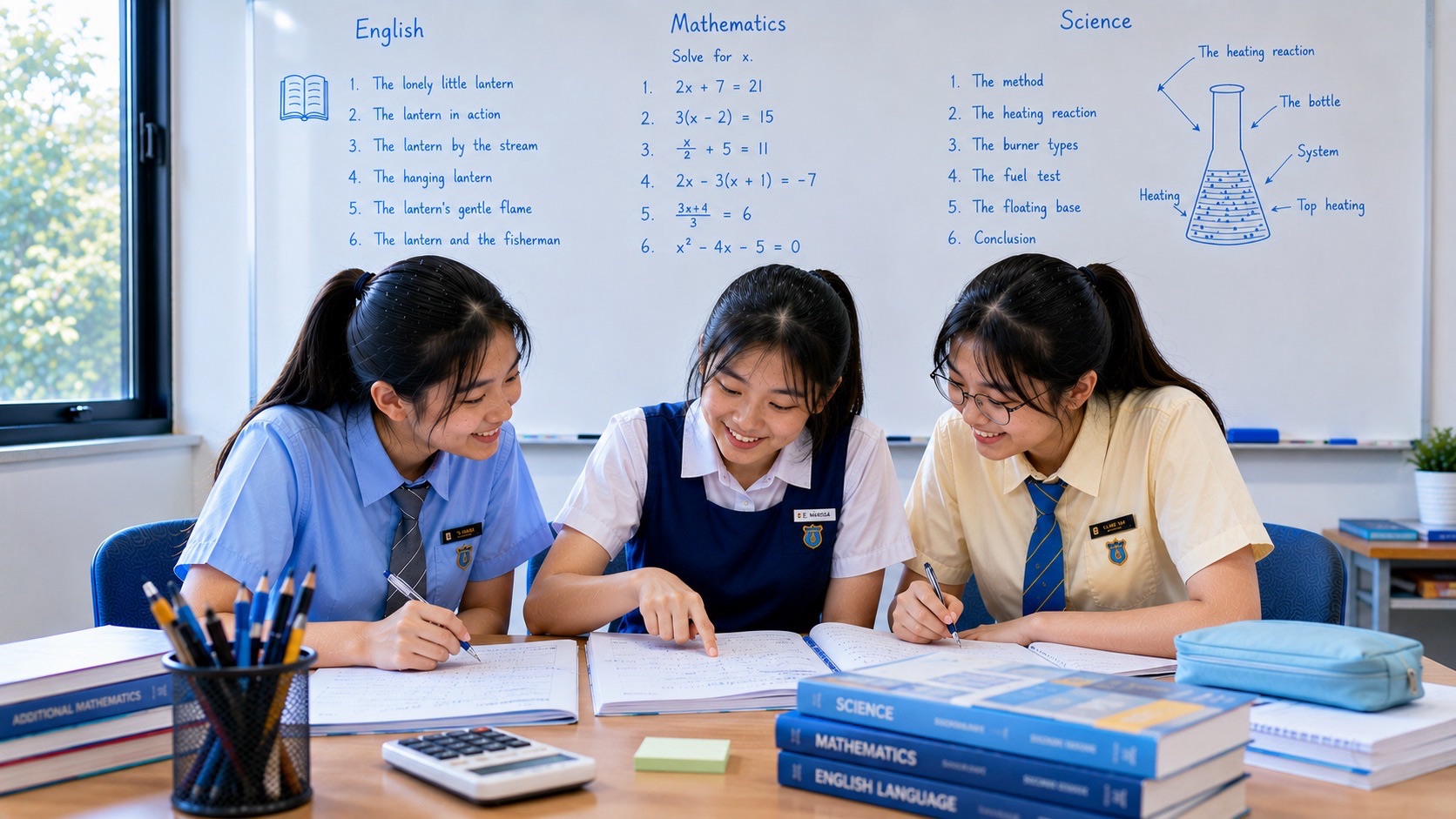
How to Excel in Secondary 2 Mathematics with Bukit Timah Tuition is a student operating manual for connecting the system before upper secondary. Secondary 2 is where separate lower-secondary techniques begin interacting more often. Algebra appears inside graphs and geometry. Fractions appear inside formulae. Ratio and rate appear inside word problems. Statistics requires both calculation and interpretation. Old Sec 1 knowledge must still be retrievable while new methods are added. The student who treats every chapter as a separate memory task carries too much cognitive load; the student who sees shared structures carries a smaller, more powerful system.
Under Full Subject-Based Banding, your Mathematics may be taken at G1, G2 or G3 subject level. That level describes the current subject demand; it is not a permanent identity. From 2027, students graduate under the Singapore-Cambridge Secondary Education Certificate, with Mathematics offered at G1, G2 and G3 levels. Your job in Sec 2 is therefore to make your current Mathematics reliable enough that future subject choices and upper-secondary demands are based on real readiness rather than panic, comparison or outdated stream labels.
The central proposition of this manual is: Secondary 2 Mathematics becomes easier when you connect algebra, representation, retrieval and checking into one operating system before Sec 3 adds more simultaneous complexity. That means keeping old topics alive, recognising relationships without chapter headings, building algebra that survives inside other topics, and becoming increasingly independent in homework, corrections and revision.
Alicia, Tricia and Kai Kai again represent three common operating styles. Alicia is fast but can lose signs or conditions. Tricia sees deep connections but sometimes takes too long. Kai Kai often knows enough but waits for confirmation. Sec 2 is a good year to fix those habits before upper-secondary stakes and workload rise.
50-Second Sec 2 Student Router
| If this sounds like you | Start here | Main habit |
|---|---|---|
| My algebra is fine until fractions appear | Fractions + algebra | Repair dependency, then reinsert |
| I can expand but not factorise | Reversible algebra | Treat factorisation as reverse expansion |
| Graphs feel separate from equations | Representation | Translate equation→table→graph |
| I forget Sec 1 topics | Retrieval | Weekly cumulative review |
| I do well topically, badly on mixed tests | Recognition | Remove chapter headings |
| I understand but work too slowly | Efficiency | Compress representation/working |
| I make sign mistakes | Control | Predict sign and align algebra |
| I rely on hints | Independence | Silent start + smaller prompts |
| I want to start A-Math early | Readiness | Secure current algebra first |
| I want to be ready for Sec 3 | Handoff | Audit algebra, graphs, geometry, retrieval |
Algebra as Infrastructure
algebra is no longer one chapter; it sits under many topics. A common Sec 2 mistake happens when students can simplify expressions but lose control inside graphs or geometry. Practise algebra inside multiple contexts, not only algebra worksheets. Infrastructure should work while attention is elsewhere.
After the method works once, alter the surface. Change numbers, representation, wording or unknown. If the same relationship still works, the knowledge is transferring. If not, the chapter may be memorised more narrowly than it feels.
Then return after a delay. Alicia should test precision, Tricia should test efficiency, and Kai Kai should test whether he can initiate without a hint. Sec 2 success means the system remains available when attention is divided across multiple topics.
Fractions Inside Algebra
fraction operations can become the hidden bottleneck. A common Sec 2 mistake happens when students blame algebra when denominators create the errors. Test and repair fraction operations separately, then return to the algebraic question. This is a classic high-connectivity dependency.
After the method works once, alter the surface. Change numbers, representation, wording or unknown. If the same relationship still works, the knowledge is transferring. If not, the chapter may be memorised more narrowly than it feels.
Then return after a delay. Alicia should test precision, Tricia should test efficiency, and Kai Kai should test whether he can initiate without a hint. Sec 2 success means the system remains available when attention is divided across multiple topics.
Expansion
distribution supports later factorisation and quadratics. A common Sec 2 mistake happens when students expand mechanically and lose signs. Predict term structure before multiplying. Clean expansion prevents future upper-secondary debt.
After the method works once, alter the surface. Change numbers, representation, wording or unknown. If the same relationship still works, the knowledge is transferring. If not, the chapter may be memorised more narrowly than it feels.
Then return after a delay. Alicia should test precision, Tricia should test efficiency, and Kai Kai should test whether he can initiate without a hint. Sec 2 success means the system remains available when attention is divided across multiple topics.
Factorisation
factorisation reverses expansion. A common Sec 2 mistake happens when students memorise patterns but do not recognise structure. Ask what common factor or product could have generated the expression. Reversibility reduces memorisation.
After the method works once, alter the surface. Change numbers, representation, wording or unknown. If the same relationship still works, the knowledge is transferring. If not, the chapter may be memorised more narrowly than it feels.
Then return after a delay. Alicia should test precision, Tricia should test efficiency, and Kai Kai should test whether he can initiate without a hint. Sec 2 success means the system remains available when attention is divided across multiple topics.
Formula Substitution
formulae require reading variables accurately. A common Sec 2 mistake happens when students substitute numbers into wrong positions. Create a variable-value map first. Clear mapping prevents symbol confusion.
After the method works once, alter the surface. Change numbers, representation, wording or unknown. If the same relationship still works, the knowledge is transferring. If not, the chapter may be memorised more narrowly than it feels.
Then return after a delay. Alicia should test precision, Tricia should test efficiency, and Kai Kai should test whether he can initiate without a hint. Sec 2 success means the system remains available when attention is divided across multiple topics.
Formula Rearrangement
relationships can be read in multiple directions. A common Sec 2 mistake happens when students transpose mechanically. Preserve equality through inverse operations. This is direct preparation for upper-secondary algebra.
After the method works once, alter the surface. Change numbers, representation, wording or unknown. If the same relationship still works, the knowledge is transferring. If not, the chapter may be memorised more narrowly than it feels.
Then return after a delay. Alicia should test precision, Tricia should test efficiency, and Kai Kai should test whether he can initiate without a hint. Sec 2 success means the system remains available when attention is divided across multiple topics.
Equations
equation solving is structured inverse reasoning. A common Sec 2 mistake happens when students know moves but cannot justify them. Explain one transformation per line and check by substitution. Verified algebra builds confidence.
After the method works once, alter the surface. Change numbers, representation, wording or unknown. If the same relationship still works, the knowledge is transferring. If not, the chapter may be memorised more narrowly than it feels.
Then return after a delay. Alicia should test precision, Tricia should test efficiency, and Kai Kai should test whether he can initiate without a hint. Sec 2 success means the system remains available when attention is divided across multiple topics.
Graphs
graphs, tables and equations represent one relationship. A common Sec 2 mistake happens when students treat plotting as a separate drawing task. Translate among all three forms. Graph literacy is a bridge to functions.
After the method works once, alter the surface. Change numbers, representation, wording or unknown. If the same relationship still works, the knowledge is transferring. If not, the chapter may be memorised more narrowly than it feels.
Then return after a delay. Alicia should test precision, Tricia should test efficiency, and Kai Kai should test whether he can initiate without a hint. Sec 2 success means the system remains available when attention is divided across multiple topics.
Gradient and Change
slope expresses how one quantity changes with another. A common Sec 2 mistake happens when students use formula without geometric meaning. Sketch rise/run and interpret sign. Gradient later matters in coordinate geometry and calculus.
After the method works once, alter the surface. Change numbers, representation, wording or unknown. If the same relationship still works, the knowledge is transferring. If not, the chapter may be memorised more narrowly than it feels.
Then return after a delay. Alicia should test precision, Tricia should test efficiency, and Kai Kai should test whether he can initiate without a hint. Sec 2 success means the system remains available when attention is divided across multiple topics.
Geometry Properties
geometry depends on properties rather than appearance. A common Sec 2 mistake happens when students infer facts from how the diagram looks. Mark what is given or proven. Deductive habits should start before upper secondary.
After the method works once, alter the surface. Change numbers, representation, wording or unknown. If the same relationship still works, the knowledge is transferring. If not, the chapter may be memorised more narrowly than it feels.
Then return after a delay. Alicia should test precision, Tricia should test efficiency, and Kai Kai should test whether he can initiate without a hint. Sec 2 success means the system remains available when attention is divided across multiple topics.
Ratio
ratio is a scalable relationship. A common Sec 2 mistake happens when students confuse part-to-part and part-to-whole. Use ratio units and label quantities. Ratio connects to similarity and rates.
After the method works once, alter the surface. Change numbers, representation, wording or unknown. If the same relationship still works, the knowledge is transferring. If not, the chapter may be memorised more narrowly than it feels.
Then return after a delay. Alicia should test precision, Tricia should test efficiency, and Kai Kai should test whether he can initiate without a hint. Sec 2 success means the system remains available when attention is divided across multiple topics.
Rate
rates compare unlike quantities per unit. A common Sec 2 mistake happens when students invert relationships. State the unit phrase, such as kilometres per hour. Units reveal the operation.
After the method works once, alter the surface. Change numbers, representation, wording or unknown. If the same relationship still works, the knowledge is transferring. If not, the chapter may be memorised more narrowly than it feels.
Then return after a delay. Alicia should test precision, Tricia should test efficiency, and Kai Kai should test whether he can initiate without a hint. Sec 2 success means the system remains available when attention is divided across multiple topics.
Statistics
statistics combines calculation and interpretation. A common Sec 2 mistake happens when students calculate but cannot explain what the number means. Name variable, units and context. Interpretation is part of correctness.
After the method works once, alter the surface. Change numbers, representation, wording or unknown. If the same relationship still works, the knowledge is transferring. If not, the chapter may be memorised more narrowly than it feels.
Then return after a delay. Alicia should test precision, Tricia should test efficiency, and Kai Kai should test whether he can initiate without a hint. Sec 2 success means the system remains available when attention is divided across multiple topics.
Probability
probability relies on complete outcome structure. A common Sec 2 mistake happens when students jump straight to fractions. Represent sample space or cases first. Probability is modelling before arithmetic.
After the method works once, alter the surface. Change numbers, representation, wording or unknown. If the same relationship still works, the knowledge is transferring. If not, the chapter may be memorised more narrowly than it feels.
Then return after a delay. Alicia should test precision, Tricia should test efficiency, and Kai Kai should test whether he can initiate without a hint. Sec 2 success means the system remains available when attention is divided across multiple topics.
Retrieval
Sec 1 knowledge must stay active. A common Sec 2 mistake happens when old chapters vanish after tests. Use weekly cumulative recall. Upper secondary assumes old knowledge remains available.
After the method works once, alter the surface. Change numbers, representation, wording or unknown. If the same relationship still works, the knowledge is transferring. If not, the chapter may be memorised more narrowly than it feels.
Then return after a delay. Alicia should test precision, Tricia should test efficiency, and Kai Kai should test whether he can initiate without a hint. Sec 2 success means the system remains available when attention is divided across multiple topics.
Spacing
long-term memory needs revisiting. A common Sec 2 mistake happens when revision is massed before tests. Return at increasing intervals. Spacing reduces future relearning.
After the method works once, alter the surface. Change numbers, representation, wording or unknown. If the same relationship still works, the knowledge is transferring. If not, the chapter may be memorised more narrowly than it feels.
Then return after a delay. Alicia should test precision, Tricia should test efficiency, and Kai Kai should test whether he can initiate without a hint. Sec 2 success means the system remains available when attention is divided across multiple topics.
Interleaving
method selection improves when topics are mixed. A common Sec 2 mistake happens when all practice is blocked by chapter. Mix after initial stability. Interleaving trains recognition.
After the method works once, alter the surface. Change numbers, representation, wording or unknown. If the same relationship still works, the knowledge is transferring. If not, the chapter may be memorised more narrowly than it feels.
Then return after a delay. Alicia should test precision, Tricia should test efficiency, and Kai Kai should test whether he can initiate without a hint. Sec 2 success means the system remains available when attention is divided across multiple topics.
Recognition
mixed papers require identifying the mathematical object. A common Sec 2 mistake happens when students start calculating before understanding. Name knowns, unknown and relationship first. Recognition is often the difference between chapter success and paper success.
After the method works once, alter the surface. Change numbers, representation, wording or unknown. If the same relationship still works, the knowledge is transferring. If not, the chapter may be memorised more narrowly than it feels.
Then return after a delay. Alicia should test precision, Tricia should test efficiency, and Kai Kai should test whether he can initiate without a hint. Sec 2 success means the system remains available when attention is divided across multiple topics.
Representation Choice
a good representation reduces cognitive load. A common Sec 2 mistake happens when students draw everything or nothing. Use the smallest table, diagram, graph or equation that preserves the relationship. Efficiency begins with representation choice.
After the method works once, alter the surface. Change numbers, representation, wording or unknown. If the same relationship still works, the knowledge is transferring. If not, the chapter may be memorised more narrowly than it feels.
Then return after a delay. Alicia should test precision, Tricia should test efficiency, and Kai Kai should test whether he can initiate without a hint. Sec 2 success means the system remains available when attention is divided across multiple topics.
Working
written lines should preserve state and logic. A common Sec 2 mistake happens when students either over-write or keep too much mentally. Keep meaningful transformations and labels. Working should help you recover, not decorate the page.
After the method works once, alter the surface. Change numbers, representation, wording or unknown. If the same relationship still works, the knowledge is transferring. If not, the chapter may be memorised more narrowly than it feels.
Then return after a delay. Alicia should test precision, Tricia should test efficiency, and Kai Kai should test whether he can initiate without a hint. Sec 2 success means the system remains available when attention is divided across multiple topics.
Checking
different questions allow different verification. A common Sec 2 mistake happens when students finish at the first answer. Use substitution, estimate, units, graph sense or inverse operations. Cheap independent checks protect marks.
After the method works once, alter the surface. Change numbers, representation, wording or unknown. If the same relationship still works, the knowledge is transferring. If not, the chapter may be memorised more narrowly than it feels.
Then return after a delay. Alicia should test precision, Tricia should test efficiency, and Kai Kai should test whether he can initiate without a hint. Sec 2 success means the system remains available when attention is divided across multiple topics.
Error Logs
mistakes should become future training data. A common Sec 2 mistake happens when students copy correct answers and move on. Record first broken process and one changed retest. An error log is useful only if it changes practice.
After the method works once, alter the surface. Change numbers, representation, wording or unknown. If the same relationship still works, the knowledge is transferring. If not, the chapter may be memorised more narrowly than it feels.
Then return after a delay. Alicia should test precision, Tricia should test efficiency, and Kai Kai should test whether he can initiate without a hint. Sec 2 success means the system remains available when attention is divided across multiple topics.
School Feedback
teachers provide current evidence. A common Sec 2 mistake happens when returned tests are ignored. Re-solve without looking, classify errors, retest after delay. Corrections become learning through reconstruction.
After the method works once, alter the surface. Change numbers, representation, wording or unknown. If the same relationship still works, the knowledge is transferring. If not, the chapter may be memorised more narrowly than it feels.
Then return after a delay. Alicia should test precision, Tricia should test efficiency, and Kai Kai should test whether he can initiate without a hint. Sec 2 success means the system remains available when attention is divided across multiple topics.
Mixed Tests
mixed assessments reveal whether knowledge is addressable. A common Sec 2 mistake happens when students think low mixed scores mean all concepts are weak. Separate recognition from concept and execution. The fix depends on the layer.
After the method works once, alter the surface. Change numbers, representation, wording or unknown. If the same relationship still works, the knowledge is transferring. If not, the chapter may be memorised more narrowly than it feels.
Then return after a delay. Alicia should test precision, Tricia should test efficiency, and Kai Kai should test whether he can initiate without a hint. Sec 2 success means the system remains available when attention is divided across multiple topics.
Time Efficiency
slow work can come from over-representation. A common Sec 2 mistake happens when students rush without measuring where time is lost. Track which step consumes time. Efficiency can be redesigned.
After the method works once, alter the surface. Change numbers, representation, wording or unknown. If the same relationship still works, the knowledge is transferring. If not, the chapter may be memorised more narrowly than it feels.
Then return after a delay. Alicia should test precision, Tricia should test efficiency, and Kai Kai should test whether he can initiate without a hint. Sec 2 success means the system remains available when attention is divided across multiple topics.
Calculator Discipline
technology should be used deliberately where allowed. A common Sec 2 mistake happens when students trust output or use it for trivial arithmetic. Estimate, enter carefully and inspect. Tool use should reduce burden without replacing reasoning.
After the method works once, alter the surface. Change numbers, representation, wording or unknown. If the same relationship still works, the knowledge is transferring. If not, the chapter may be memorised more narrowly than it feels.
Then return after a delay. Alicia should test precision, Tricia should test efficiency, and Kai Kai should test whether he can initiate without a hint. Sec 2 success means the system remains available when attention is divided across multiple topics.
G1/G2/G3 Mindset
subject level is current learning demand. A common Sec 2 mistake happens when students compare labels rather than progress. Focus on mastery and school feedback. Your Mathematics level is not your identity.
After the method works once, alter the surface. Change numbers, representation, wording or unknown. If the same relationship still works, the knowledge is transferring. If not, the chapter may be memorised more narrowly than it feels.
Then return after a delay. Alicia should test precision, Tricia should test efficiency, and Kai Kai should test whether he can initiate without a hint. Sec 2 success means the system remains available when attention is divided across multiple topics.
A-Math Readiness
Additional Mathematics depends on stable algebraic infrastructure. A common Sec 2 mistake happens when students think early exposure equals readiness. Audit signs, fractions, factorisation, equations and graphs first. Strong current Mathematics is the best preparation.
After the method works once, alter the surface. Change numbers, representation, wording or unknown. If the same relationship still works, the knowledge is transferring. If not, the chapter may be memorised more narrowly than it feels.
Then return after a delay. Alicia should test precision, Tricia should test efficiency, and Kai Kai should test whether he can initiate without a hint. Sec 2 success means the system remains available when attention is divided across multiple topics.
A-Math Preview
light preview can help secure learners. A common Sec 2 mistake happens when preview crowds out current depth. Use only when school work is stable and independent. Acceleration should not create debt.
After the method works once, alter the surface. Change numbers, representation, wording or unknown. If the same relationship still works, the knowledge is transferring. If not, the chapter may be memorised more narrowly than it feels.
Then return after a delay. Alicia should test precision, Tricia should test efficiency, and Kai Kai should test whether he can initiate without a hint. Sec 2 success means the system remains available when attention is divided across multiple topics.
Upper-Secondary Workload
Sec 3 may increase simultaneous systems and subjects. A common Sec 2 mistake happens when students enter with weak study routines. Build retrieval, working and weekly planning now. Operational habits matter as much as content.
After the method works once, alter the surface. Change numbers, representation, wording or unknown. If the same relationship still works, the knowledge is transferring. If not, the chapter may be memorised more narrowly than it feels.
Then return after a delay. Alicia should test precision, Tricia should test efficiency, and Kai Kai should test whether he can initiate without a hint. Sec 2 success means the system remains available when attention is divided across multiple topics.
Independent Homework
you need to start without an adult. A common Sec 2 mistake happens when student waits for the first hint. Use knowns–unknown–relationship before asking for help. Independent initiation is trainable.
After the method works once, alter the surface. Change numbers, representation, wording or unknown. If the same relationship still works, the knowledge is transferring. If not, the chapter may be memorised more narrowly than it feels.
Then return after a delay. Alicia should test precision, Tricia should test efficiency, and Kai Kai should test whether he can initiate without a hint. Sec 2 success means the system remains available when attention is divided across multiple topics.
Ask Better Questions
specific questions make help efficient. A common Sec 2 mistake happens when student says only ‘I don’t understand’. Point to the exact transformation or representation that failed. Good questions improve tutor feedback.
After the method works once, alter the surface. Change numbers, representation, wording or unknown. If the same relationship still works, the knowledge is transferring. If not, the chapter may be memorised more narrowly than it feels.
Then return after a delay. Alicia should test precision, Tricia should test efficiency, and Kai Kai should test whether he can initiate without a hint. Sec 2 success means the system remains available when attention is divided across multiple topics.
Use Tuition Correctly
tuition should increase your control. A common Sec 2 mistake happens when student performs only with tutor prompts. Attempt first, accept smaller hints, retest alone. The goal is to outgrow the scaffold.
After the method works once, alter the surface. Change numbers, representation, wording or unknown. If the same relationship still works, the knowledge is transferring. If not, the chapter may be memorised more narrowly than it feels.
Then return after a delay. Alicia should test precision, Tricia should test efficiency, and Kai Kai should test whether he can initiate without a hint. Sec 2 success means the system remains available when attention is divided across multiple topics.
Use AI Carefully
AI can explain concepts but can also remove productive struggle. A common Sec 2 mistake happens when student copies a generated solution. Close the tool and reconstruct the method from a blank page. Ownership matters.
After the method works once, alter the surface. Change numbers, representation, wording or unknown. If the same relationship still works, the knowledge is transferring. If not, the chapter may be memorised more narrowly than it feels.
Then return after a delay. Alicia should test precision, Tricia should test efficiency, and Kai Kai should test whether he can initiate without a hint. Sec 2 success means the system remains available when attention is divided across multiple topics.
Revision Planning
not all topics deserve equal time. A common Sec 2 mistake happens when students revise favourite chapters. Use error frequency, connectivity and exam evidence to allocate time. Revision should follow constraints.
After the method works once, alter the surface. Change numbers, representation, wording or unknown. If the same relationship still works, the knowledge is transferring. If not, the chapter may be memorised more narrowly than it feels.
Then return after a delay. Alicia should test precision, Tricia should test efficiency, and Kai Kai should test whether he can initiate without a hint. Sec 2 success means the system remains available when attention is divided across multiple topics.
Sec 3 Handoff
Sec 2 should leave a connected lower-secondary system. A common Sec 2 mistake happens when student starts Sec 3 by relearning Sec 1. Audit algebra, graphs, geometry, ratio, statistics and retrieval at year-end. A clean handoff makes upper secondary cheaper.
After the method works once, alter the surface. Change numbers, representation, wording or unknown. If the same relationship still works, the knowledge is transferring. If not, the chapter may be memorised more narrowly than it feels.
Then return after a delay. Alicia should test precision, Tricia should test efficiency, and Kai Kai should test whether he can initiate without a hint. Sec 2 success means the system remains available when attention is divided across multiple topics.
120 Sec 2 Student Diagnostic Cases
Student Case 1: fractions. one mistake. Classify the layer first: concept, dependency, retrieval, recognition, execution, efficiency or confidence. Use the smallest repair, test a changed example, and return later without notes. The label ‘weak at Math’ is too vague to help you improve.
Student Case 2: signs. same error repeats. Classify the layer first: concept, dependency, retrieval, recognition, execution, efficiency or confidence. Use the smallest repair, test a changed example, and return later without notes. The label ‘weak at Math’ is too vague to help you improve.
Student Case 3: expansion. I need a hint. Classify the layer first: concept, dependency, retrieval, recognition, execution, efficiency or confidence. Use the smallest repair, test a changed example, and return later without notes. The label ‘weak at Math’ is too vague to help you improve.
Student Case 4: factorisation. I need a full example. Classify the layer first: concept, dependency, retrieval, recognition, execution, efficiency or confidence. Use the smallest repair, test a changed example, and return later without notes. The label ‘weak at Math’ is too vague to help you improve.
Student Case 5: formulae. I can explain but not execute. Classify the layer first: concept, dependency, retrieval, recognition, execution, efficiency or confidence. Use the smallest repair, test a changed example, and return later without notes. The label ‘weak at Math’ is too vague to help you improve.
Student Case 6: equations. I can execute but not explain. Classify the layer first: concept, dependency, retrieval, recognition, execution, efficiency or confidence. Use the smallest repair, test a changed example, and return later without notes. The label ‘weak at Math’ is too vague to help you improve.
Student Case 7: graphs. I am fast but careless. Classify the layer first: concept, dependency, retrieval, recognition, execution, efficiency or confidence. Use the smallest repair, test a changed example, and return later without notes. The label ‘weak at Math’ is too vague to help you improve.
Student Case 8: gradient. I am slow but accurate. Classify the layer first: concept, dependency, retrieval, recognition, execution, efficiency or confidence. Use the smallest repair, test a changed example, and return later without notes. The label ‘weak at Math’ is too vague to help you improve.
Student Case 9: geometry. I forget next week. Classify the layer first: concept, dependency, retrieval, recognition, execution, efficiency or confidence. Use the smallest repair, test a changed example, and return later without notes. The label ‘weak at Math’ is too vague to help you improve.
Student Case 10: ratio. I fail changed wording. Classify the layer first: concept, dependency, retrieval, recognition, execution, efficiency or confidence. Use the smallest repair, test a changed example, and return later without notes. The label ‘weak at Math’ is too vague to help you improve.
Student Case 11: rate. I fail mixed tests. Classify the layer first: concept, dependency, retrieval, recognition, execution, efficiency or confidence. Use the smallest repair, test a changed example, and return later without notes. The label ‘weak at Math’ is too vague to help you improve.
Student Case 12: statistics. I cannot check. Classify the layer first: concept, dependency, retrieval, recognition, execution, efficiency or confidence. Use the smallest repair, test a changed example, and return later without notes. The label ‘weak at Math’ is too vague to help you improve.
Student Case 13: probability. one mistake. Classify the layer first: concept, dependency, retrieval, recognition, execution, efficiency or confidence. Use the smallest repair, test a changed example, and return later without notes. The label ‘weak at Math’ is too vague to help you improve.
Student Case 14: working. same error repeats. Classify the layer first: concept, dependency, retrieval, recognition, execution, efficiency or confidence. Use the smallest repair, test a changed example, and return later without notes. The label ‘weak at Math’ is too vague to help you improve.
Student Case 15: retrieval. I need a hint. Classify the layer first: concept, dependency, retrieval, recognition, execution, efficiency or confidence. Use the smallest repair, test a changed example, and return later without notes. The label ‘weak at Math’ is too vague to help you improve.
Student Case 16: recognition. I need a full example. Classify the layer first: concept, dependency, retrieval, recognition, execution, efficiency or confidence. Use the smallest repair, test a changed example, and return later without notes. The label ‘weak at Math’ is too vague to help you improve.
Student Case 17: mixed test. I can explain but not execute. Classify the layer first: concept, dependency, retrieval, recognition, execution, efficiency or confidence. Use the smallest repair, test a changed example, and return later without notes. The label ‘weak at Math’ is too vague to help you improve.
Student Case 18: timing. I can execute but not explain. Classify the layer first: concept, dependency, retrieval, recognition, execution, efficiency or confidence. Use the smallest repair, test a changed example, and return later without notes. The label ‘weak at Math’ is too vague to help you improve.
Student Case 19: checking. I am fast but careless. Classify the layer first: concept, dependency, retrieval, recognition, execution, efficiency or confidence. Use the smallest repair, test a changed example, and return later without notes. The label ‘weak at Math’ is too vague to help you improve.
Student Case 20: school feedback. I am slow but accurate. Classify the layer first: concept, dependency, retrieval, recognition, execution, efficiency or confidence. Use the smallest repair, test a changed example, and return later without notes. The label ‘weak at Math’ is too vague to help you improve.
Student Case 21: A-Math readiness. I forget next week. Classify the layer first: concept, dependency, retrieval, recognition, execution, efficiency or confidence. Use the smallest repair, test a changed example, and return later without notes. The label ‘weak at Math’ is too vague to help you improve.
Student Case 22: class pace. I fail changed wording. Classify the layer first: concept, dependency, retrieval, recognition, execution, efficiency or confidence. Use the smallest repair, test a changed example, and return later without notes. The label ‘weak at Math’ is too vague to help you improve.
Student Case 23: homework start. I fail mixed tests. Classify the layer first: concept, dependency, retrieval, recognition, execution, efficiency or confidence. Use the smallest repair, test a changed example, and return later without notes. The label ‘weak at Math’ is too vague to help you improve.
Student Case 24: AI use. I cannot check. Classify the layer first: concept, dependency, retrieval, recognition, execution, efficiency or confidence. Use the smallest repair, test a changed example, and return later without notes. The label ‘weak at Math’ is too vague to help you improve.
Student Case 25: sleep. one mistake. Classify the layer first: concept, dependency, retrieval, recognition, execution, efficiency or confidence. Use the smallest repair, test a changed example, and return later without notes. The label ‘weak at Math’ is too vague to help you improve.
Student Case 26: Sec3 readiness. same error repeats. Classify the layer first: concept, dependency, retrieval, recognition, execution, efficiency or confidence. Use the smallest repair, test a changed example, and return later without notes. The label ‘weak at Math’ is too vague to help you improve.
Student Case 27: independence. I need a hint. Classify the layer first: concept, dependency, retrieval, recognition, execution, efficiency or confidence. Use the smallest repair, test a changed example, and return later without notes. The label ‘weak at Math’ is too vague to help you improve.
Student Case 28: calculator. I need a full example. Classify the layer first: concept, dependency, retrieval, recognition, execution, efficiency or confidence. Use the smallest repair, test a changed example, and return later without notes. The label ‘weak at Math’ is too vague to help you improve.
Student Case 29: error log. I can explain but not execute. Classify the layer first: concept, dependency, retrieval, recognition, execution, efficiency or confidence. Use the smallest repair, test a changed example, and return later without notes. The label ‘weak at Math’ is too vague to help you improve.
Student Case 30: revision plan. I can execute but not explain. Classify the layer first: concept, dependency, retrieval, recognition, execution, efficiency or confidence. Use the smallest repair, test a changed example, and return later without notes. The label ‘weak at Math’ is too vague to help you improve.
Student Case 31: fractions. I am fast but careless. Classify the layer first: concept, dependency, retrieval, recognition, execution, efficiency or confidence. Use the smallest repair, test a changed example, and return later without notes. The label ‘weak at Math’ is too vague to help you improve.
Student Case 32: signs. I am slow but accurate. Classify the layer first: concept, dependency, retrieval, recognition, execution, efficiency or confidence. Use the smallest repair, test a changed example, and return later without notes. The label ‘weak at Math’ is too vague to help you improve.
Student Case 33: expansion. I forget next week. Classify the layer first: concept, dependency, retrieval, recognition, execution, efficiency or confidence. Use the smallest repair, test a changed example, and return later without notes. The label ‘weak at Math’ is too vague to help you improve.
Student Case 34: factorisation. I fail changed wording. Classify the layer first: concept, dependency, retrieval, recognition, execution, efficiency or confidence. Use the smallest repair, test a changed example, and return later without notes. The label ‘weak at Math’ is too vague to help you improve.
Student Case 35: formulae. I fail mixed tests. Classify the layer first: concept, dependency, retrieval, recognition, execution, efficiency or confidence. Use the smallest repair, test a changed example, and return later without notes. The label ‘weak at Math’ is too vague to help you improve.
Student Case 36: equations. I cannot check. Classify the layer first: concept, dependency, retrieval, recognition, execution, efficiency or confidence. Use the smallest repair, test a changed example, and return later without notes. The label ‘weak at Math’ is too vague to help you improve.
Student Case 37: graphs. one mistake. Classify the layer first: concept, dependency, retrieval, recognition, execution, efficiency or confidence. Use the smallest repair, test a changed example, and return later without notes. The label ‘weak at Math’ is too vague to help you improve.
Student Case 38: gradient. same error repeats. Classify the layer first: concept, dependency, retrieval, recognition, execution, efficiency or confidence. Use the smallest repair, test a changed example, and return later without notes. The label ‘weak at Math’ is too vague to help you improve.
Student Case 39: geometry. I need a hint. Classify the layer first: concept, dependency, retrieval, recognition, execution, efficiency or confidence. Use the smallest repair, test a changed example, and return later without notes. The label ‘weak at Math’ is too vague to help you improve.
Student Case 40: ratio. I need a full example. Classify the layer first: concept, dependency, retrieval, recognition, execution, efficiency or confidence. Use the smallest repair, test a changed example, and return later without notes. The label ‘weak at Math’ is too vague to help you improve.
Student Case 41: rate. I can explain but not execute. Classify the layer first: concept, dependency, retrieval, recognition, execution, efficiency or confidence. Use the smallest repair, test a changed example, and return later without notes. The label ‘weak at Math’ is too vague to help you improve.
Student Case 42: statistics. I can execute but not explain. Classify the layer first: concept, dependency, retrieval, recognition, execution, efficiency or confidence. Use the smallest repair, test a changed example, and return later without notes. The label ‘weak at Math’ is too vague to help you improve.
Student Case 43: probability. I am fast but careless. Classify the layer first: concept, dependency, retrieval, recognition, execution, efficiency or confidence. Use the smallest repair, test a changed example, and return later without notes. The label ‘weak at Math’ is too vague to help you improve.
Student Case 44: working. I am slow but accurate. Classify the layer first: concept, dependency, retrieval, recognition, execution, efficiency or confidence. Use the smallest repair, test a changed example, and return later without notes. The label ‘weak at Math’ is too vague to help you improve.
Student Case 45: retrieval. I forget next week. Classify the layer first: concept, dependency, retrieval, recognition, execution, efficiency or confidence. Use the smallest repair, test a changed example, and return later without notes. The label ‘weak at Math’ is too vague to help you improve.
Student Case 46: recognition. I fail changed wording. Classify the layer first: concept, dependency, retrieval, recognition, execution, efficiency or confidence. Use the smallest repair, test a changed example, and return later without notes. The label ‘weak at Math’ is too vague to help you improve.
Student Case 47: mixed test. I fail mixed tests. Classify the layer first: concept, dependency, retrieval, recognition, execution, efficiency or confidence. Use the smallest repair, test a changed example, and return later without notes. The label ‘weak at Math’ is too vague to help you improve.
Student Case 48: timing. I cannot check. Classify the layer first: concept, dependency, retrieval, recognition, execution, efficiency or confidence. Use the smallest repair, test a changed example, and return later without notes. The label ‘weak at Math’ is too vague to help you improve.
Student Case 49: checking. one mistake. Classify the layer first: concept, dependency, retrieval, recognition, execution, efficiency or confidence. Use the smallest repair, test a changed example, and return later without notes. The label ‘weak at Math’ is too vague to help you improve.
Student Case 50: school feedback. same error repeats. Classify the layer first: concept, dependency, retrieval, recognition, execution, efficiency or confidence. Use the smallest repair, test a changed example, and return later without notes. The label ‘weak at Math’ is too vague to help you improve.
Student Case 51: A-Math readiness. I need a hint. Classify the layer first: concept, dependency, retrieval, recognition, execution, efficiency or confidence. Use the smallest repair, test a changed example, and return later without notes. The label ‘weak at Math’ is too vague to help you improve.
Student Case 52: class pace. I need a full example. Classify the layer first: concept, dependency, retrieval, recognition, execution, efficiency or confidence. Use the smallest repair, test a changed example, and return later without notes. The label ‘weak at Math’ is too vague to help you improve.
Student Case 53: homework start. I can explain but not execute. Classify the layer first: concept, dependency, retrieval, recognition, execution, efficiency or confidence. Use the smallest repair, test a changed example, and return later without notes. The label ‘weak at Math’ is too vague to help you improve.
Student Case 54: AI use. I can execute but not explain. Classify the layer first: concept, dependency, retrieval, recognition, execution, efficiency or confidence. Use the smallest repair, test a changed example, and return later without notes. The label ‘weak at Math’ is too vague to help you improve.
Student Case 55: sleep. I am fast but careless. Classify the layer first: concept, dependency, retrieval, recognition, execution, efficiency or confidence. Use the smallest repair, test a changed example, and return later without notes. The label ‘weak at Math’ is too vague to help you improve.
Student Case 56: Sec3 readiness. I am slow but accurate. Classify the layer first: concept, dependency, retrieval, recognition, execution, efficiency or confidence. Use the smallest repair, test a changed example, and return later without notes. The label ‘weak at Math’ is too vague to help you improve.
Student Case 57: independence. I forget next week. Classify the layer first: concept, dependency, retrieval, recognition, execution, efficiency or confidence. Use the smallest repair, test a changed example, and return later without notes. The label ‘weak at Math’ is too vague to help you improve.
Student Case 58: calculator. I fail changed wording. Classify the layer first: concept, dependency, retrieval, recognition, execution, efficiency or confidence. Use the smallest repair, test a changed example, and return later without notes. The label ‘weak at Math’ is too vague to help you improve.
Student Case 59: error log. I fail mixed tests. Classify the layer first: concept, dependency, retrieval, recognition, execution, efficiency or confidence. Use the smallest repair, test a changed example, and return later without notes. The label ‘weak at Math’ is too vague to help you improve.
Student Case 60: revision plan. I cannot check. Classify the layer first: concept, dependency, retrieval, recognition, execution, efficiency or confidence. Use the smallest repair, test a changed example, and return later without notes. The label ‘weak at Math’ is too vague to help you improve.
Student Case 61: fractions. one mistake. Classify the layer first: concept, dependency, retrieval, recognition, execution, efficiency or confidence. Use the smallest repair, test a changed example, and return later without notes. The label ‘weak at Math’ is too vague to help you improve.
Student Case 62: signs. same error repeats. Classify the layer first: concept, dependency, retrieval, recognition, execution, efficiency or confidence. Use the smallest repair, test a changed example, and return later without notes. The label ‘weak at Math’ is too vague to help you improve.
Student Case 63: expansion. I need a hint. Classify the layer first: concept, dependency, retrieval, recognition, execution, efficiency or confidence. Use the smallest repair, test a changed example, and return later without notes. The label ‘weak at Math’ is too vague to help you improve.
Student Case 64: factorisation. I need a full example. Classify the layer first: concept, dependency, retrieval, recognition, execution, efficiency or confidence. Use the smallest repair, test a changed example, and return later without notes. The label ‘weak at Math’ is too vague to help you improve.
Student Case 65: formulae. I can explain but not execute. Classify the layer first: concept, dependency, retrieval, recognition, execution, efficiency or confidence. Use the smallest repair, test a changed example, and return later without notes. The label ‘weak at Math’ is too vague to help you improve.
Student Case 66: equations. I can execute but not explain. Classify the layer first: concept, dependency, retrieval, recognition, execution, efficiency or confidence. Use the smallest repair, test a changed example, and return later without notes. The label ‘weak at Math’ is too vague to help you improve.
Student Case 67: graphs. I am fast but careless. Classify the layer first: concept, dependency, retrieval, recognition, execution, efficiency or confidence. Use the smallest repair, test a changed example, and return later without notes. The label ‘weak at Math’ is too vague to help you improve.
Student Case 68: gradient. I am slow but accurate. Classify the layer first: concept, dependency, retrieval, recognition, execution, efficiency or confidence. Use the smallest repair, test a changed example, and return later without notes. The label ‘weak at Math’ is too vague to help you improve.
Student Case 69: geometry. I forget next week. Classify the layer first: concept, dependency, retrieval, recognition, execution, efficiency or confidence. Use the smallest repair, test a changed example, and return later without notes. The label ‘weak at Math’ is too vague to help you improve.
Student Case 70: ratio. I fail changed wording. Classify the layer first: concept, dependency, retrieval, recognition, execution, efficiency or confidence. Use the smallest repair, test a changed example, and return later without notes. The label ‘weak at Math’ is too vague to help you improve.
Student Case 71: rate. I fail mixed tests. Classify the layer first: concept, dependency, retrieval, recognition, execution, efficiency or confidence. Use the smallest repair, test a changed example, and return later without notes. The label ‘weak at Math’ is too vague to help you improve.
Student Case 72: statistics. I cannot check. Classify the layer first: concept, dependency, retrieval, recognition, execution, efficiency or confidence. Use the smallest repair, test a changed example, and return later without notes. The label ‘weak at Math’ is too vague to help you improve.
Student Case 73: probability. one mistake. Classify the layer first: concept, dependency, retrieval, recognition, execution, efficiency or confidence. Use the smallest repair, test a changed example, and return later without notes. The label ‘weak at Math’ is too vague to help you improve.
Student Case 74: working. same error repeats. Classify the layer first: concept, dependency, retrieval, recognition, execution, efficiency or confidence. Use the smallest repair, test a changed example, and return later without notes. The label ‘weak at Math’ is too vague to help you improve.
Student Case 75: retrieval. I need a hint. Classify the layer first: concept, dependency, retrieval, recognition, execution, efficiency or confidence. Use the smallest repair, test a changed example, and return later without notes. The label ‘weak at Math’ is too vague to help you improve.
Student Case 76: recognition. I need a full example. Classify the layer first: concept, dependency, retrieval, recognition, execution, efficiency or confidence. Use the smallest repair, test a changed example, and return later without notes. The label ‘weak at Math’ is too vague to help you improve.
Student Case 77: mixed test. I can explain but not execute. Classify the layer first: concept, dependency, retrieval, recognition, execution, efficiency or confidence. Use the smallest repair, test a changed example, and return later without notes. The label ‘weak at Math’ is too vague to help you improve.
Student Case 78: timing. I can execute but not explain. Classify the layer first: concept, dependency, retrieval, recognition, execution, efficiency or confidence. Use the smallest repair, test a changed example, and return later without notes. The label ‘weak at Math’ is too vague to help you improve.
Student Case 79: checking. I am fast but careless. Classify the layer first: concept, dependency, retrieval, recognition, execution, efficiency or confidence. Use the smallest repair, test a changed example, and return later without notes. The label ‘weak at Math’ is too vague to help you improve.
Student Case 80: school feedback. I am slow but accurate. Classify the layer first: concept, dependency, retrieval, recognition, execution, efficiency or confidence. Use the smallest repair, test a changed example, and return later without notes. The label ‘weak at Math’ is too vague to help you improve.
Student Case 81: A-Math readiness. I forget next week. Classify the layer first: concept, dependency, retrieval, recognition, execution, efficiency or confidence. Use the smallest repair, test a changed example, and return later without notes. The label ‘weak at Math’ is too vague to help you improve.
Student Case 82: class pace. I fail changed wording. Classify the layer first: concept, dependency, retrieval, recognition, execution, efficiency or confidence. Use the smallest repair, test a changed example, and return later without notes. The label ‘weak at Math’ is too vague to help you improve.
Student Case 83: homework start. I fail mixed tests. Classify the layer first: concept, dependency, retrieval, recognition, execution, efficiency or confidence. Use the smallest repair, test a changed example, and return later without notes. The label ‘weak at Math’ is too vague to help you improve.
Student Case 84: AI use. I cannot check. Classify the layer first: concept, dependency, retrieval, recognition, execution, efficiency or confidence. Use the smallest repair, test a changed example, and return later without notes. The label ‘weak at Math’ is too vague to help you improve.
Student Case 85: sleep. one mistake. Classify the layer first: concept, dependency, retrieval, recognition, execution, efficiency or confidence. Use the smallest repair, test a changed example, and return later without notes. The label ‘weak at Math’ is too vague to help you improve.
Student Case 86: Sec3 readiness. same error repeats. Classify the layer first: concept, dependency, retrieval, recognition, execution, efficiency or confidence. Use the smallest repair, test a changed example, and return later without notes. The label ‘weak at Math’ is too vague to help you improve.
Student Case 87: independence. I need a hint. Classify the layer first: concept, dependency, retrieval, recognition, execution, efficiency or confidence. Use the smallest repair, test a changed example, and return later without notes. The label ‘weak at Math’ is too vague to help you improve.
Student Case 88: calculator. I need a full example. Classify the layer first: concept, dependency, retrieval, recognition, execution, efficiency or confidence. Use the smallest repair, test a changed example, and return later without notes. The label ‘weak at Math’ is too vague to help you improve.
Student Case 89: error log. I can explain but not execute. Classify the layer first: concept, dependency, retrieval, recognition, execution, efficiency or confidence. Use the smallest repair, test a changed example, and return later without notes. The label ‘weak at Math’ is too vague to help you improve.
Student Case 90: revision plan. I can execute but not explain. Classify the layer first: concept, dependency, retrieval, recognition, execution, efficiency or confidence. Use the smallest repair, test a changed example, and return later without notes. The label ‘weak at Math’ is too vague to help you improve.
Student Case 91: fractions. I am fast but careless. Classify the layer first: concept, dependency, retrieval, recognition, execution, efficiency or confidence. Use the smallest repair, test a changed example, and return later without notes. The label ‘weak at Math’ is too vague to help you improve.
Student Case 92: signs. I am slow but accurate. Classify the layer first: concept, dependency, retrieval, recognition, execution, efficiency or confidence. Use the smallest repair, test a changed example, and return later without notes. The label ‘weak at Math’ is too vague to help you improve.
Student Case 93: expansion. I forget next week. Classify the layer first: concept, dependency, retrieval, recognition, execution, efficiency or confidence. Use the smallest repair, test a changed example, and return later without notes. The label ‘weak at Math’ is too vague to help you improve.
Student Case 94: factorisation. I fail changed wording. Classify the layer first: concept, dependency, retrieval, recognition, execution, efficiency or confidence. Use the smallest repair, test a changed example, and return later without notes. The label ‘weak at Math’ is too vague to help you improve.
Student Case 95: formulae. I fail mixed tests. Classify the layer first: concept, dependency, retrieval, recognition, execution, efficiency or confidence. Use the smallest repair, test a changed example, and return later without notes. The label ‘weak at Math’ is too vague to help you improve.
Student Case 96: equations. I cannot check. Classify the layer first: concept, dependency, retrieval, recognition, execution, efficiency or confidence. Use the smallest repair, test a changed example, and return later without notes. The label ‘weak at Math’ is too vague to help you improve.
Student Case 97: graphs. one mistake. Classify the layer first: concept, dependency, retrieval, recognition, execution, efficiency or confidence. Use the smallest repair, test a changed example, and return later without notes. The label ‘weak at Math’ is too vague to help you improve.
Student Case 98: gradient. same error repeats. Classify the layer first: concept, dependency, retrieval, recognition, execution, efficiency or confidence. Use the smallest repair, test a changed example, and return later without notes. The label ‘weak at Math’ is too vague to help you improve.
Student Case 99: geometry. I need a hint. Classify the layer first: concept, dependency, retrieval, recognition, execution, efficiency or confidence. Use the smallest repair, test a changed example, and return later without notes. The label ‘weak at Math’ is too vague to help you improve.
Student Case 100: ratio. I need a full example. Classify the layer first: concept, dependency, retrieval, recognition, execution, efficiency or confidence. Use the smallest repair, test a changed example, and return later without notes. The label ‘weak at Math’ is too vague to help you improve.
Student Case 101: rate. I can explain but not execute. Classify the layer first: concept, dependency, retrieval, recognition, execution, efficiency or confidence. Use the smallest repair, test a changed example, and return later without notes. The label ‘weak at Math’ is too vague to help you improve.
Student Case 102: statistics. I can execute but not explain. Classify the layer first: concept, dependency, retrieval, recognition, execution, efficiency or confidence. Use the smallest repair, test a changed example, and return later without notes. The label ‘weak at Math’ is too vague to help you improve.
Student Case 103: probability. I am fast but careless. Classify the layer first: concept, dependency, retrieval, recognition, execution, efficiency or confidence. Use the smallest repair, test a changed example, and return later without notes. The label ‘weak at Math’ is too vague to help you improve.
Student Case 104: working. I am slow but accurate. Classify the layer first: concept, dependency, retrieval, recognition, execution, efficiency or confidence. Use the smallest repair, test a changed example, and return later without notes. The label ‘weak at Math’ is too vague to help you improve.
Student Case 105: retrieval. I forget next week. Classify the layer first: concept, dependency, retrieval, recognition, execution, efficiency or confidence. Use the smallest repair, test a changed example, and return later without notes. The label ‘weak at Math’ is too vague to help you improve.
Student Case 106: recognition. I fail changed wording. Classify the layer first: concept, dependency, retrieval, recognition, execution, efficiency or confidence. Use the smallest repair, test a changed example, and return later without notes. The label ‘weak at Math’ is too vague to help you improve.
Student Case 107: mixed test. I fail mixed tests. Classify the layer first: concept, dependency, retrieval, recognition, execution, efficiency or confidence. Use the smallest repair, test a changed example, and return later without notes. The label ‘weak at Math’ is too vague to help you improve.
Student Case 108: timing. I cannot check. Classify the layer first: concept, dependency, retrieval, recognition, execution, efficiency or confidence. Use the smallest repair, test a changed example, and return later without notes. The label ‘weak at Math’ is too vague to help you improve.
Student Case 109: checking. one mistake. Classify the layer first: concept, dependency, retrieval, recognition, execution, efficiency or confidence. Use the smallest repair, test a changed example, and return later without notes. The label ‘weak at Math’ is too vague to help you improve.
Student Case 110: school feedback. same error repeats. Classify the layer first: concept, dependency, retrieval, recognition, execution, efficiency or confidence. Use the smallest repair, test a changed example, and return later without notes. The label ‘weak at Math’ is too vague to help you improve.
Student Case 111: A-Math readiness. I need a hint. Classify the layer first: concept, dependency, retrieval, recognition, execution, efficiency or confidence. Use the smallest repair, test a changed example, and return later without notes. The label ‘weak at Math’ is too vague to help you improve.
Student Case 112: class pace. I need a full example. Classify the layer first: concept, dependency, retrieval, recognition, execution, efficiency or confidence. Use the smallest repair, test a changed example, and return later without notes. The label ‘weak at Math’ is too vague to help you improve.
Student Case 113: homework start. I can explain but not execute. Classify the layer first: concept, dependency, retrieval, recognition, execution, efficiency or confidence. Use the smallest repair, test a changed example, and return later without notes. The label ‘weak at Math’ is too vague to help you improve.
Student Case 114: AI use. I can execute but not explain. Classify the layer first: concept, dependency, retrieval, recognition, execution, efficiency or confidence. Use the smallest repair, test a changed example, and return later without notes. The label ‘weak at Math’ is too vague to help you improve.
Student Case 115: sleep. I am fast but careless. Classify the layer first: concept, dependency, retrieval, recognition, execution, efficiency or confidence. Use the smallest repair, test a changed example, and return later without notes. The label ‘weak at Math’ is too vague to help you improve.
Student Case 116: Sec3 readiness. I am slow but accurate. Classify the layer first: concept, dependency, retrieval, recognition, execution, efficiency or confidence. Use the smallest repair, test a changed example, and return later without notes. The label ‘weak at Math’ is too vague to help you improve.
Student Case 117: independence. I forget next week. Classify the layer first: concept, dependency, retrieval, recognition, execution, efficiency or confidence. Use the smallest repair, test a changed example, and return later without notes. The label ‘weak at Math’ is too vague to help you improve.
Student Case 118: calculator. I fail changed wording. Classify the layer first: concept, dependency, retrieval, recognition, execution, efficiency or confidence. Use the smallest repair, test a changed example, and return later without notes. The label ‘weak at Math’ is too vague to help you improve.
Student Case 119: error log. I fail mixed tests. Classify the layer first: concept, dependency, retrieval, recognition, execution, efficiency or confidence. Use the smallest repair, test a changed example, and return later without notes. The label ‘weak at Math’ is too vague to help you improve.
Student Case 120: revision plan. I cannot check. Classify the layer first: concept, dependency, retrieval, recognition, execution, efficiency or confidence. Use the smallest repair, test a changed example, and return later without notes. The label ‘weak at Math’ is too vague to help you improve.
260 Sec 2 Operating Drills
Operating Drill 1: fractions. Close your notes and reconstruct the core relationship before solving. The goal is not maximum worksheet volume. The goal is a connected system that can retrieve the right Mathematics, recognise when it applies, execute it accurately and check it independently.
Operating Drill 2: signs. Change one surface feature and confirm that the method still transfers. The goal is not maximum worksheet volume. The goal is a connected system that can retrieve the right Mathematics, recognise when it applies, execute it accurately and check it independently.
Operating Drill 3: equality. Write one sentence explaining why the first algebraic move is legal. The goal is not maximum worksheet volume. The goal is a connected system that can retrieve the right Mathematics, recognise when it applies, execute it accurately and check it independently.
Operating Drill 4: expansion. Use a second representation and compare which one reduces complexity. The goal is not maximum worksheet volume. The goal is a connected system that can retrieve the right Mathematics, recognise when it applies, execute it accurately and check it independently.
Operating Drill 5: factorisation. Check with an inverse operation, substitution, estimate, graph or unit. The goal is not maximum worksheet volume. The goal is a connected system that can retrieve the right Mathematics, recognise when it applies, execute it accurately and check it independently.
Operating Drill 6: formulae. Record the first broken line rather than copying the final correct answer. The goal is not maximum worksheet volume. The goal is a connected system that can retrieve the right Mathematics, recognise when it applies, execute it accurately and check it independently.
Operating Drill 7: equations. Return after two or three days without hints. The goal is not maximum worksheet volume. The goal is a connected system that can retrieve the right Mathematics, recognise when it applies, execute it accurately and check it independently.
Operating Drill 8: graphs. Mix this skill with two older topics so method selection becomes part of the task. The goal is not maximum worksheet volume. The goal is a connected system that can retrieve the right Mathematics, recognise when it applies, execute it accurately and check it independently.
Operating Drill 9: gradient. Reduce the amount of working only when the solution remains auditable. The goal is not maximum worksheet volume. The goal is a connected system that can retrieve the right Mathematics, recognise when it applies, execute it accurately and check it independently.
Operating Drill 10: geometry. Finish by asking how this same foundation will appear in Sec 3 or Additional Mathematics. The goal is not maximum worksheet volume. The goal is a connected system that can retrieve the right Mathematics, recognise when it applies, execute it accurately and check it independently.
Operating Drill 11: ratio. Close your notes and reconstruct the core relationship before solving. The goal is not maximum worksheet volume. The goal is a connected system that can retrieve the right Mathematics, recognise when it applies, execute it accurately and check it independently.
Operating Drill 12: rate. Change one surface feature and confirm that the method still transfers. The goal is not maximum worksheet volume. The goal is a connected system that can retrieve the right Mathematics, recognise when it applies, execute it accurately and check it independently.
Operating Drill 13: statistics. Write one sentence explaining why the first algebraic move is legal. The goal is not maximum worksheet volume. The goal is a connected system that can retrieve the right Mathematics, recognise when it applies, execute it accurately and check it independently.
Operating Drill 14: probability. Use a second representation and compare which one reduces complexity. The goal is not maximum worksheet volume. The goal is a connected system that can retrieve the right Mathematics, recognise when it applies, execute it accurately and check it independently.
Operating Drill 15: working. Check with an inverse operation, substitution, estimate, graph or unit. The goal is not maximum worksheet volume. The goal is a connected system that can retrieve the right Mathematics, recognise when it applies, execute it accurately and check it independently.
Operating Drill 16: retrieval. Record the first broken line rather than copying the final correct answer. The goal is not maximum worksheet volume. The goal is a connected system that can retrieve the right Mathematics, recognise when it applies, execute it accurately and check it independently.
Operating Drill 17: spacing. Return after two or three days without hints. The goal is not maximum worksheet volume. The goal is a connected system that can retrieve the right Mathematics, recognise when it applies, execute it accurately and check it independently.
Operating Drill 18: interleaving. Mix this skill with two older topics so method selection becomes part of the task. The goal is not maximum worksheet volume. The goal is a connected system that can retrieve the right Mathematics, recognise when it applies, execute it accurately and check it independently.
Operating Drill 19: recognition. Reduce the amount of working only when the solution remains auditable. The goal is not maximum worksheet volume. The goal is a connected system that can retrieve the right Mathematics, recognise when it applies, execute it accurately and check it independently.
Operating Drill 20: representation. Finish by asking how this same foundation will appear in Sec 3 or Additional Mathematics. The goal is not maximum worksheet volume. The goal is a connected system that can retrieve the right Mathematics, recognise when it applies, execute it accurately and check it independently.
Operating Drill 21: checking. Close your notes and reconstruct the core relationship before solving. The goal is not maximum worksheet volume. The goal is a connected system that can retrieve the right Mathematics, recognise when it applies, execute it accurately and check it independently.
Operating Drill 22: error log. Change one surface feature and confirm that the method still transfers. The goal is not maximum worksheet volume. The goal is a connected system that can retrieve the right Mathematics, recognise when it applies, execute it accurately and check it independently.
Operating Drill 23: school corrections. Write one sentence explaining why the first algebraic move is legal. The goal is not maximum worksheet volume. The goal is a connected system that can retrieve the right Mathematics, recognise when it applies, execute it accurately and check it independently.
Operating Drill 24: A-Math readiness. Use a second representation and compare which one reduces complexity. The goal is not maximum worksheet volume. The goal is a connected system that can retrieve the right Mathematics, recognise when it applies, execute it accurately and check it independently.
Operating Drill 25: homework start. Check with an inverse operation, substitution, estimate, graph or unit. The goal is not maximum worksheet volume. The goal is a connected system that can retrieve the right Mathematics, recognise when it applies, execute it accurately and check it independently.
Operating Drill 26: tuition. Record the first broken line rather than copying the final correct answer. The goal is not maximum worksheet volume. The goal is a connected system that can retrieve the right Mathematics, recognise when it applies, execute it accurately and check it independently.
Operating Drill 27: AI use. Return after two or three days without hints. The goal is not maximum worksheet volume. The goal is a connected system that can retrieve the right Mathematics, recognise when it applies, execute it accurately and check it independently.
Operating Drill 28: time. Mix this skill with two older topics so method selection becomes part of the task. The goal is not maximum worksheet volume. The goal is a connected system that can retrieve the right Mathematics, recognise when it applies, execute it accurately and check it independently.
Operating Drill 29: recovery. Reduce the amount of working only when the solution remains auditable. The goal is not maximum worksheet volume. The goal is a connected system that can retrieve the right Mathematics, recognise when it applies, execute it accurately and check it independently.
Operating Drill 30: Sec3 handoff. Finish by asking how this same foundation will appear in Sec 3 or Additional Mathematics. The goal is not maximum worksheet volume. The goal is a connected system that can retrieve the right Mathematics, recognise when it applies, execute it accurately and check it independently.
Operating Drill 31: fractions. Close your notes and reconstruct the core relationship before solving. The goal is not maximum worksheet volume. The goal is a connected system that can retrieve the right Mathematics, recognise when it applies, execute it accurately and check it independently.
Operating Drill 32: signs. Change one surface feature and confirm that the method still transfers. The goal is not maximum worksheet volume. The goal is a connected system that can retrieve the right Mathematics, recognise when it applies, execute it accurately and check it independently.
Operating Drill 33: equality. Write one sentence explaining why the first algebraic move is legal. The goal is not maximum worksheet volume. The goal is a connected system that can retrieve the right Mathematics, recognise when it applies, execute it accurately and check it independently.
Operating Drill 34: expansion. Use a second representation and compare which one reduces complexity. The goal is not maximum worksheet volume. The goal is a connected system that can retrieve the right Mathematics, recognise when it applies, execute it accurately and check it independently.
Operating Drill 35: factorisation. Check with an inverse operation, substitution, estimate, graph or unit. The goal is not maximum worksheet volume. The goal is a connected system that can retrieve the right Mathematics, recognise when it applies, execute it accurately and check it independently.
Operating Drill 36: formulae. Record the first broken line rather than copying the final correct answer. The goal is not maximum worksheet volume. The goal is a connected system that can retrieve the right Mathematics, recognise when it applies, execute it accurately and check it independently.
Operating Drill 37: equations. Return after two or three days without hints. The goal is not maximum worksheet volume. The goal is a connected system that can retrieve the right Mathematics, recognise when it applies, execute it accurately and check it independently.
Operating Drill 38: graphs. Mix this skill with two older topics so method selection becomes part of the task. The goal is not maximum worksheet volume. The goal is a connected system that can retrieve the right Mathematics, recognise when it applies, execute it accurately and check it independently.
Operating Drill 39: gradient. Reduce the amount of working only when the solution remains auditable. The goal is not maximum worksheet volume. The goal is a connected system that can retrieve the right Mathematics, recognise when it applies, execute it accurately and check it independently.
Operating Drill 40: geometry. Finish by asking how this same foundation will appear in Sec 3 or Additional Mathematics. The goal is not maximum worksheet volume. The goal is a connected system that can retrieve the right Mathematics, recognise when it applies, execute it accurately and check it independently.
Operating Drill 41: ratio. Close your notes and reconstruct the core relationship before solving. The goal is not maximum worksheet volume. The goal is a connected system that can retrieve the right Mathematics, recognise when it applies, execute it accurately and check it independently.
Operating Drill 42: rate. Change one surface feature and confirm that the method still transfers. The goal is not maximum worksheet volume. The goal is a connected system that can retrieve the right Mathematics, recognise when it applies, execute it accurately and check it independently.
Operating Drill 43: statistics. Write one sentence explaining why the first algebraic move is legal. The goal is not maximum worksheet volume. The goal is a connected system that can retrieve the right Mathematics, recognise when it applies, execute it accurately and check it independently.
Operating Drill 44: probability. Use a second representation and compare which one reduces complexity. The goal is not maximum worksheet volume. The goal is a connected system that can retrieve the right Mathematics, recognise when it applies, execute it accurately and check it independently.
Operating Drill 45: working. Check with an inverse operation, substitution, estimate, graph or unit. The goal is not maximum worksheet volume. The goal is a connected system that can retrieve the right Mathematics, recognise when it applies, execute it accurately and check it independently.
Operating Drill 46: retrieval. Record the first broken line rather than copying the final correct answer. The goal is not maximum worksheet volume. The goal is a connected system that can retrieve the right Mathematics, recognise when it applies, execute it accurately and check it independently.
Operating Drill 47: spacing. Return after two or three days without hints. The goal is not maximum worksheet volume. The goal is a connected system that can retrieve the right Mathematics, recognise when it applies, execute it accurately and check it independently.
Operating Drill 48: interleaving. Mix this skill with two older topics so method selection becomes part of the task. The goal is not maximum worksheet volume. The goal is a connected system that can retrieve the right Mathematics, recognise when it applies, execute it accurately and check it independently.
Operating Drill 49: recognition. Reduce the amount of working only when the solution remains auditable. The goal is not maximum worksheet volume. The goal is a connected system that can retrieve the right Mathematics, recognise when it applies, execute it accurately and check it independently.
Operating Drill 50: representation. Finish by asking how this same foundation will appear in Sec 3 or Additional Mathematics. The goal is not maximum worksheet volume. The goal is a connected system that can retrieve the right Mathematics, recognise when it applies, execute it accurately and check it independently.
Operating Drill 51: checking. Close your notes and reconstruct the core relationship before solving. The goal is not maximum worksheet volume. The goal is a connected system that can retrieve the right Mathematics, recognise when it applies, execute it accurately and check it independently.
Operating Drill 52: error log. Change one surface feature and confirm that the method still transfers. The goal is not maximum worksheet volume. The goal is a connected system that can retrieve the right Mathematics, recognise when it applies, execute it accurately and check it independently.
Operating Drill 53: school corrections. Write one sentence explaining why the first algebraic move is legal. The goal is not maximum worksheet volume. The goal is a connected system that can retrieve the right Mathematics, recognise when it applies, execute it accurately and check it independently.
Operating Drill 54: A-Math readiness. Use a second representation and compare which one reduces complexity. The goal is not maximum worksheet volume. The goal is a connected system that can retrieve the right Mathematics, recognise when it applies, execute it accurately and check it independently.
Operating Drill 55: homework start. Check with an inverse operation, substitution, estimate, graph or unit. The goal is not maximum worksheet volume. The goal is a connected system that can retrieve the right Mathematics, recognise when it applies, execute it accurately and check it independently.
Operating Drill 56: tuition. Record the first broken line rather than copying the final correct answer. The goal is not maximum worksheet volume. The goal is a connected system that can retrieve the right Mathematics, recognise when it applies, execute it accurately and check it independently.
Operating Drill 57: AI use. Return after two or three days without hints. The goal is not maximum worksheet volume. The goal is a connected system that can retrieve the right Mathematics, recognise when it applies, execute it accurately and check it independently.
Operating Drill 58: time. Mix this skill with two older topics so method selection becomes part of the task. The goal is not maximum worksheet volume. The goal is a connected system that can retrieve the right Mathematics, recognise when it applies, execute it accurately and check it independently.
Operating Drill 59: recovery. Reduce the amount of working only when the solution remains auditable. The goal is not maximum worksheet volume. The goal is a connected system that can retrieve the right Mathematics, recognise when it applies, execute it accurately and check it independently.
Operating Drill 60: Sec3 handoff. Finish by asking how this same foundation will appear in Sec 3 or Additional Mathematics. The goal is not maximum worksheet volume. The goal is a connected system that can retrieve the right Mathematics, recognise when it applies, execute it accurately and check it independently.
Operating Drill 61: fractions. Close your notes and reconstruct the core relationship before solving. The goal is not maximum worksheet volume. The goal is a connected system that can retrieve the right Mathematics, recognise when it applies, execute it accurately and check it independently.
Operating Drill 62: signs. Change one surface feature and confirm that the method still transfers. The goal is not maximum worksheet volume. The goal is a connected system that can retrieve the right Mathematics, recognise when it applies, execute it accurately and check it independently.
Operating Drill 63: equality. Write one sentence explaining why the first algebraic move is legal. The goal is not maximum worksheet volume. The goal is a connected system that can retrieve the right Mathematics, recognise when it applies, execute it accurately and check it independently.
Operating Drill 64: expansion. Use a second representation and compare which one reduces complexity. The goal is not maximum worksheet volume. The goal is a connected system that can retrieve the right Mathematics, recognise when it applies, execute it accurately and check it independently.
Operating Drill 65: factorisation. Check with an inverse operation, substitution, estimate, graph or unit. The goal is not maximum worksheet volume. The goal is a connected system that can retrieve the right Mathematics, recognise when it applies, execute it accurately and check it independently.
Operating Drill 66: formulae. Record the first broken line rather than copying the final correct answer. The goal is not maximum worksheet volume. The goal is a connected system that can retrieve the right Mathematics, recognise when it applies, execute it accurately and check it independently.
Operating Drill 67: equations. Return after two or three days without hints. The goal is not maximum worksheet volume. The goal is a connected system that can retrieve the right Mathematics, recognise when it applies, execute it accurately and check it independently.
Operating Drill 68: graphs. Mix this skill with two older topics so method selection becomes part of the task. The goal is not maximum worksheet volume. The goal is a connected system that can retrieve the right Mathematics, recognise when it applies, execute it accurately and check it independently.
Operating Drill 69: gradient. Reduce the amount of working only when the solution remains auditable. The goal is not maximum worksheet volume. The goal is a connected system that can retrieve the right Mathematics, recognise when it applies, execute it accurately and check it independently.
Operating Drill 70: geometry. Finish by asking how this same foundation will appear in Sec 3 or Additional Mathematics. The goal is not maximum worksheet volume. The goal is a connected system that can retrieve the right Mathematics, recognise when it applies, execute it accurately and check it independently.
Operating Drill 71: ratio. Close your notes and reconstruct the core relationship before solving. The goal is not maximum worksheet volume. The goal is a connected system that can retrieve the right Mathematics, recognise when it applies, execute it accurately and check it independently.
Operating Drill 72: rate. Change one surface feature and confirm that the method still transfers. The goal is not maximum worksheet volume. The goal is a connected system that can retrieve the right Mathematics, recognise when it applies, execute it accurately and check it independently.
Operating Drill 73: statistics. Write one sentence explaining why the first algebraic move is legal. The goal is not maximum worksheet volume. The goal is a connected system that can retrieve the right Mathematics, recognise when it applies, execute it accurately and check it independently.
Operating Drill 74: probability. Use a second representation and compare which one reduces complexity. The goal is not maximum worksheet volume. The goal is a connected system that can retrieve the right Mathematics, recognise when it applies, execute it accurately and check it independently.
Operating Drill 75: working. Check with an inverse operation, substitution, estimate, graph or unit. The goal is not maximum worksheet volume. The goal is a connected system that can retrieve the right Mathematics, recognise when it applies, execute it accurately and check it independently.
Operating Drill 76: retrieval. Record the first broken line rather than copying the final correct answer. The goal is not maximum worksheet volume. The goal is a connected system that can retrieve the right Mathematics, recognise when it applies, execute it accurately and check it independently.
Operating Drill 77: spacing. Return after two or three days without hints. The goal is not maximum worksheet volume. The goal is a connected system that can retrieve the right Mathematics, recognise when it applies, execute it accurately and check it independently.
Operating Drill 78: interleaving. Mix this skill with two older topics so method selection becomes part of the task. The goal is not maximum worksheet volume. The goal is a connected system that can retrieve the right Mathematics, recognise when it applies, execute it accurately and check it independently.
Operating Drill 79: recognition. Reduce the amount of working only when the solution remains auditable. The goal is not maximum worksheet volume. The goal is a connected system that can retrieve the right Mathematics, recognise when it applies, execute it accurately and check it independently.
Operating Drill 80: representation. Finish by asking how this same foundation will appear in Sec 3 or Additional Mathematics. The goal is not maximum worksheet volume. The goal is a connected system that can retrieve the right Mathematics, recognise when it applies, execute it accurately and check it independently.
Operating Drill 81: checking. Close your notes and reconstruct the core relationship before solving. The goal is not maximum worksheet volume. The goal is a connected system that can retrieve the right Mathematics, recognise when it applies, execute it accurately and check it independently.
Operating Drill 82: error log. Change one surface feature and confirm that the method still transfers. The goal is not maximum worksheet volume. The goal is a connected system that can retrieve the right Mathematics, recognise when it applies, execute it accurately and check it independently.
Operating Drill 83: school corrections. Write one sentence explaining why the first algebraic move is legal. The goal is not maximum worksheet volume. The goal is a connected system that can retrieve the right Mathematics, recognise when it applies, execute it accurately and check it independently.
Operating Drill 84: A-Math readiness. Use a second representation and compare which one reduces complexity. The goal is not maximum worksheet volume. The goal is a connected system that can retrieve the right Mathematics, recognise when it applies, execute it accurately and check it independently.
Operating Drill 85: homework start. Check with an inverse operation, substitution, estimate, graph or unit. The goal is not maximum worksheet volume. The goal is a connected system that can retrieve the right Mathematics, recognise when it applies, execute it accurately and check it independently.
Operating Drill 86: tuition. Record the first broken line rather than copying the final correct answer. The goal is not maximum worksheet volume. The goal is a connected system that can retrieve the right Mathematics, recognise when it applies, execute it accurately and check it independently.
Operating Drill 87: AI use. Return after two or three days without hints. The goal is not maximum worksheet volume. The goal is a connected system that can retrieve the right Mathematics, recognise when it applies, execute it accurately and check it independently.
Operating Drill 88: time. Mix this skill with two older topics so method selection becomes part of the task. The goal is not maximum worksheet volume. The goal is a connected system that can retrieve the right Mathematics, recognise when it applies, execute it accurately and check it independently.
Operating Drill 89: recovery. Reduce the amount of working only when the solution remains auditable. The goal is not maximum worksheet volume. The goal is a connected system that can retrieve the right Mathematics, recognise when it applies, execute it accurately and check it independently.
Operating Drill 90: Sec3 handoff. Finish by asking how this same foundation will appear in Sec 3 or Additional Mathematics. The goal is not maximum worksheet volume. The goal is a connected system that can retrieve the right Mathematics, recognise when it applies, execute it accurately and check it independently.
Operating Drill 91: fractions. Close your notes and reconstruct the core relationship before solving. The goal is not maximum worksheet volume. The goal is a connected system that can retrieve the right Mathematics, recognise when it applies, execute it accurately and check it independently.
Operating Drill 92: signs. Change one surface feature and confirm that the method still transfers. The goal is not maximum worksheet volume. The goal is a connected system that can retrieve the right Mathematics, recognise when it applies, execute it accurately and check it independently.
Operating Drill 93: equality. Write one sentence explaining why the first algebraic move is legal. The goal is not maximum worksheet volume. The goal is a connected system that can retrieve the right Mathematics, recognise when it applies, execute it accurately and check it independently.
Operating Drill 94: expansion. Use a second representation and compare which one reduces complexity. The goal is not maximum worksheet volume. The goal is a connected system that can retrieve the right Mathematics, recognise when it applies, execute it accurately and check it independently.
Operating Drill 95: factorisation. Check with an inverse operation, substitution, estimate, graph or unit. The goal is not maximum worksheet volume. The goal is a connected system that can retrieve the right Mathematics, recognise when it applies, execute it accurately and check it independently.
Operating Drill 96: formulae. Record the first broken line rather than copying the final correct answer. The goal is not maximum worksheet volume. The goal is a connected system that can retrieve the right Mathematics, recognise when it applies, execute it accurately and check it independently.
Operating Drill 97: equations. Return after two or three days without hints. The goal is not maximum worksheet volume. The goal is a connected system that can retrieve the right Mathematics, recognise when it applies, execute it accurately and check it independently.
Operating Drill 98: graphs. Mix this skill with two older topics so method selection becomes part of the task. The goal is not maximum worksheet volume. The goal is a connected system that can retrieve the right Mathematics, recognise when it applies, execute it accurately and check it independently.
Operating Drill 99: gradient. Reduce the amount of working only when the solution remains auditable. The goal is not maximum worksheet volume. The goal is a connected system that can retrieve the right Mathematics, recognise when it applies, execute it accurately and check it independently.
Operating Drill 100: geometry. Finish by asking how this same foundation will appear in Sec 3 or Additional Mathematics. The goal is not maximum worksheet volume. The goal is a connected system that can retrieve the right Mathematics, recognise when it applies, execute it accurately and check it independently.
Operating Drill 101: ratio. Close your notes and reconstruct the core relationship before solving. The goal is not maximum worksheet volume. The goal is a connected system that can retrieve the right Mathematics, recognise when it applies, execute it accurately and check it independently.
Operating Drill 102: rate. Change one surface feature and confirm that the method still transfers. The goal is not maximum worksheet volume. The goal is a connected system that can retrieve the right Mathematics, recognise when it applies, execute it accurately and check it independently.
Operating Drill 103: statistics. Write one sentence explaining why the first algebraic move is legal. The goal is not maximum worksheet volume. The goal is a connected system that can retrieve the right Mathematics, recognise when it applies, execute it accurately and check it independently.
Operating Drill 104: probability. Use a second representation and compare which one reduces complexity. The goal is not maximum worksheet volume. The goal is a connected system that can retrieve the right Mathematics, recognise when it applies, execute it accurately and check it independently.
Operating Drill 105: working. Check with an inverse operation, substitution, estimate, graph or unit. The goal is not maximum worksheet volume. The goal is a connected system that can retrieve the right Mathematics, recognise when it applies, execute it accurately and check it independently.
Operating Drill 106: retrieval. Record the first broken line rather than copying the final correct answer. The goal is not maximum worksheet volume. The goal is a connected system that can retrieve the right Mathematics, recognise when it applies, execute it accurately and check it independently.
Operating Drill 107: spacing. Return after two or three days without hints. The goal is not maximum worksheet volume. The goal is a connected system that can retrieve the right Mathematics, recognise when it applies, execute it accurately and check it independently.
Operating Drill 108: interleaving. Mix this skill with two older topics so method selection becomes part of the task. The goal is not maximum worksheet volume. The goal is a connected system that can retrieve the right Mathematics, recognise when it applies, execute it accurately and check it independently.
Operating Drill 109: recognition. Reduce the amount of working only when the solution remains auditable. The goal is not maximum worksheet volume. The goal is a connected system that can retrieve the right Mathematics, recognise when it applies, execute it accurately and check it independently.
Operating Drill 110: representation. Finish by asking how this same foundation will appear in Sec 3 or Additional Mathematics. The goal is not maximum worksheet volume. The goal is a connected system that can retrieve the right Mathematics, recognise when it applies, execute it accurately and check it independently.
Operating Drill 111: checking. Close your notes and reconstruct the core relationship before solving. The goal is not maximum worksheet volume. The goal is a connected system that can retrieve the right Mathematics, recognise when it applies, execute it accurately and check it independently.
Operating Drill 112: error log. Change one surface feature and confirm that the method still transfers. The goal is not maximum worksheet volume. The goal is a connected system that can retrieve the right Mathematics, recognise when it applies, execute it accurately and check it independently.
Operating Drill 113: school corrections. Write one sentence explaining why the first algebraic move is legal. The goal is not maximum worksheet volume. The goal is a connected system that can retrieve the right Mathematics, recognise when it applies, execute it accurately and check it independently.
Operating Drill 114: A-Math readiness. Use a second representation and compare which one reduces complexity. The goal is not maximum worksheet volume. The goal is a connected system that can retrieve the right Mathematics, recognise when it applies, execute it accurately and check it independently.
Operating Drill 115: homework start. Check with an inverse operation, substitution, estimate, graph or unit. The goal is not maximum worksheet volume. The goal is a connected system that can retrieve the right Mathematics, recognise when it applies, execute it accurately and check it independently.
Operating Drill 116: tuition. Record the first broken line rather than copying the final correct answer. The goal is not maximum worksheet volume. The goal is a connected system that can retrieve the right Mathematics, recognise when it applies, execute it accurately and check it independently.
Operating Drill 117: AI use. Return after two or three days without hints. The goal is not maximum worksheet volume. The goal is a connected system that can retrieve the right Mathematics, recognise when it applies, execute it accurately and check it independently.
Operating Drill 118: time. Mix this skill with two older topics so method selection becomes part of the task. The goal is not maximum worksheet volume. The goal is a connected system that can retrieve the right Mathematics, recognise when it applies, execute it accurately and check it independently.
Operating Drill 119: recovery. Reduce the amount of working only when the solution remains auditable. The goal is not maximum worksheet volume. The goal is a connected system that can retrieve the right Mathematics, recognise when it applies, execute it accurately and check it independently.
Operating Drill 120: Sec3 handoff. Finish by asking how this same foundation will appear in Sec 3 or Additional Mathematics. The goal is not maximum worksheet volume. The goal is a connected system that can retrieve the right Mathematics, recognise when it applies, execute it accurately and check it independently.
Operating Drill 121: fractions. Close your notes and reconstruct the core relationship before solving. The goal is not maximum worksheet volume. The goal is a connected system that can retrieve the right Mathematics, recognise when it applies, execute it accurately and check it independently.
Operating Drill 122: signs. Change one surface feature and confirm that the method still transfers. The goal is not maximum worksheet volume. The goal is a connected system that can retrieve the right Mathematics, recognise when it applies, execute it accurately and check it independently.
Operating Drill 123: equality. Write one sentence explaining why the first algebraic move is legal. The goal is not maximum worksheet volume. The goal is a connected system that can retrieve the right Mathematics, recognise when it applies, execute it accurately and check it independently.
Operating Drill 124: expansion. Use a second representation and compare which one reduces complexity. The goal is not maximum worksheet volume. The goal is a connected system that can retrieve the right Mathematics, recognise when it applies, execute it accurately and check it independently.
Operating Drill 125: factorisation. Check with an inverse operation, substitution, estimate, graph or unit. The goal is not maximum worksheet volume. The goal is a connected system that can retrieve the right Mathematics, recognise when it applies, execute it accurately and check it independently.
Operating Drill 126: formulae. Record the first broken line rather than copying the final correct answer. The goal is not maximum worksheet volume. The goal is a connected system that can retrieve the right Mathematics, recognise when it applies, execute it accurately and check it independently.
Operating Drill 127: equations. Return after two or three days without hints. The goal is not maximum worksheet volume. The goal is a connected system that can retrieve the right Mathematics, recognise when it applies, execute it accurately and check it independently.
Operating Drill 128: graphs. Mix this skill with two older topics so method selection becomes part of the task. The goal is not maximum worksheet volume. The goal is a connected system that can retrieve the right Mathematics, recognise when it applies, execute it accurately and check it independently.
Operating Drill 129: gradient. Reduce the amount of working only when the solution remains auditable. The goal is not maximum worksheet volume. The goal is a connected system that can retrieve the right Mathematics, recognise when it applies, execute it accurately and check it independently.
Operating Drill 130: geometry. Finish by asking how this same foundation will appear in Sec 3 or Additional Mathematics. The goal is not maximum worksheet volume. The goal is a connected system that can retrieve the right Mathematics, recognise when it applies, execute it accurately and check it independently.
Operating Drill 131: ratio. Close your notes and reconstruct the core relationship before solving. The goal is not maximum worksheet volume. The goal is a connected system that can retrieve the right Mathematics, recognise when it applies, execute it accurately and check it independently.
Operating Drill 132: rate. Change one surface feature and confirm that the method still transfers. The goal is not maximum worksheet volume. The goal is a connected system that can retrieve the right Mathematics, recognise when it applies, execute it accurately and check it independently.
Operating Drill 133: statistics. Write one sentence explaining why the first algebraic move is legal. The goal is not maximum worksheet volume. The goal is a connected system that can retrieve the right Mathematics, recognise when it applies, execute it accurately and check it independently.
Operating Drill 134: probability. Use a second representation and compare which one reduces complexity. The goal is not maximum worksheet volume. The goal is a connected system that can retrieve the right Mathematics, recognise when it applies, execute it accurately and check it independently.
Operating Drill 135: working. Check with an inverse operation, substitution, estimate, graph or unit. The goal is not maximum worksheet volume. The goal is a connected system that can retrieve the right Mathematics, recognise when it applies, execute it accurately and check it independently.
Operating Drill 136: retrieval. Record the first broken line rather than copying the final correct answer. The goal is not maximum worksheet volume. The goal is a connected system that can retrieve the right Mathematics, recognise when it applies, execute it accurately and check it independently.
Operating Drill 137: spacing. Return after two or three days without hints. The goal is not maximum worksheet volume. The goal is a connected system that can retrieve the right Mathematics, recognise when it applies, execute it accurately and check it independently.
Operating Drill 138: interleaving. Mix this skill with two older topics so method selection becomes part of the task. The goal is not maximum worksheet volume. The goal is a connected system that can retrieve the right Mathematics, recognise when it applies, execute it accurately and check it independently.
Operating Drill 139: recognition. Reduce the amount of working only when the solution remains auditable. The goal is not maximum worksheet volume. The goal is a connected system that can retrieve the right Mathematics, recognise when it applies, execute it accurately and check it independently.
Operating Drill 140: representation. Finish by asking how this same foundation will appear in Sec 3 or Additional Mathematics. The goal is not maximum worksheet volume. The goal is a connected system that can retrieve the right Mathematics, recognise when it applies, execute it accurately and check it independently.
Operating Drill 141: checking. Close your notes and reconstruct the core relationship before solving. The goal is not maximum worksheet volume. The goal is a connected system that can retrieve the right Mathematics, recognise when it applies, execute it accurately and check it independently.
Operating Drill 142: error log. Change one surface feature and confirm that the method still transfers. The goal is not maximum worksheet volume. The goal is a connected system that can retrieve the right Mathematics, recognise when it applies, execute it accurately and check it independently.
Operating Drill 143: school corrections. Write one sentence explaining why the first algebraic move is legal. The goal is not maximum worksheet volume. The goal is a connected system that can retrieve the right Mathematics, recognise when it applies, execute it accurately and check it independently.
Operating Drill 144: A-Math readiness. Use a second representation and compare which one reduces complexity. The goal is not maximum worksheet volume. The goal is a connected system that can retrieve the right Mathematics, recognise when it applies, execute it accurately and check it independently.
Operating Drill 145: homework start. Check with an inverse operation, substitution, estimate, graph or unit. The goal is not maximum worksheet volume. The goal is a connected system that can retrieve the right Mathematics, recognise when it applies, execute it accurately and check it independently.
Operating Drill 146: tuition. Record the first broken line rather than copying the final correct answer. The goal is not maximum worksheet volume. The goal is a connected system that can retrieve the right Mathematics, recognise when it applies, execute it accurately and check it independently.
Operating Drill 147: AI use. Return after two or three days without hints. The goal is not maximum worksheet volume. The goal is a connected system that can retrieve the right Mathematics, recognise when it applies, execute it accurately and check it independently.
Operating Drill 148: time. Mix this skill with two older topics so method selection becomes part of the task. The goal is not maximum worksheet volume. The goal is a connected system that can retrieve the right Mathematics, recognise when it applies, execute it accurately and check it independently.
Operating Drill 149: recovery. Reduce the amount of working only when the solution remains auditable. The goal is not maximum worksheet volume. The goal is a connected system that can retrieve the right Mathematics, recognise when it applies, execute it accurately and check it independently.
Operating Drill 150: Sec3 handoff. Finish by asking how this same foundation will appear in Sec 3 or Additional Mathematics. The goal is not maximum worksheet volume. The goal is a connected system that can retrieve the right Mathematics, recognise when it applies, execute it accurately and check it independently.
Operating Drill 151: fractions. Close your notes and reconstruct the core relationship before solving. The goal is not maximum worksheet volume. The goal is a connected system that can retrieve the right Mathematics, recognise when it applies, execute it accurately and check it independently.
Operating Drill 152: signs. Change one surface feature and confirm that the method still transfers. The goal is not maximum worksheet volume. The goal is a connected system that can retrieve the right Mathematics, recognise when it applies, execute it accurately and check it independently.
Operating Drill 153: equality. Write one sentence explaining why the first algebraic move is legal. The goal is not maximum worksheet volume. The goal is a connected system that can retrieve the right Mathematics, recognise when it applies, execute it accurately and check it independently.
Operating Drill 154: expansion. Use a second representation and compare which one reduces complexity. The goal is not maximum worksheet volume. The goal is a connected system that can retrieve the right Mathematics, recognise when it applies, execute it accurately and check it independently.
Operating Drill 155: factorisation. Check with an inverse operation, substitution, estimate, graph or unit. The goal is not maximum worksheet volume. The goal is a connected system that can retrieve the right Mathematics, recognise when it applies, execute it accurately and check it independently.
Operating Drill 156: formulae. Record the first broken line rather than copying the final correct answer. The goal is not maximum worksheet volume. The goal is a connected system that can retrieve the right Mathematics, recognise when it applies, execute it accurately and check it independently.
Operating Drill 157: equations. Return after two or three days without hints. The goal is not maximum worksheet volume. The goal is a connected system that can retrieve the right Mathematics, recognise when it applies, execute it accurately and check it independently.
Operating Drill 158: graphs. Mix this skill with two older topics so method selection becomes part of the task. The goal is not maximum worksheet volume. The goal is a connected system that can retrieve the right Mathematics, recognise when it applies, execute it accurately and check it independently.
Operating Drill 159: gradient. Reduce the amount of working only when the solution remains auditable. The goal is not maximum worksheet volume. The goal is a connected system that can retrieve the right Mathematics, recognise when it applies, execute it accurately and check it independently.
Operating Drill 160: geometry. Finish by asking how this same foundation will appear in Sec 3 or Additional Mathematics. The goal is not maximum worksheet volume. The goal is a connected system that can retrieve the right Mathematics, recognise when it applies, execute it accurately and check it independently.
Operating Drill 161: ratio. Close your notes and reconstruct the core relationship before solving. The goal is not maximum worksheet volume. The goal is a connected system that can retrieve the right Mathematics, recognise when it applies, execute it accurately and check it independently.
Operating Drill 162: rate. Change one surface feature and confirm that the method still transfers. The goal is not maximum worksheet volume. The goal is a connected system that can retrieve the right Mathematics, recognise when it applies, execute it accurately and check it independently.
Operating Drill 163: statistics. Write one sentence explaining why the first algebraic move is legal. The goal is not maximum worksheet volume. The goal is a connected system that can retrieve the right Mathematics, recognise when it applies, execute it accurately and check it independently.
Operating Drill 164: probability. Use a second representation and compare which one reduces complexity. The goal is not maximum worksheet volume. The goal is a connected system that can retrieve the right Mathematics, recognise when it applies, execute it accurately and check it independently.
Operating Drill 165: working. Check with an inverse operation, substitution, estimate, graph or unit. The goal is not maximum worksheet volume. The goal is a connected system that can retrieve the right Mathematics, recognise when it applies, execute it accurately and check it independently.
Operating Drill 166: retrieval. Record the first broken line rather than copying the final correct answer. The goal is not maximum worksheet volume. The goal is a connected system that can retrieve the right Mathematics, recognise when it applies, execute it accurately and check it independently.
Operating Drill 167: spacing. Return after two or three days without hints. The goal is not maximum worksheet volume. The goal is a connected system that can retrieve the right Mathematics, recognise when it applies, execute it accurately and check it independently.
Operating Drill 168: interleaving. Mix this skill with two older topics so method selection becomes part of the task. The goal is not maximum worksheet volume. The goal is a connected system that can retrieve the right Mathematics, recognise when it applies, execute it accurately and check it independently.
Operating Drill 169: recognition. Reduce the amount of working only when the solution remains auditable. The goal is not maximum worksheet volume. The goal is a connected system that can retrieve the right Mathematics, recognise when it applies, execute it accurately and check it independently.
Operating Drill 170: representation. Finish by asking how this same foundation will appear in Sec 3 or Additional Mathematics. The goal is not maximum worksheet volume. The goal is a connected system that can retrieve the right Mathematics, recognise when it applies, execute it accurately and check it independently.
Operating Drill 171: checking. Close your notes and reconstruct the core relationship before solving. The goal is not maximum worksheet volume. The goal is a connected system that can retrieve the right Mathematics, recognise when it applies, execute it accurately and check it independently.
Operating Drill 172: error log. Change one surface feature and confirm that the method still transfers. The goal is not maximum worksheet volume. The goal is a connected system that can retrieve the right Mathematics, recognise when it applies, execute it accurately and check it independently.
Operating Drill 173: school corrections. Write one sentence explaining why the first algebraic move is legal. The goal is not maximum worksheet volume. The goal is a connected system that can retrieve the right Mathematics, recognise when it applies, execute it accurately and check it independently.
Operating Drill 174: A-Math readiness. Use a second representation and compare which one reduces complexity. The goal is not maximum worksheet volume. The goal is a connected system that can retrieve the right Mathematics, recognise when it applies, execute it accurately and check it independently.
Operating Drill 175: homework start. Check with an inverse operation, substitution, estimate, graph or unit. The goal is not maximum worksheet volume. The goal is a connected system that can retrieve the right Mathematics, recognise when it applies, execute it accurately and check it independently.
Operating Drill 176: tuition. Record the first broken line rather than copying the final correct answer. The goal is not maximum worksheet volume. The goal is a connected system that can retrieve the right Mathematics, recognise when it applies, execute it accurately and check it independently.
Operating Drill 177: AI use. Return after two or three days without hints. The goal is not maximum worksheet volume. The goal is a connected system that can retrieve the right Mathematics, recognise when it applies, execute it accurately and check it independently.
Operating Drill 178: time. Mix this skill with two older topics so method selection becomes part of the task. The goal is not maximum worksheet volume. The goal is a connected system that can retrieve the right Mathematics, recognise when it applies, execute it accurately and check it independently.
Operating Drill 179: recovery. Reduce the amount of working only when the solution remains auditable. The goal is not maximum worksheet volume. The goal is a connected system that can retrieve the right Mathematics, recognise when it applies, execute it accurately and check it independently.
Operating Drill 180: Sec3 handoff. Finish by asking how this same foundation will appear in Sec 3 or Additional Mathematics. The goal is not maximum worksheet volume. The goal is a connected system that can retrieve the right Mathematics, recognise when it applies, execute it accurately and check it independently.
Operating Drill 181: fractions. Close your notes and reconstruct the core relationship before solving. The goal is not maximum worksheet volume. The goal is a connected system that can retrieve the right Mathematics, recognise when it applies, execute it accurately and check it independently.
Operating Drill 182: signs. Change one surface feature and confirm that the method still transfers. The goal is not maximum worksheet volume. The goal is a connected system that can retrieve the right Mathematics, recognise when it applies, execute it accurately and check it independently.
Operating Drill 183: equality. Write one sentence explaining why the first algebraic move is legal. The goal is not maximum worksheet volume. The goal is a connected system that can retrieve the right Mathematics, recognise when it applies, execute it accurately and check it independently.
Operating Drill 184: expansion. Use a second representation and compare which one reduces complexity. The goal is not maximum worksheet volume. The goal is a connected system that can retrieve the right Mathematics, recognise when it applies, execute it accurately and check it independently.
Operating Drill 185: factorisation. Check with an inverse operation, substitution, estimate, graph or unit. The goal is not maximum worksheet volume. The goal is a connected system that can retrieve the right Mathematics, recognise when it applies, execute it accurately and check it independently.
Operating Drill 186: formulae. Record the first broken line rather than copying the final correct answer. The goal is not maximum worksheet volume. The goal is a connected system that can retrieve the right Mathematics, recognise when it applies, execute it accurately and check it independently.
Operating Drill 187: equations. Return after two or three days without hints. The goal is not maximum worksheet volume. The goal is a connected system that can retrieve the right Mathematics, recognise when it applies, execute it accurately and check it independently.
Operating Drill 188: graphs. Mix this skill with two older topics so method selection becomes part of the task. The goal is not maximum worksheet volume. The goal is a connected system that can retrieve the right Mathematics, recognise when it applies, execute it accurately and check it independently.
Operating Drill 189: gradient. Reduce the amount of working only when the solution remains auditable. The goal is not maximum worksheet volume. The goal is a connected system that can retrieve the right Mathematics, recognise when it applies, execute it accurately and check it independently.
Operating Drill 190: geometry. Finish by asking how this same foundation will appear in Sec 3 or Additional Mathematics. The goal is not maximum worksheet volume. The goal is a connected system that can retrieve the right Mathematics, recognise when it applies, execute it accurately and check it independently.
Operating Drill 191: ratio. Close your notes and reconstruct the core relationship before solving. The goal is not maximum worksheet volume. The goal is a connected system that can retrieve the right Mathematics, recognise when it applies, execute it accurately and check it independently.
Operating Drill 192: rate. Change one surface feature and confirm that the method still transfers. The goal is not maximum worksheet volume. The goal is a connected system that can retrieve the right Mathematics, recognise when it applies, execute it accurately and check it independently.
Operating Drill 193: statistics. Write one sentence explaining why the first algebraic move is legal. The goal is not maximum worksheet volume. The goal is a connected system that can retrieve the right Mathematics, recognise when it applies, execute it accurately and check it independently.
Operating Drill 194: probability. Use a second representation and compare which one reduces complexity. The goal is not maximum worksheet volume. The goal is a connected system that can retrieve the right Mathematics, recognise when it applies, execute it accurately and check it independently.
Operating Drill 195: working. Check with an inverse operation, substitution, estimate, graph or unit. The goal is not maximum worksheet volume. The goal is a connected system that can retrieve the right Mathematics, recognise when it applies, execute it accurately and check it independently.
Operating Drill 196: retrieval. Record the first broken line rather than copying the final correct answer. The goal is not maximum worksheet volume. The goal is a connected system that can retrieve the right Mathematics, recognise when it applies, execute it accurately and check it independently.
Operating Drill 197: spacing. Return after two or three days without hints. The goal is not maximum worksheet volume. The goal is a connected system that can retrieve the right Mathematics, recognise when it applies, execute it accurately and check it independently.
Operating Drill 198: interleaving. Mix this skill with two older topics so method selection becomes part of the task. The goal is not maximum worksheet volume. The goal is a connected system that can retrieve the right Mathematics, recognise when it applies, execute it accurately and check it independently.
Operating Drill 199: recognition. Reduce the amount of working only when the solution remains auditable. The goal is not maximum worksheet volume. The goal is a connected system that can retrieve the right Mathematics, recognise when it applies, execute it accurately and check it independently.
Operating Drill 200: representation. Finish by asking how this same foundation will appear in Sec 3 or Additional Mathematics. The goal is not maximum worksheet volume. The goal is a connected system that can retrieve the right Mathematics, recognise when it applies, execute it accurately and check it independently.
Operating Drill 201: checking. Close your notes and reconstruct the core relationship before solving. The goal is not maximum worksheet volume. The goal is a connected system that can retrieve the right Mathematics, recognise when it applies, execute it accurately and check it independently.
Operating Drill 202: error log. Change one surface feature and confirm that the method still transfers. The goal is not maximum worksheet volume. The goal is a connected system that can retrieve the right Mathematics, recognise when it applies, execute it accurately and check it independently.
Operating Drill 203: school corrections. Write one sentence explaining why the first algebraic move is legal. The goal is not maximum worksheet volume. The goal is a connected system that can retrieve the right Mathematics, recognise when it applies, execute it accurately and check it independently.
Operating Drill 204: A-Math readiness. Use a second representation and compare which one reduces complexity. The goal is not maximum worksheet volume. The goal is a connected system that can retrieve the right Mathematics, recognise when it applies, execute it accurately and check it independently.
Operating Drill 205: homework start. Check with an inverse operation, substitution, estimate, graph or unit. The goal is not maximum worksheet volume. The goal is a connected system that can retrieve the right Mathematics, recognise when it applies, execute it accurately and check it independently.
Operating Drill 206: tuition. Record the first broken line rather than copying the final correct answer. The goal is not maximum worksheet volume. The goal is a connected system that can retrieve the right Mathematics, recognise when it applies, execute it accurately and check it independently.
Operating Drill 207: AI use. Return after two or three days without hints. The goal is not maximum worksheet volume. The goal is a connected system that can retrieve the right Mathematics, recognise when it applies, execute it accurately and check it independently.
Operating Drill 208: time. Mix this skill with two older topics so method selection becomes part of the task. The goal is not maximum worksheet volume. The goal is a connected system that can retrieve the right Mathematics, recognise when it applies, execute it accurately and check it independently.
Operating Drill 209: recovery. Reduce the amount of working only when the solution remains auditable. The goal is not maximum worksheet volume. The goal is a connected system that can retrieve the right Mathematics, recognise when it applies, execute it accurately and check it independently.
Operating Drill 210: Sec3 handoff. Finish by asking how this same foundation will appear in Sec 3 or Additional Mathematics. The goal is not maximum worksheet volume. The goal is a connected system that can retrieve the right Mathematics, recognise when it applies, execute it accurately and check it independently.
Operating Drill 211: fractions. Close your notes and reconstruct the core relationship before solving. The goal is not maximum worksheet volume. The goal is a connected system that can retrieve the right Mathematics, recognise when it applies, execute it accurately and check it independently.
Operating Drill 212: signs. Change one surface feature and confirm that the method still transfers. The goal is not maximum worksheet volume. The goal is a connected system that can retrieve the right Mathematics, recognise when it applies, execute it accurately and check it independently.
Operating Drill 213: equality. Write one sentence explaining why the first algebraic move is legal. The goal is not maximum worksheet volume. The goal is a connected system that can retrieve the right Mathematics, recognise when it applies, execute it accurately and check it independently.
Operating Drill 214: expansion. Use a second representation and compare which one reduces complexity. The goal is not maximum worksheet volume. The goal is a connected system that can retrieve the right Mathematics, recognise when it applies, execute it accurately and check it independently.
Operating Drill 215: factorisation. Check with an inverse operation, substitution, estimate, graph or unit. The goal is not maximum worksheet volume. The goal is a connected system that can retrieve the right Mathematics, recognise when it applies, execute it accurately and check it independently.
Operating Drill 216: formulae. Record the first broken line rather than copying the final correct answer. The goal is not maximum worksheet volume. The goal is a connected system that can retrieve the right Mathematics, recognise when it applies, execute it accurately and check it independently.
Operating Drill 217: equations. Return after two or three days without hints. The goal is not maximum worksheet volume. The goal is a connected system that can retrieve the right Mathematics, recognise when it applies, execute it accurately and check it independently.
Operating Drill 218: graphs. Mix this skill with two older topics so method selection becomes part of the task. The goal is not maximum worksheet volume. The goal is a connected system that can retrieve the right Mathematics, recognise when it applies, execute it accurately and check it independently.
Operating Drill 219: gradient. Reduce the amount of working only when the solution remains auditable. The goal is not maximum worksheet volume. The goal is a connected system that can retrieve the right Mathematics, recognise when it applies, execute it accurately and check it independently.
Operating Drill 220: geometry. Finish by asking how this same foundation will appear in Sec 3 or Additional Mathematics. The goal is not maximum worksheet volume. The goal is a connected system that can retrieve the right Mathematics, recognise when it applies, execute it accurately and check it independently.
Operating Drill 221: ratio. Close your notes and reconstruct the core relationship before solving. The goal is not maximum worksheet volume. The goal is a connected system that can retrieve the right Mathematics, recognise when it applies, execute it accurately and check it independently.
Operating Drill 222: rate. Change one surface feature and confirm that the method still transfers. The goal is not maximum worksheet volume. The goal is a connected system that can retrieve the right Mathematics, recognise when it applies, execute it accurately and check it independently.
Operating Drill 223: statistics. Write one sentence explaining why the first algebraic move is legal. The goal is not maximum worksheet volume. The goal is a connected system that can retrieve the right Mathematics, recognise when it applies, execute it accurately and check it independently.
Operating Drill 224: probability. Use a second representation and compare which one reduces complexity. The goal is not maximum worksheet volume. The goal is a connected system that can retrieve the right Mathematics, recognise when it applies, execute it accurately and check it independently.
Operating Drill 225: working. Check with an inverse operation, substitution, estimate, graph or unit. The goal is not maximum worksheet volume. The goal is a connected system that can retrieve the right Mathematics, recognise when it applies, execute it accurately and check it independently.
Operating Drill 226: retrieval. Record the first broken line rather than copying the final correct answer. The goal is not maximum worksheet volume. The goal is a connected system that can retrieve the right Mathematics, recognise when it applies, execute it accurately and check it independently.
Operating Drill 227: spacing. Return after two or three days without hints. The goal is not maximum worksheet volume. The goal is a connected system that can retrieve the right Mathematics, recognise when it applies, execute it accurately and check it independently.
Operating Drill 228: interleaving. Mix this skill with two older topics so method selection becomes part of the task. The goal is not maximum worksheet volume. The goal is a connected system that can retrieve the right Mathematics, recognise when it applies, execute it accurately and check it independently.
Operating Drill 229: recognition. Reduce the amount of working only when the solution remains auditable. The goal is not maximum worksheet volume. The goal is a connected system that can retrieve the right Mathematics, recognise when it applies, execute it accurately and check it independently.
Operating Drill 230: representation. Finish by asking how this same foundation will appear in Sec 3 or Additional Mathematics. The goal is not maximum worksheet volume. The goal is a connected system that can retrieve the right Mathematics, recognise when it applies, execute it accurately and check it independently.
Operating Drill 231: checking. Close your notes and reconstruct the core relationship before solving. The goal is not maximum worksheet volume. The goal is a connected system that can retrieve the right Mathematics, recognise when it applies, execute it accurately and check it independently.
Operating Drill 232: error log. Change one surface feature and confirm that the method still transfers. The goal is not maximum worksheet volume. The goal is a connected system that can retrieve the right Mathematics, recognise when it applies, execute it accurately and check it independently.
Operating Drill 233: school corrections. Write one sentence explaining why the first algebraic move is legal. The goal is not maximum worksheet volume. The goal is a connected system that can retrieve the right Mathematics, recognise when it applies, execute it accurately and check it independently.
Operating Drill 234: A-Math readiness. Use a second representation and compare which one reduces complexity. The goal is not maximum worksheet volume. The goal is a connected system that can retrieve the right Mathematics, recognise when it applies, execute it accurately and check it independently.
Operating Drill 235: homework start. Check with an inverse operation, substitution, estimate, graph or unit. The goal is not maximum worksheet volume. The goal is a connected system that can retrieve the right Mathematics, recognise when it applies, execute it accurately and check it independently.
Operating Drill 236: tuition. Record the first broken line rather than copying the final correct answer. The goal is not maximum worksheet volume. The goal is a connected system that can retrieve the right Mathematics, recognise when it applies, execute it accurately and check it independently.
Operating Drill 237: AI use. Return after two or three days without hints. The goal is not maximum worksheet volume. The goal is a connected system that can retrieve the right Mathematics, recognise when it applies, execute it accurately and check it independently.
Operating Drill 238: time. Mix this skill with two older topics so method selection becomes part of the task. The goal is not maximum worksheet volume. The goal is a connected system that can retrieve the right Mathematics, recognise when it applies, execute it accurately and check it independently.
Operating Drill 239: recovery. Reduce the amount of working only when the solution remains auditable. The goal is not maximum worksheet volume. The goal is a connected system that can retrieve the right Mathematics, recognise when it applies, execute it accurately and check it independently.
Operating Drill 240: Sec3 handoff. Finish by asking how this same foundation will appear in Sec 3 or Additional Mathematics. The goal is not maximum worksheet volume. The goal is a connected system that can retrieve the right Mathematics, recognise when it applies, execute it accurately and check it independently.
Operating Drill 241: fractions. Close your notes and reconstruct the core relationship before solving. The goal is not maximum worksheet volume. The goal is a connected system that can retrieve the right Mathematics, recognise when it applies, execute it accurately and check it independently.
Operating Drill 242: signs. Change one surface feature and confirm that the method still transfers. The goal is not maximum worksheet volume. The goal is a connected system that can retrieve the right Mathematics, recognise when it applies, execute it accurately and check it independently.
Operating Drill 243: equality. Write one sentence explaining why the first algebraic move is legal. The goal is not maximum worksheet volume. The goal is a connected system that can retrieve the right Mathematics, recognise when it applies, execute it accurately and check it independently.
Operating Drill 244: expansion. Use a second representation and compare which one reduces complexity. The goal is not maximum worksheet volume. The goal is a connected system that can retrieve the right Mathematics, recognise when it applies, execute it accurately and check it independently.
Operating Drill 245: factorisation. Check with an inverse operation, substitution, estimate, graph or unit. The goal is not maximum worksheet volume. The goal is a connected system that can retrieve the right Mathematics, recognise when it applies, execute it accurately and check it independently.
Operating Drill 246: formulae. Record the first broken line rather than copying the final correct answer. The goal is not maximum worksheet volume. The goal is a connected system that can retrieve the right Mathematics, recognise when it applies, execute it accurately and check it independently.
Operating Drill 247: equations. Return after two or three days without hints. The goal is not maximum worksheet volume. The goal is a connected system that can retrieve the right Mathematics, recognise when it applies, execute it accurately and check it independently.
Operating Drill 248: graphs. Mix this skill with two older topics so method selection becomes part of the task. The goal is not maximum worksheet volume. The goal is a connected system that can retrieve the right Mathematics, recognise when it applies, execute it accurately and check it independently.
Operating Drill 249: gradient. Reduce the amount of working only when the solution remains auditable. The goal is not maximum worksheet volume. The goal is a connected system that can retrieve the right Mathematics, recognise when it applies, execute it accurately and check it independently.
Operating Drill 250: geometry. Finish by asking how this same foundation will appear in Sec 3 or Additional Mathematics. The goal is not maximum worksheet volume. The goal is a connected system that can retrieve the right Mathematics, recognise when it applies, execute it accurately and check it independently.
Operating Drill 251: ratio. Close your notes and reconstruct the core relationship before solving. The goal is not maximum worksheet volume. The goal is a connected system that can retrieve the right Mathematics, recognise when it applies, execute it accurately and check it independently.
Operating Drill 252: rate. Change one surface feature and confirm that the method still transfers. The goal is not maximum worksheet volume. The goal is a connected system that can retrieve the right Mathematics, recognise when it applies, execute it accurately and check it independently.
Operating Drill 253: statistics. Write one sentence explaining why the first algebraic move is legal. The goal is not maximum worksheet volume. The goal is a connected system that can retrieve the right Mathematics, recognise when it applies, execute it accurately and check it independently.
Operating Drill 254: probability. Use a second representation and compare which one reduces complexity. The goal is not maximum worksheet volume. The goal is a connected system that can retrieve the right Mathematics, recognise when it applies, execute it accurately and check it independently.
Operating Drill 255: working. Check with an inverse operation, substitution, estimate, graph or unit. The goal is not maximum worksheet volume. The goal is a connected system that can retrieve the right Mathematics, recognise when it applies, execute it accurately and check it independently.
Operating Drill 256: retrieval. Record the first broken line rather than copying the final correct answer. The goal is not maximum worksheet volume. The goal is a connected system that can retrieve the right Mathematics, recognise when it applies, execute it accurately and check it independently.
Operating Drill 257: spacing. Return after two or three days without hints. The goal is not maximum worksheet volume. The goal is a connected system that can retrieve the right Mathematics, recognise when it applies, execute it accurately and check it independently.
Operating Drill 258: interleaving. Mix this skill with two older topics so method selection becomes part of the task. The goal is not maximum worksheet volume. The goal is a connected system that can retrieve the right Mathematics, recognise when it applies, execute it accurately and check it independently.
Operating Drill 259: recognition. Reduce the amount of working only when the solution remains auditable. The goal is not maximum worksheet volume. The goal is a connected system that can retrieve the right Mathematics, recognise when it applies, execute it accurately and check it independently.
Operating Drill 260: representation. Finish by asking how this same foundation will appear in Sec 3 or Additional Mathematics. The goal is not maximum worksheet volume. The goal is a connected system that can retrieve the right Mathematics, recognise when it applies, execute it accurately and check it independently.
Alicia, Tricia and Kai Kai | Three Sec 2 Operating Manuals
Alicia’s Sec 2 rule is to keep speed but insert checkpoints where signs, units or multi-step substitutions create risk. She does not need slower Mathematics everywhere; she needs better control at the transitions that generate her repeated errors.
Tricia’s rule is to preserve depth while reducing representation cost. She uses a full diagram only when it clarifies the relationship, then compresses to an equation or table once the structure is secure.
Kai Kai’s rule is to classify before asking. He identifies the object, knowns, unknown and likely relationship, writes a route plan and attempts the first step. His progress is visible when the tutor’s hint becomes smaller and later unnecessary.
Authoritative and Internal Routes
- MOE Full Subject-Based Banding context
- SEAB SEC syllabus hub
- Bukit Timah Secondary 2 Mathematics canonical guide
- Sec 2 parent decision guide
- Sec 2 tutor-role guide
Final Principle
To excel in Secondary 2 Mathematics, connect the system before upper secondary increases the load.
Make algebra reusable, keep old knowledge retrievable, translate among representations, remove chapter cues, improve working and checking, and learn to start independently. Sec 2 is successful when Sec 3 does not begin with a large bill of forgotten Mathematics.