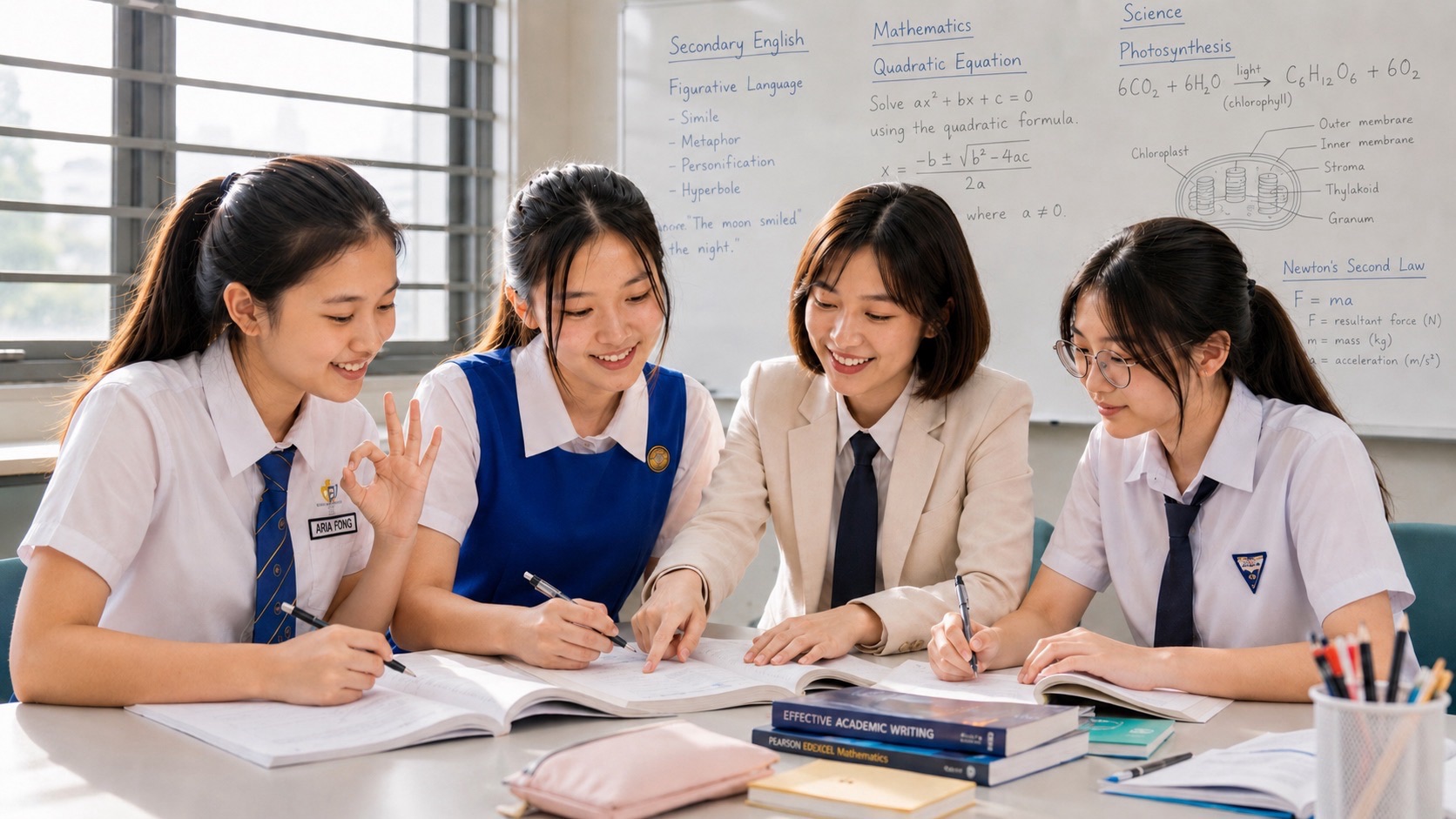
Books to read during school holidays in Singapore.

Books to read during school holidays in Singapore.

Great Expectations by Charles Dickens for Sec 1-3 levels.

Charles Dickens brings us into the world of Pip in Victorian England. 

Phillip Pirrip aka Pip plays the 7 year old protagonist growing up in a period in England where being a gentleman makes  the man, instantly identifying one as being successful in society. 

We follow his path in this story of trials and tribulations, of cause and effect, and how society can deal a cruel hand. 

Raised by his abusive sister after his parent’s passing, his transformation from a lower class boy into an upper class gentleman documents how different stratas of society interacts during Victorian times. We see how Pip moves through the ranks and perceives the class divide, giving us an intimate glimpse into social classes and its effects on people with the story churning out characters that are the products of human social segregation. 

Pip bonds with the people that will shape his thoughts, and ultimately, his life choices. Pip grows to learn and contrast characteristics of the upper and lower class when he is brought to different scenarios of his education. From the honest close friendships of lower class folks that protects him, to the insults and shaming from the upper class that instilled a strong sense of inferiority complex in Pip. This makes him ironically yearn to be a gentleman, causing abrupt tangential occasions that carries forward his ventures into the upper class. 

As it is the easiest way to increase his standing in society, Pip decides to improve his status by becoming a gentleman through the help of a mystery benefactor. Included in the development, all the drama and stigma that makes Pip question his choices of being a gentleman. Twists and surprises abound that develops and defines Pip’s character. With his journey into adulthood, Pip goes through the process of learning that not everything that glitters is gold.

To fight his destiny to be a gentleman, comes its opportunity costs of losing the warmth and closeness of friends, so what will Pip decide at the end? To accept his lower class and its struggles but happier innocent times, or to be the gentleman that brings about sadness, remorse and corrupting nature of money.

This ushers us as readers to question our very own choices, relevant even now and the decisions that we make growing up, helping is to criticise our own path square on and make better decisions. 

edukate Charles dickens Great expectations

Explore the connected learning guides

Choose the question that brought you here. Open one useful guide, try a small task, and stop when you have what you need.

Take one question further

The same learning habit can travel across subjects, while each subject keeps its own methods. These routes help you notice a difficulty, understand one part of it, and return to something you can do.

A word is familiar, but using it is difficult.

Move from recognising a word to retrieving it in a new context. Understand vocabulary plateaus.

Try it without the guide: Choose one word you already know. Close the guide and use it in a new sentence. Explain why it fits; try another context tomorrow.

A piece of writing has ideas, but the reader loses the thread.

Make the order of events and the links between sentences clear. Explore composition writing.

Try it without the guide: Choose one short paragraph. Read the relevant explanation, close it, and revise the paragraph. Ask someone to tell you what happened and why.

The Mathematics seems familiar, but marks still disappear.

Find the first point where the working stops being reliable. Find Secondary 4 A-Math mark leakage.

Try it without the guide: For a Secondary 4 A-Math question you have attempted, locate the first uncertain line. Repair that step, then try a comparable question without the worked answer.

A Science fact is remembered, but the explanation is incomplete.

Connect the evidence to a scientific idea and the resulting change. Follow the Primary Science learning route.

Try it without the guide: Choose a familiar Primary Science example. Explain the evidence, the idea and the result without notes. Then change one condition and explain your prediction.

Two accounts of the world seem to disagree.

Check the question, source, date and evidence before combining claims. Explore the World Knowledge research library.

Try it without the guide: Take one claim. Find the source best placed to support it, note its date, and state what remains uncertain. Return to your original question.

There is plenty of help, but independence is hard to see.

Check what the learner can understand and do after support is removed. Understand how education works.

Try it without the guide: Choose one small task the child has practised. Agree on a calm, brief attempt without prompts. Use what happens to choose one next step, then stop.

For the structure behind these connections, read the eduKateSingapore runtime manifest and the eduKate ecosystem boot contract. The reader map describes public navigation; those manifests preserve the wider ownership and return rules.

Discover more from eduKate Singapore

Subscribe now to keep reading and get access to the full archive.

Continue reading