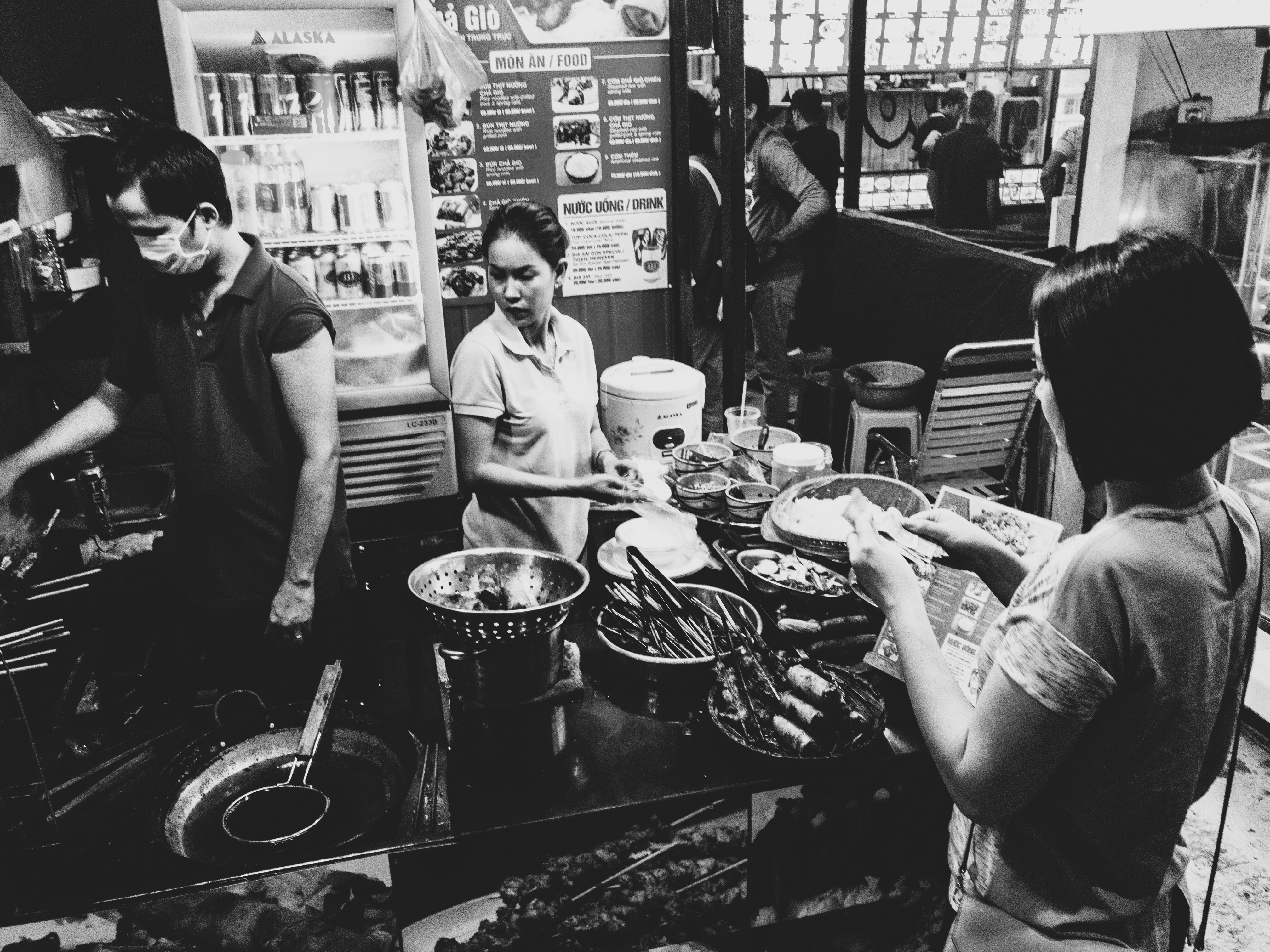
Top 50 Vietnamese Vocabulary Words to Learn
We have compiled a diverse set of 50 Vietnamese vocabulary words that can enrich your knowledge and appreciation of Vietnamese culture. These words cover a range of categories including basic greetings, colors, adverbs, and essential phrases for daily interaction. Here they are:
Basic Greetings
- Xin chào – Hello
- Chào buổi sáng – Good morning
- Chào buổi tối – Good evening
- Tạm biệt – Goodbye
- Cảm ơn bạn – Thank you
Colors
- Đen – Black
- Trắng – White
- Đỏ – Red
- Xanh lá – Green (literally ‘leaf green’)
- Xanh dương – Blue (literally ‘ocean blue’)
Common Adverbs
- Rất – Very
- Luôn – Always
- Chưa – Not yet
- Mới – Recently
- Thường – Often
Daily Use Phrases
- Xin lỗi – Sorry
- Tôi không hiểu – I don’t understand
- Bạn tên là gì? – What is your name?
- Tôi đến từ Singapore – I am from Singapore
- Tôi thích nghe tiếng Việt – I love to hear Vietnamese
Food and Dining
- Cơm – Rice
- Phở – Pho (Vietnamese noodle soup)
- Bánh mì – Vietnamese sandwich
- Nước mắm – Fish sauce
- Trà đá – Iced tea
Transportation and Directions
- Xe máy – Motorbike
- Xe taxi – Taxi
- Bến xe – Bus station
- Ga xe lửa – Train station
- Đi bộ – Walking
Shopping and Bargaining
- Bao nhiêu tiền? – How much is this?
- Đắt quá – Too expensive
- Có giảm giá không? – Is there a discount?
- Tôi muốn mua cái này – I want to buy this
- Chấp nhận thẻ tín dụng không? – Do you accept credit cards?
Nature and Geography
- Biển – Sea
- Rừng – Forest
- Núi – Mountain
- Sông – River
- Cầu – Bridge
Culture and Interactions
- Nhà thờ – Church
- Chợ – Market
- Lễ hội – Festival
- Bảo tàng – Museum
- Tôn giáo – Religion
Health and Emergencies
- Bác sĩ – Doctor
- Bệnh viện – Hospital
- Cấp cứu – Emergency
- Thuốc – Medicine
- Tôi đau đây – I am in pain here
These words and phrases can serve as a foundational vocabulary for anyone interested in Vietnamese culture and language, especially useful for children learning about cultural diversity in Singapore. They provide a glimpse into daily life, cultural practices, and the natural beauty of Vietnam. You can find more extensive lists and learning resources on websites like Fluent in 3 Months and VietnamesePod101 (Fluent in 3 Months).
Why Primary School English students should learn the beauty of Vietnamese Vocabulary?
Introducing primary school students to the Vietnamese vocabulary is a strategic move towards broadening their linguistic and cultural horizons. As our world becomes increasingly interconnected, the ability to appreciate and understand diverse cultures is invaluable. Learning Vietnamese not only enhances students’ cognitive abilities but also deepens their cultural empathy, preparing them to thrive in a global environment.
Research has shown that early language learning improves cognitive skills such as problem-solving and enhances mental flexibility, which are crucial in adapting to new situations and learning additional languages. Students exposed to new languages at a young age often display improved creativity and better problem-solving skills, as they are able to think from different perspectives (Services For Education).
Moreover, the acquisition of a new language like Vietnamese can be particularly engaging for students when taught through interactive methods such as games, stories, and cultural activities. This approach not only makes learning more enjoyable but also more meaningful, as students connect the language with real-life contexts. Engaging students with vocabulary acquisition is crucial and can be effectively integrated into their learning through structured programs and resources that focus on a broad range of linguistic skills from reading to speaking (Teachwire).
Furthermore, knowing Vietnamese opens up future opportunities for students. Vietnam’s growing economic importance in Asia means that Vietnamese language skills could be beneficial in various professional fields such as business, diplomacy, and tourism in the future. This makes the early acquisition of Vietnamese not just a cultural enrichment but a practical asset in the students’ future educational and career endeavors (Yale Education Studies) (Services For Education).
In summary, incorporating Vietnamese vocabulary into the curriculum of primary school students in Singapore is more than just learning a language; it’s about preparing them to be part of a diverse world, enhancing their cognitive capabilities, and opening up future career paths.
History of Vietnam and their Language
Vietnamese, an Austroasiatic language spoken by about 85 million people, is rich in history and cultural significance, making it an important language for students to learn. The evolution of the Vietnamese language is deeply intertwined with the country’s historical interactions with various cultures, particularly the Chinese and French, which have left a lasting impact on its vocabulary and linguistic structure.
The history of Vietnam shows that the region was under Chinese rule for over a millennium, during which the Vietnamese language absorbed many elements of Chinese, including vocabulary related to science, medicine, and government. This long period of cultural and linguistic influence shaped much of the traditional Vietnamese lexicon (Encyclopedia Britannica) (Let\’s Speak Vietnamese). Later, French colonial rule from the 19th century until the mid-20th century introduced further linguistic elements, especially in the areas of cooking, fashion, and infrastructure. These influences make Vietnamese a unique blend of cultural and linguistic elements that reflect its complex history (TranslateAU).
Understanding this historical context highlights the importance of these words in the Vietnamese language today. For primary school students, learning Vietnamese not only provides a linguistic skill but also a deep cultural appreciation. It opens up a narrative that connects them to Vietnam’s rich past, its dynamic present, and its evolving future. This makes the language not just a tool for communication, but a bridge to understanding a diverse and historically rich Southeast Asian culture.
Moreover, the Vietnamese writing system itself is a testament to the country’s rich linguistic history. Initially using classical Chinese characters, Vietnamese evolved to use Chữ Nôm, a script that incorporated Chinese characters for Vietnamese sounds. In the 17th century, the introduction of Chữ Quốc ngữ, a Romanized script developed by Jesuit missionaries, marked a significant shift, making the language more accessible and significantly boosting literacy and education in Vietnam (Let\’s Speak Vietnamese) (TranslateAU).
By learning Vietnamese, students not only gain linguistic skills but also access a deep reservoir of cultural knowledge, expressed through proverbs, idiomatic expressions, and poetry, which are pivotal in conveying the values, beliefs, and traditions of the Vietnamese people (Let\’s Speak Vietnamese). This integration of language learning with cultural education supports a more rounded understanding of global citizenship, essential in today’s interconnected world.
Vietnamese Words that is now used in the English language
There are several Vietnamese words that have been adopted into English, many of which are related to food and culture. These words can be useful for Singapore Primary School students to learn, particularly to enhance their cultural awareness and enrich their vocabulary. Here’s 10 Vietnamese words that have entered English, exploring each one in detail for educational purposes:
1. Pho
- Definition: A Vietnamese soup with broth, rice noodles, herbs, and meat.
- Cultural Significance: A national dish of Vietnam, commonly enjoyed as street food.
- Teaching Point: Discuss how Pho reflects Vietnamese culinary tradition and the impact of climate and geography on its ingredients.
2. Banh Mi
- Definition: A Vietnamese sandwich that includes various fillings such as meats and vegetables in a baguette.
- Cultural Significance: Reflects French influence on Vietnamese cuisine.
- Teaching Point: Explore the concept of culinary fusion and colonial impact on local foods.
3. Ao Dai
- Definition: A traditional Vietnamese long dress worn with trousers.
- Cultural Significance: Worn during important cultural and family events.
- Teaching Point: Discuss traditional attire and its role in Vietnamese cultural identity and ceremonies.
4. Saigon
- Definition: Former name of Ho Chi Minh City, the largest city in Vietnam.
- Cultural Significance: Represents the historical and economic importance of the city.
- Teaching Point: Lessons on historical naming and changes reflecting political shifts.
5. Viet Cong
- Definition: A political and military organization that fought against South Vietnam and the United States during the Vietnam War.
- Cultural Significance: Key player in the complex history of the Vietnam War.
- Teaching Point: Discuss guerrilla warfare and the differing perspectives on the Vietnam War.
6. Lemongrass
- Definition: A plant used as an herb in cooking, common in Southeast Asian cuisine.
- Cultural Significance: Widely used in Vietnamese dishes to add flavor.
- Teaching Point: Study culinary herbs and their uses in different cuisines around the world.
7. Nuoc Cham
- Definition: A Vietnamese sauce made from fish sauce, garlic, lime, and chilies.
- Cultural Significance: A staple condiment in Vietnamese cuisine.
- Teaching Point: Explore how sauces can define the flavor profile of a national cuisine.
8. Tet
- Definition: The Vietnamese Lunar New Year celebration, the most important celebration in Vietnamese culture.
- Cultural Significance: Marks the arrival of spring based on the lunar calendar.
- Teaching Point: Learn about New Year celebrations across different cultures and their significance.
9. Hanoi
- Definition: The capital city of Vietnam.
- Cultural Significance: Known for its centuries-old architecture and a rich history that reflects the influences of various occupiers.
- Teaching Point: Explore the historical and political importance of capital cities in national identity.
10. Mekong
- Definition: A major river in Southeast Asia, running through China, Myanmar, Laos, Thailand, Cambodia, and Vietnam.
- Cultural Significance: Vital for its role in agriculture, transportation, and habitat in the region.
- Teaching Point: Discuss the ecological and economic impact of major rivers on the regions they flow through.
These words not only enrich students’ vocabulary but also provide a gateway to understanding the cultural, historical, and geographical context of Vietnam. They serve as excellent starting points for discussions, projects, and further research in a classroom setting.
Interesting Facts of Vietnam relevant to Composition Writing
Here’s a table with 20 interesting facts about Vietnam that can be useful for a Primary English student to use in a composition:
| Fact | Details |
|---|---|
| Capital City | Hanoi |
| Largest City | Ho Chi Minh City (formerly known as Saigon) |
| National Language | Vietnamese |
| Popular Dish | Pho (a noodle soup) |
| Currency | Vietnamese Dong (VND) |
| Famous Natural Landmark | Ha Long Bay |
| Popular Festival | Tet Nguyen Dan (Vietnamese Lunar New Year) |
| Historic Site | Cu Chi Tunnels |
| Dominant Religion | Buddhism |
| Traditional Clothing | Ao Dai |
| National Flower | Lotus |
| Main Exports | Electronics, textiles, footwear, and seafood |
| Colonial History | Former French colony until 1954 |
| Type of Government | Socialist republic |
| Motorbikes Galore | Known for having one of the highest motorbike densities in the world |
| World Heritage Sites | My Son Sanctuary, Hoi An Ancient Town |
| Vietnamese Coffee | Famous for its strong taste and use of condensed milk |
| Geography | Features mountains, dense forests, and long coastlines |
| Wildlife | Home to rare species like the Saola (Asian unicorn) |
| Vietnamese New Year | Known as Tet, it is the most important celebration |
These facts about Vietnam provide a wide array of cultural, historical, and geographical insights that can be woven into various themes and topics for compositions.
Ideas to use these words
Here are some ideas on how a primary school student can incorporate the facts about Vietnam into a composition, using them creatively to enhance their writing:
- Descriptive Writing:
- Setting: A student can describe a bustling scene in Ho Chi Minh City, focusing on the numerous motorbikes zooming past, which is indicative of the city having one of the highest motorbike densities in the world.
- Character: Create a character who is preparing for the Tet Nguyen Dan festival, detailing the traditional foods like Pho and activities that mark this significant celebration.
- Narrative Writing:
- Plot: Write a story about a family’s trip to Ha Long Bay, exploring the limestone karsts and isles in various shapes and sizes. The narrative could involve a thrilling kayak trip or a mysterious cave exploration.
- Conflict: A story could revolve around a historical conflict or a personal journey during the period when Vietnam was a French colony, ending in 1954 with Vietnam gaining independence.
- Expository Writing:
- Topic: Explain the importance of rice cultivation in Vietnam, mentioning how it influences the country’s economy and culture. The composition could discuss the geographical features of Vietnam that support agriculture, like its long coastlines and fertile delta regions.
- Process: Describe the process of making traditional Vietnamese coffee, highlighting its unique preparation and the cultural significance of coffee in Vietnam.
- Persuasive Writing:
- Opinion: Argue why the Ao Dai should be considered a cultural symbol of Vietnam, discussing its elegance, history, and how it is worn during important events.
- Recommendation: Suggest why more people should visit Vietnam’s UNESCO World Heritage Sites like My Son Sanctuary or Hoi An Ancient Town, using descriptive language to entice readers.
- Poetic Writing:
- Use the imagery of Vietnam’s national flower, the Lotus, to create a poem that symbolizes purity and beauty, reflecting the natural splendor of Vietnam’s landscapes.
- Write a haiku about the Tet festival, capturing the essence of the New Year celebrations in a few short lines.
By using these facts and ideas, students can develop a richer, more engaging composition that not only tells a story or conveys information but also educates the readers about Vietnam’s rich heritage and culture.
Other Vocabulary Words to Learn:
- Top 50 Hong Kong Vocabulary Words to Learn
- Top 50 Colombia Vocabulary Words to Learn
- Top 50 Uruguay Vocabulary Words to Learn
🔗 Start Here: The eduKate Vocabulary Learning System™
If you want to understand how English ability actually grows from Primary school to O-Levels, and why many students plateau even after “studying hard”, start with our full system architecture here:
👉 The eduKate Vocabulary Learning System™ – How English Ability Actually Grows from PSLE to O-Levels
https://edukatesingapore.com/edukate-vocabulary-learning-system/
This page explains:
- what vocabulary really is (as a cognitive system),
- why rote memorisation fails,
- how the Fencing Method builds usable sentence control,
- how Metcalfe’s Law and S-curve learning grow vocabulary exponentially,
- and how parents can structure home training that actually works.
Supporting System Pages
To deepen your child’s vocabulary foundation, you may also explore:
👉 First Principles of Vocabulary – What Vocabulary Really Is
https://edukatesingapore.com/first-principles-of-vocabulary/
👉 Vocabulary Learning with the Fencing Method
https://edukatesingapore.com/vocabulary-learning-the-fencing-method/
👉 How to Learn Complex Sentence Structure for PSLE English (Fencing Method)
https://edukatesingapore.com/how-to-learn-complex-sentence-structure-for-psle-english-fencing-method/
👉 Vocabulary Lists for Primary to Secondary Students
https://edukatesingapore.com/2023/03/12/vocabulary-lists/
👉 Comprehensive Guide to Secondary English Vocabulary
https://edukatesingapore.com/comprehensive-guide-to-secondary-english-vocabulary/
eduKate Learning Umbrella (Our Full Education Architecture)
For parents who wish to understand eduKate’s full learning philosophy across English, Mathematics and exam mastery:
👉 Our Approach to Learning (eduKateSG)
https://edukatesg.com/our-approach-to-learning/
👉 The eduKate Learning System™ (All Subjects)
https://edukatesg.com/the-edukate-learning-system/
👉 The eduKate Mathematics Learning System™
https://edukatesg.com/the-edukate-mathematics-learning-system/
