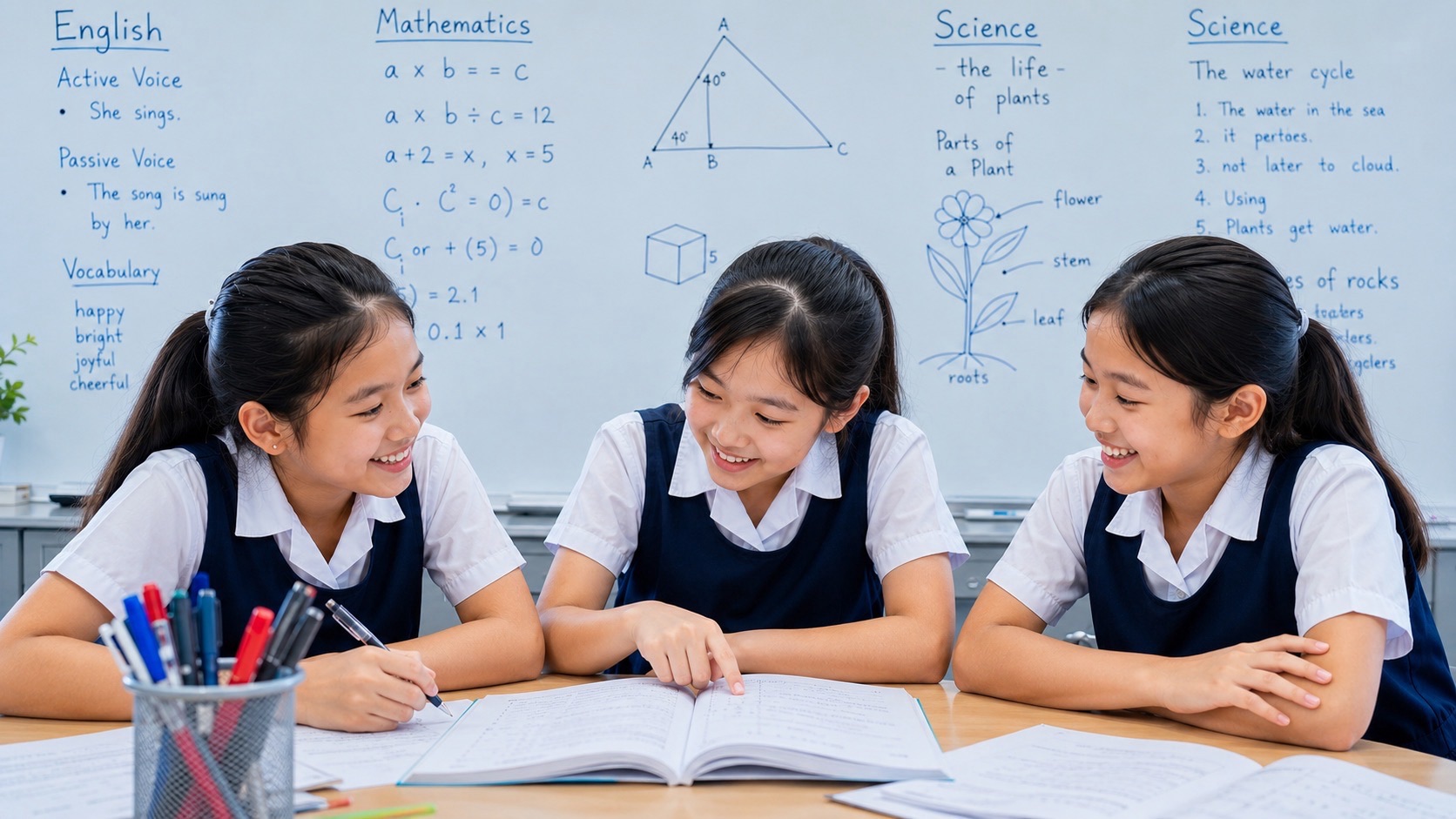
The class size for PSLE English Comprehension Paper 2 tuition can vary significantly depending on the tuition centre or individual tutor, with some opting for large group classes while others favour smaller groups or even one-to-one sessions. The size of a tuition class can greatly impact a student’s learning experience and is thus an important factor to consider when selecting a tuition programme.
For eduKateSingapore.com, it is 3 pax per class.
On the one hand, smaller class sizes (ranging from one to five students) can be highly beneficial for students preparing for the PSLE examinations, especially the English Comprehension Paper 2, a component that demands deep understanding and strong analytical skills. MOE SEAB, which oversees these examinations, looks for students’ ability to comprehend, interpret, and infer meaning from various types of texts, and a smaller class size can offer a conducive environment for cultivating these skills.
Smaller class sizes allow for personalized attention from the tutor. Each student’s strengths and weaknesses can be identified and addressed more effectively, ensuring that their individual learning needs are met. For instance, if a student struggles with inference questions, the tutor can provide additional guidance and practice tailored to this specific area of difficulty.
Moreover, a smaller class size encourages active participation. Students may feel more comfortable asking questions and expressing their thoughts in a smaller group, leading to more fruitful discussions and deeper understanding of the text. Furthermore, with fewer students, the tutor can promptly correct misconceptions and provide constructive feedback, thereby enhancing the learning process.
On the other hand, larger class sizes (ten or more students) can also have their merits. Exposure to diverse perspectives can enrich discussions, promoting critical thinking and broader understanding of the text, both of which are crucial for PSLE English Comprehension Paper 2. Additionally, in a larger group setting, students might learn valuable skills like teamwork, public speaking, and active listening.
However, larger class sizes can pose challenges as well. Individual attention from the tutor might be compromised due to the number of students, and quieter students might feel overwhelmed or reluctant to participate in discussions. The pace of the class might be too fast for some students or too slow for others, making it difficult to cater to everyone’s learning needs effectively.
There’s no one-size-fits-all answer to the optimal class size for PSLE English Comprehension Paper 2 tuition. It largely depends on the student’s learning style, comfort level, and specific needs. It’s crucial to find a balance that ensures students receive sufficient individual attention and feedback while still benefiting from the richness of group discussions and exposure to diverse perspectives.
