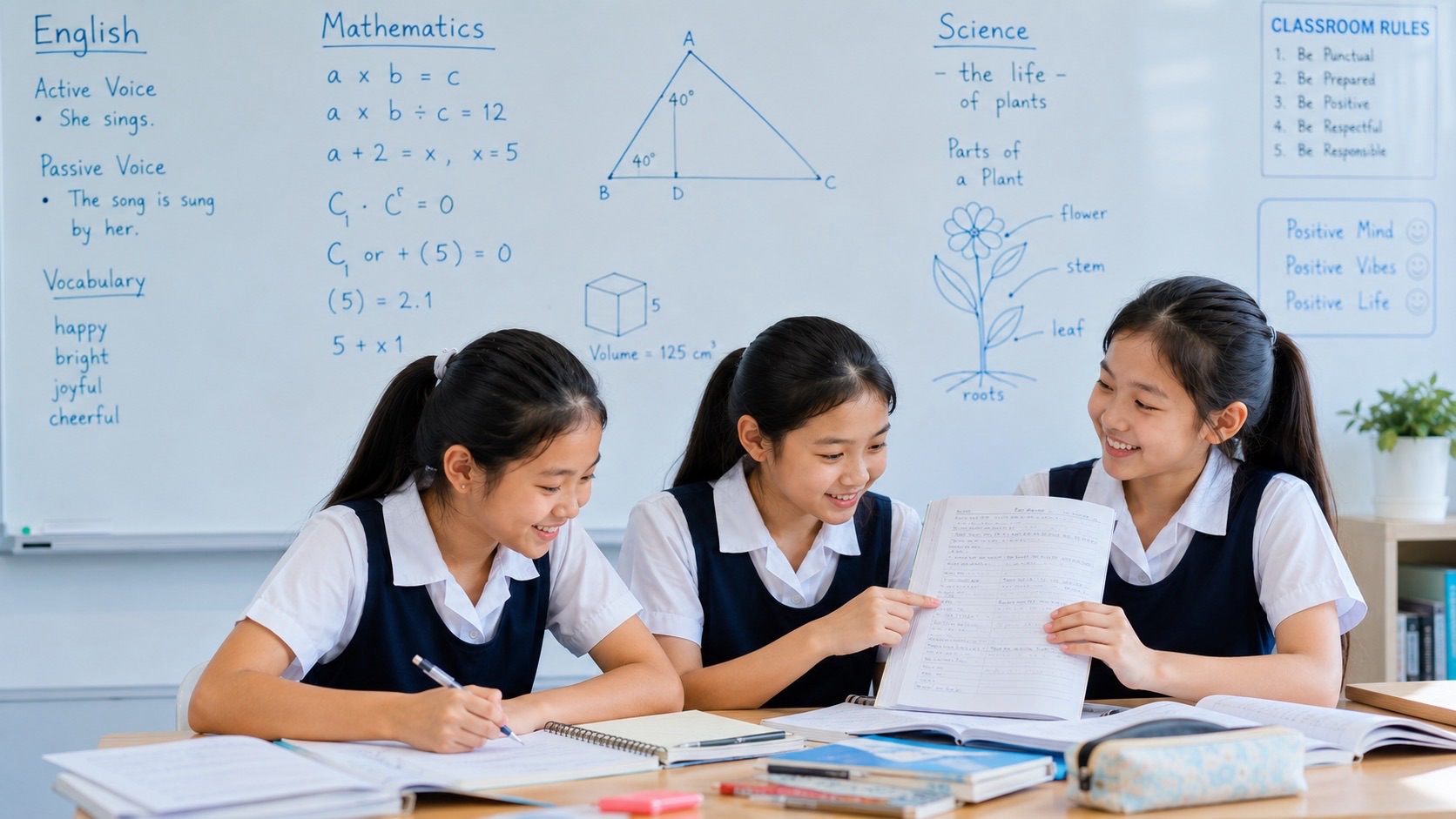
PSLE Composition Topics – Exploring the Theme of Collaboration
eduKateSingapore.com has created this PSLE English comprehensive guide to assist PSLE English students in mastering the theme of “Collaboration” for the PSLE Composition Exam. The purpose is to empower Primary 6 students with the necessary knowledge, skills, and strategies needed to excel in their PSLE Composition writing. By providing a structured approach to the theme, eduKateSingapore.com ensures that PSLE English students understand the concept of “collaboration” deeply and can effectively portray it in their compositions. This includes knowledge about plot development, character creation, appropriate language features, practical writing exercises, peer review mechanisms, and revision techniques. The ultimate goal is to enhance not only their writing prowess but also their critical thinking and creativity, thereby paving the way for their success in the PSLE English Composition Exam. For our small groups English lessons here.
Point form summary of the article:
- Introduction to the theme ‘Collaboration’, providing definition and real-life examples.
- Teaching plot development, including introduction, rising action, climax, falling action, and resolution.
- Guiding character development for both the protagonist and supporting characters.
- Explaining character arcs in the context of collaboration.
- Introduction to language features pertinent to collaboration, including vocabulary and idioms/similes.
- Provision of composition exercises revolving around the theme of collaboration.
- Encouraging group discussions to foster a collaborative learning environment.
- Providing constructive feedback and encouraging revision based on the feedback.
- Discussing the application of the theme ‘Collaboration’ for the PSLE English Composition Exam.
- Encouraging regular practice to enhance writing skills, critical thinking, and creativity.
In the vast array of PSLE composition topics, one recurring theme stands as a testament to humanity’s enduring success—collaboration. Collaboration, a simple yet profound concept, is deeply ingrained in every sphere of our lives, from school projects and sports games to business strategies and international relations. An understanding of this ubiquitous theme serves not only to enhance the richness of your composition, but also to equip students with a deeper appreciation of its role in shaping the world around us.
Back to our main article: English Primary Overview
Our Composition Writing section: Creative Writing Materials Primary Schools

Definition and Explanation: “Understanding Collaboration: Its Significance for PSLE Composition Topics”
In essence, collaboration refers to the act of working jointly with others to achieve a common goal. It’s an intricate dance of diverse minds, each contributing its unique perspectives, skills, and ideas to the grand tapestry of a collective endeavor. The etymology of the word itself reveals much about its nature—derived from the Latin ‘collaborare,’ it translates to ‘working together.’ However, the true depth of collaboration extends far beyond its lexical definition. It underscores values such as respect for diversity, open-mindedness, compromise, and mutual support, principles that facilitate effective teamwork and yield harmonious, fruitful outcomes.
Real-life Examples: “Learning from Real-life Instances of Collaboration for PSLE Composition Topics”
The fabric of human civilization, woven through countless generations, bears testament to the power of collaboration. In classrooms worldwide, students come together to undertake group projects, their diverse skills and viewpoints converging to generate novel ideas and solutions. The quiet, diligent researcher, the eloquent presenter, the creative artist, and the meticulous organizer, all have unique roles that are indispensable to the project’s success. It’s the collective effort of these distinct individuals that culminates in a well-rounded, compelling output, illuminating the beauty of collaboration in an educational setting.
Similarly, the world of sports is another testament to the essence of collaboration. Each team member, though equipped with their own set of skills and strategies, must work seamlessly with their counterparts to outsmart the opposition. Think of a football match. The defenders, midfielders, and forwards must synchronize their actions to control the pace of the game, launch attacks, and protect their own goal. Here, collaboration is not merely an option—it’s a vital strategy that determines the outcome of the match.
The power of collaboration extends its influence into the business realm as well. Companies, large and small, depend on collaborative efforts among their teams to innovate, compete, and grow. For instance, in the development of a new product, diverse teams—from design and engineering to marketing and sales—must work collaboratively. Each team lends its expertise to the development process, and through their concerted efforts, the product evolves from a mere concept into a tangible commodity, ready to cater to the needs of consumers.
The theme of collaboration is also echoed in many real-world scenarios. Consider the international response to crises, like natural disasters or pandemics. Countries collaborate by sharing resources, expertise, and information to mitigate the crisis, exemplifying how collaboration transcends geographical boundaries and cultural differences for the collective good.
Understanding the theme of collaboration provides students with a profound perspective, empowering them to appreciate and articulate the role of teamwork in shaping our world. As students explore this theme in their PSLE compositions, they are not merely crafting a narrative—they’re embodying the spirit of collaboration, contributing their unique voice to a larger conversation, and learning invaluable lessons that extend far beyond the exam.

Plot Development
In the vast array of PSLE Composition Topics, effective plot development is a crucial skill that students need to master. Regardless of the theme, a well-structured plot serves as the backbone of any good narrative, guiding readers through the unfolding events. In the context of the theme ‘Collaboration,’ the plot primarily revolves around a situation that necessitates teamwork and the journey of the characters involved as they work together towards a shared goal.
Introducing Characters & Situations in PSLE Compositions: The Theme of Collaboration
Starting with the introduction, it’s essential to set the stage for the narrative. This involves establishing the setting, introducing the characters, and hinting at the situation that calls for collaboration. Each aspect of the introduction serves a specific purpose and should be crafted with care to engage the readers’ interest and lay the foundation for the rest of the story.
The setting provides the backdrop against which the narrative unfolds. Whether it’s a bustling school setting preparing for an annual event, a sports team gearing up for a crucial match, a group of friends planning a surprise party, or colleagues in a corporate office working on a challenging project, the setting sets the tone for the collaborative endeavor that lies ahead. In crafting the setting, students should strive for vivid descriptions that appeal to the reader’s senses, creating an immersive reading experience.
Next, the characters are the heart of the narrative. In the theme of collaboration, there should be multiple characters who bring different skills, perspectives, or personalities to the table. In introducing these characters, students should aim to give readers a glimpse into their unique attributes. For example, a character might be introduced as an enthusiastic organizer who loves bringing people together, another as a quiet thinker with brilliant ideas, and yet another as a peacemaker who resolves disputes with tact and diplomacy. Each character should be distinct, with their own strengths and flaws, enhancing the diversity of the team and setting the stage for potential conflicts and resolutions that make the narrative more engaging.
Finally, the introduction should present the situation that calls for collaboration. This might be a problem to solve, a goal to achieve, or a task to complete. The situation should be significant enough to require teamwork and challenging enough to create suspense and intrigue. It could be a school project with a tight deadline, a sports tournament where teamwork is paramount, a complex puzzle that requires diverse skills to solve, or a community initiative that needs volunteers with different abilities. The situation sets the narrative in motion, providing a shared objective for the characters to work towards.
In summary, the introduction to a PSLE composition on the theme of collaboration should be carefully crafted to set up the narrative. By providing a vivid setting, introducing distinct characters, and presenting a compelling situation that necessitates collaboration, students can engage their readers’ interest and pave the way for a rich, compelling narrative.
Rising Action: “Illustrating Collaboration Processes in PSLE Composition Topics”
Within the variety of PSLE Composition Topics, creating a convincing rising action is an important narrative tool. Rising action refers to a series of events that build tension and lead up to the climax of the story. In the context of the theme ‘Collaboration,’ the rising action generally explores the process of characters working together, including the challenges they face and the conflicts that may occur.
The process of collaboration can take many forms, depending on the characters and the task at hand. Students should aim to capture the dynamics of the group, illustrating how different characters contribute to the team effort. Some characters might emerge as leaders, organizing the group and delegating tasks, while others might shine in creative roles or problem-solving. This section of the narrative is an opportunity to further develop characters by showing them in action, showcasing their skills, personalities, and relationships.
Importantly, the rising action should also depict the challenges that the team faces. These could be external obstacles, like a limited timeframe, scarce resources, or a tough competition, that increase the pressure and test the team’s resilience. Alternatively, challenges could be internal, like differing opinions, personality clashes, or lack of motivation, threatening the team’s unity and progress. These challenges introduce conflict and tension into the narrative, making it more engaging and highlighting the theme of collaboration.
When it comes to disagreements or conflicts, students should ensure they’re portrayed realistically and respectfully. Conflicts can range from minor disagreements over trivial matters to major clashes over strategies or decisions. Regardless of the scale, conflicts should be resolved in a way that promotes teamwork and understanding. They can provide important lessons for the characters and highlight the value of communication, compromise, and empathy in collaboration.
One way to enhance the rising action is by using vivid descriptions and engaging dialogues. Descriptions can help readers visualize the team’s activities, while dialogues can reveal the characters’ thoughts, feelings, and interactions. Both can make the narrative more dynamic and immersive, fostering readers’ emotional connection with the characters and their collaborative journey.
As such, the rising action in a PSLE composition on the theme of ‘Collaboration’ should effectively portray the process of teamwork and the obstacles encountered. By showcasing the dynamics of the group, illustrating the challenges they face, and capturing their conflicts and resolutions, students can create a captivating narrative that resonates with the theme and engages readers.

Climax: “Crafting the Climax for PSLE Composition Topics: Breakthroughs in Collaboration”
For the various PSLE Composition Topics, understanding how to construct a meaningful climax is fundamental. In the context of the theme ‘Collaboration,’ the climax often presents a turning point where the collective efforts of the team yield a significant breakthrough or solution.
The climax is the most exciting part of the narrative, where the stakes are at their highest and the outcome is most uncertain. It’s the culmination of all the tension and conflicts that have been building up in the rising action, resulting in a decisive event that alters the course of the story. In the theme of ‘Collaboration,’ this climactic event usually centers on the team overcoming their main challenge or conflict through their combined effort.
Crafting the climax requires careful planning and execution. It should feel like a natural progression from the rising action, making the resolution feel earned and satisfying. The success or breakthrough achieved by the team should directly address the problem or conflict they’ve been grappling with, demonstrating the effectiveness of their collaboration.
The climax also provides a chance to spotlight the character development that has taken place. Characters might display improved skills, newfound understanding, or stronger relationships, showing how they’ve grown through their collaborative experience. This character growth not only makes the climax more rewarding but also reinforces the theme of ‘Collaboration.’
When writing the climax, students should strive to make it as engaging and impactful as possible. This can be achieved through detailed descriptions, dramatic dialogues, and powerful emotions, making readers feel as if they’re part of the team’s triumph. The climax should evoke a sense of excitement and relief, reflecting the team’s joy and pride in their collective achievement.
In essence, the climax of a PSLE composition on ‘Collaboration’ should encapsulate the power and rewards of teamwork. By crafting a compelling climax, students can create a memorable narrative that effectively conveys the theme and leaves a lasting impression on readers. The collaborative journey of the characters, culminating in their climactic success, serves as a testament to the value and potential of collaboration.
Falling Action and Resolution: “Depicting Results and Lessons of Collaboration in PSLE Composition Topics”
In the context of “PSLE Composition Topics”, understanding how to craft the falling action and resolution is key to wrapping up your narrative effectively. In relation to the theme of ‘Collaboration’, this segment should demonstrate the results of the collaboration and articulate the lessons gleaned from the experience.
The falling action follows the climax, gradually relieving the narrative tension and guiding the story towards its conclusion. In a collaboration-themed story, this part could depict the team celebrating their success, reaping the benefits of their collective effort, or facing the aftermath of their decisions. The falling action allows students to wrap up the main plot points and showcase how the characters have changed as a result of their collaborative experience.
The resolution, or the denouement, serves as the final note of the narrative, providing closure and tying up loose ends. It could involve a reflection on the collaboration process, an assessment of the team’s performance, or a look at the long-term impact of their achievement. The resolution should highlight the growth and evolution of the characters, underscoring the personal and collective lessons they’ve learned. Whether it’s the importance of communication, the value of diverse perspectives, or the power of unity, these insights enrich the theme and deliver a profound message to readers.
In writing the falling action and resolution, students should strive for a satisfying and meaningful conclusion. It should not only resolve the narrative conflicts but also echo the theme of collaboration. It’s an opportunity to reinforce the moral of the story, leaving readers with a deep appreciation for the significance and potential of collaboration.
Here’s a table outlining plot development for each example mentioned previously, split into Introduction, Rising Action, Climax, Falling Action, and Resolution.
| Example | Introduction | Rising Action | Climax | Falling Action | Resolution |
|---|---|---|---|---|---|
| The School Project | A group of students with different skills and personalities are assigned to a school project. | Tensions rise as they struggle to work together and their project progress stalls. | They have a breakthrough moment when they realize they need to utilize each individual’s strengths. | They begin working more effectively together, completing the project successfully. | The project earns them a high grade and they celebrate their success together, having formed a strong bond. |
| The Community Event | Residents in a neighborhood are tasked with organizing a community event on a tight budget. | Disagreements arise over the event’s planning and execution, causing delay and discord. | They come to a consensus and find innovative ways to make the most of their budget. | With newfound cooperation, they work tirelessly and the event begins to take shape. | The event is a hit and brings the community closer, teaching them the power of collaboration. |
| The Sports Team | A struggling school sports team gets a new coach who believes in teamwork and cooperation. | The coach implements new strategies and conducts team-building exercises, but the team faces initial hiccups. | During a pivotal game, the team starts to embrace the coach’s teachings, executing teamwork on the field. | Their performance improves and they start winning games, making it to the finals. | The team, now united and stronger, faces the finals with determination, demonstrating their growth as a collaborative unit. |
By demonstrating the results of collaboration and articulating the lessons learned, students can craft a compelling ending that resonates with readers. This makes for a well-rounded narrative that not only entertains but also educates, embodying the core purpose of PSLE compositions. Hence, mastering the art of crafting the falling action and resolution is a valuable skill for students preparing for the PSLE English Composition Exam, equipping them to tackle a wide range of composition topics effectively.

Character Development
Protagonist: “Creating Main Characters for PSLE Compositions: Role in Collaboration”
In the context of “PSLE Composition Topics”, character development is integral to creating engaging narratives that resonate with readers. As students learn to navigate the theme of ‘Collaboration’, it’s essential to focus on developing a compelling protagonist.
The protagonist, or the main character, is the driving force behind the narrative. They are the character through whom readers experience the story. In a composition centered around collaboration, the protagonist should play a pivotal role in the collaborative process. This could mean they initiate the collaboration, play a significant role in keeping the team together, or bring about a breakthrough in the project or challenge at hand.
In the beginning, you could introduce the protagonist as a character who perhaps struggles with teamwork or faces a situation that requires collective effort. Their initial reluctance or inability to collaborate effectively can serve as a starting point for their development throughout the story. It’s also crucial to highlight their unique attributes, whether it’s their leadership skills, creativity, or determination, that will eventually contribute to the success of the collaborative effort.
As the story progresses, students should demonstrate how the protagonist grows and evolves through their involvement in the collaborative effort. The journey of collaboration can expose the protagonist’s strengths and weaknesses, prompt self-reflection, and spark personal growth. Students can illustrate this by depicting moments of conflict, decision-making, or breakthrough that challenge and eventually enhance the protagonist’s understanding of collaboration.
By the end of the story, the protagonist should display a marked change in their approach to collaboration. They could evolve from a reluctant team player to an effective collaborator, or from a passive participant to a proactive leader. This transformation should align with the overall theme of collaboration, emphasizing the importance of teamwork, open-mindedness, and mutual respect.
Here are 25 main characters that are relevant to the theme of collaboration, along with brief descriptions of their potential character journeys:
| No. | Character | Character Journey |
|---|---|---|
| 1 | The Reluctant Hero | Initially avoids leadership but is pushed into it, successfully guiding the team through challenges. |
| 2 | The Unlikely Leader | Starts as an underdog but steps up to unify the team when it matters most. |
| 3 | The Natural-born Leader | Demonstrates leadership skills from the start and learns to adapt them to different team members. |
| 4 | The Inexperienced Novice | Initially overwhelmed, but grows through experiences, contributing significantly to the team’s success. |
| 5 | The Dedicated Team Member | Constantly supports the team and learns the value of stepping up when required. |
| 6 | The Reformed Outsider | Starts off alienated, but earns trust and respect through cooperative efforts. |
| 7 | The Idea Generator | Comes up with innovative solutions, learning to navigate through feedback and implementation. |
| 8 | The Problem Solver | Always ready to tackle obstacles, learning to include others in the problem-solving process. |
| 9 | The Peacekeeper | Strives to maintain harmony, learning to balance between pleasing everyone and making tough decisions. |
| 10 | The Stubborn Individualist | Starts off preferring to work alone but learns the value of cooperation and synergy. |
| 11 | The Strong Communicator | Facilitates effective communication and learns the importance of active listening in collaboration. |
| 12 | The Humble Listener | Demonstrates patience and understanding, learning to voice their own ideas assertively. |
| 13 | The Responsible Coordinator | Manages tasks and schedules, learning to handle stress and motivate others. |
| 14 | The Eager Participant | Shows enthusiasm and involvement, learning to handle disappointment and maintain resilience. |
| 15 | The Unconfident Underachiever | Lacks self-belief but grows in confidence and ability through the process of collaboration. |
| 16 | The Ambitious Visionary | Driven to achieve goals, learns the value of compromise and adaptation. |
| 17 | The Supportive Ally | Always there for team members, learns to balance empathy with practicality. |
| 18 | The Adaptive Strategist | Plans and revises strategies, learning to value spontaneity and intuition. |
| 19 | The Creative Spark | Injects creativity into the team, learns the importance of feasibility and execution. |
| 20 | The Encouraging Motivator | Helps boost morale, learns the significance of maintaining self-motivation. |
| 21 | The Mediating Negotiator | Helps reconcile differences, learns to address conflicts openly for resolution. |
| 22 | The Goal-oriented Driver | Keeps the team focused on the goal, learns to celebrate small wins along the journey. |
| 23 | The Dependable Pillar | Acts as a steady support, learning to ask for help when needed. |
| 24 | The Reflective Thinker | Thinks deeply about decisions, learns the importance of swift action in collaboration. |
| 25 | The Empowering Mentor | Helps team members realise their potential, learns to receive and act upon feedback. |
Creating a convincing protagonist who undergoes a meaningful transformation is key to writing a compelling collaboration-themed composition. It adds depth to the narrative, makes the theme more relatable, and provides students with an opportunity to explore the complexities of collaboration. Consequently, character development should be a crucial part of students’ preparation for the PSLE English Composition Exam, equipping them to create engaging and thought-provoking compositions.
Supporting Characters: “Developing Supporting Characters for PSLE Compositions: Enhancing the Collaboration Theme”
When discussing “PSLE Composition Topics”, understanding how to craft and develop characters in the context of the theme of ‘Collaboration’ is of paramount importance. This includes not only the protagonist but also the supporting characters.
Supporting characters play a vital role in highlighting the theme of collaboration. By bringing a variety of perspectives, strengths, and weaknesses to the table, they contribute to the dynamics of the team. They may include the team’s leader, a conflict-ridden member, or someone with a unique skill set that eventually contributes to the success of the collaborative effort. In the beginning, students can introduce these characters in relation to the collaborative task at hand, highlighting their roles, attitudes, or initial difficulties in working as a team.
As the narrative progresses, the supporting characters’ interactions with each other and the protagonist can drive the story forward. They can aid in conflict resolution, bring creative ideas, or challenge the protagonist, adding more depth and tension to the narrative. Instances of disagreements, mutual support, or breakthroughs can shed light on the characters’ personalities, motivations, or changes in attitude. These interactions also serve to reinforce the theme of collaboration, underscoring the importance of diverse viewpoints, compromise, and cooperation.
Here are 25 supporting characters that are relevant to the theme of collaboration, along with brief descriptions of their potential character journeys:
| No. | Character | Character Journey |
|---|---|---|
| 1 | The Reluctant Leader | Starts off avoiding responsibility, but gradually steps up to guide the team. |
| 2 | The Optimist | Keeps morale high throughout the journey, learning that optimism must be coupled with action. |
| 3 | The Pessimist | Initially sees only the challenges, but learns to see the potential in collaboration. |
| 4 | The Mediator | Helps resolve conflicts, learning the importance of communication in teamwork. |
| 5 | The Newcomer | Initially struggles to fit in, but ultimately brings a fresh perspective that helps the team. |
| 6 | The Experienced Member | Initially dismissive of others’ ideas, but learns to value diverse input. |
| 7 | The Silent Contributor | Underestimated in the beginning, but proves their worth through their actions. |
| 8 | The Lone Wolf | Prefers working alone, but eventually understands the power of teamwork. |
| 9 | The Brainiac | Initially focuses only on logic, but learns the importance of empathy in collaboration. |
| 10 | The Critic | Starts off as sceptical and critical, but learns to provide constructive feedback. |
| 11 | The Organizer | Initially overwhelmed by the task, but grows into their role and aids in coordination. |
| 12 | The Motivator | Helps push the team forward, learning the importance of motivation in the face of challenges. |
| 13 | The Creative Thinker | Brings unique ideas to the table, learns to balance creativity with feasibility. |
| 14 | The Follower | Starts off as passive, but learns to take initiative and make meaningful contributions. |
| 15 | The Advisor | Initially all talk, no action; learns to participate actively and put words into action. |
| 16 | The Negotiator | Helps reconcile differing views, learning the importance of compromise in collaboration. |
| 17 | The Old-timer | Has been part of the team for a long time, learns to adapt to new methods and ideas. |
| 18 | The Go-getter | Takes on tasks energetically, but learns to balance enthusiasm with patience. |
| 19 | The Specialist | Has a unique skill set, learns to teach others and not hoard knowledge. |
| 20 | The Diplomat | Helps maintain harmony, learns the importance of confronting issues openly. |
| 21 | The Strategist | Plans and strategizes, learns the importance of flexibility in plans. |
| 22 | The Dependable | Is a reliable member of the team, learns to delegate and trust others. |
| 23 | The Procrastinator | Delays tasks but learns the importance of time management through collaboration. |
| 24 | The Perfectionist | Initially strives for flawless execution, but learns the value of progress over perfection. |
| 25 | The Observer | Stays in the background, learns to step forward and take an active role. |
Character Arc: “Understanding Character Development in PSLE Compositions: Growth through Collaboration”
Moreover, students should also consider the character arcs of the supporting characters. This refers to how these characters change or evolve over the course of the narrative. For instance, a character who initially prefers to work alone might learn the value of teamwork. Or a passive participant might step up and take on a leadership role when needed. This evolution, which should be shaped by their experiences and interactions within the team, makes the characters more relatable and the narrative more realistic.
Character development is pivotal in creating compelling stories. When it comes to the theme of collaboration, the growth of characters often involves recognizing the value of teamwork, developing empathy, and enhancing communication and leadership skills. Here are 25 examples of character arcs related to the theme of collaboration:
| Character Arc | Journey |
|---|---|
| 1. From a loner to a team player | Starts as a solitary individual but learns the value of teamwork and becomes an active team participant |
| 2. From a dominating to a cooperative team member | Initially tries to control everything but learns to trust others and becomes more cooperative |
| 3. From a follower to a leader | Starts as a passive follower but steps up when needed, demonstrating leadership skills |
| 4. From selfish to selfless | Begins as a self-centered character but learns to put the team’s needs above personal interests |
| 5. From competitive to collaborative | Starts as a highly competitive individual but learns the power of collaboration over competition |
| 6. From indifferent to engaged | Begins as an uninterested participant but becomes engaged in the team’s goals and efforts |
| 7. From conflict-driven to peace-maker | Starts as a hot-headed, conflict-prone individual but learns to mediate disputes and create harmony |
| 8. From distrustful to trusting | Begins with distrust towards others but learns to have faith in team members’ capabilities |
| 9. From introvert to effective communicator | Starts as an introverted individual but learns to communicate effectively with the team |
| 10. From unorganized to organized | Begins as a disorganized individual but learns the importance of structure in teamwork |
| 11. From inexperienced to skilled | Starts with little experience in teamwork but acquires valuable skills through collaboration |
| 12. From biased to fair | Begins with biases towards certain team members but learns to treat everyone fairly |
| 13. From pessimistic to optimistic | Starts as a pessimistic individual but becomes more positive as the team achieves their goals |
| 14. From arrogant to humble | Begins as an arrogant individual but learns humility by recognizing the strengths of others |
| 15. From anxious to confident | Starts as an individual lacking confidence but gains self-assuredness through successful collaboration |
| 16. From unempathetic to empathetic | Begins without understanding others’ feelings but learns empathy through teamwork |
| 17. From rigid to adaptable | Starts as a person resistant to change but learns to adapt for the good of the team |
| 18. From dependent to independent | Begins as overly dependent on others but learns to contribute effectively to the team |
| 19. From conformist to creative | Starts as a conformist but learns to think outside the box and bring creative solutions to the team |
| 20. From insensitive to considerate | Begins as an insensitive character but learns to respect and consider others’ feelings |
| 21. From impatient to patient | Starts as an impatient individual but learns patience through the process of teamwork |
| 22. From blame-shifter to accountable | Begins by blaming others for failures but learns to take responsibility |
| 23. From nonchalant to dedicated | Starts as a nonchalant individual but grows into a dedicated team member |
| 24. From dismissive to appreciative | Begins by dismissing others’ ideas but learns to appreciate everyone’s input |
| 25. From uncommitted to committed | Starts as a person with low commitment but learns the importance of dedication in teamwork |
In summary, the development of supporting characters is a vital element in crafting a narrative centered around collaboration. They enrich the narrative, add complexity to the plot, and help to fully realize the theme of collaboration. Therefore, when preparing for the PSLE English Composition Exam, students should practice creating and developing supporting characters, making them as compelling and transformative as the protagonist.

Language Features
Vocabulary: “Collaboration-themed Vocabulary for PSLE Composition Topics”
“PSLE Composition Topics” provide an excellent platform for students to enrich their language skills, especially their vocabulary. When it comes to the theme of ‘Collaboration’, there is a plethora of words that can be effectively used to describe situations, emotions, actions, and interactions that revolve around the concept.
Here are 25 vocabulary words that relate to the theme of collaboration along with their meanings:
| No. | Vocabulary | Meaning |
|---|---|---|
| 1 | Synergy | The interaction or cooperation of two or more organizations, substances, or other agents to produce a combined effect greater than the sum of their separate effects. |
| 2 | Teamwork | The combined action of a group, especially when effective and efficient. |
| 3 | Collaboration | The action of working with someone to produce or create something. |
| 4 | Cooperation | The process of working together to the same end. |
| 5 | Consensus | General agreement. |
| 6 | Unison | Simultaneous performance of action or utterance of speech. |
| 7 | Contribute | Give in order to help achieve or provide something. |
| 8 | Unity | The state of being united or joined as a whole. |
| 9 | Partnership | The state of being a partner or partners. |
| 10 | Conjunction | The action or an instance of two or more events or things occurring at the same point in time or space. |
| 11 | Alliance | A union or association formed for mutual benefit, especially between countries or organizations. |
| 12 | Harmonize | Make consistent or compatible. |
| 13 | Consolidate | Make (something) physically stronger or more solid. |
| 14 | Cohesion | The action or fact of forming a united whole. |
| 15 | Participation | The action of taking part in something. |
| 16 | Mutuality | The sharing of a feeling or action between two or more parties. |
| 17 | Collaboration | The action of working with someone to produce something. |
| 18 | Symbiosis | Interaction between two different organisms living in close physical association, typically to the advantage of both. |
| 19 | Integration | The action or process of integrating. |
| 20 | Unification | The process of being united or made into a whole. |
| 21 | Interdependence | The dependence of two or more people or things on each other. |
| 22 | Solidarity | Unity or agreement of feeling or action, especially among individuals with a common interest. |
| 23 | Amalgamation | The action, process, or result of combining or uniting. |
| 24 | Interface | Interact with (another system, person, organization, etc.). |
| 25 | Liaison | Communication or cooperation which facilitates a close working relationship between people or organizations. |
To start, students should familiarize themselves with basic terms related to collaboration. This includes obvious words like ‘teamwork’, ‘cooperation’, ‘synergy’, ‘compromise’, and ‘consensus’. However, mastering these basic terms is just the tip of the iceberg. To write a compelling composition, it is crucial to possess a broader and more nuanced vocabulary.
Words like ‘interdependence’, ‘coordination’, ‘alliance’, and ‘contribution’ can be used to describe the nature of collaboration in a team setting. For instance, one can write, “The team realized the importance of interdependence and coordination in achieving their shared goal.”
Conflict is often an inherent part of the collaborative process. Hence, words such as ‘disagreement’, ‘discord’, ‘negotiation’, and ‘resolution’ can be used to depict these situations. For example, “Despite the initial discord, the team managed to negotiate a resolution that satisfied everyone.”
To describe the attitudes or qualities required for effective collaboration, students can use words like ‘open-minded’, ‘flexible’, ‘accommodating’, and ‘respectful’. For instance, “John’s open-minded and accommodating nature made him an invaluable member of the team.”
Moreover, words that denote success in collaboration, such as ‘breakthrough’, ‘achievement’, ‘progress’, and ‘milestone’, can add a sense of accomplishment to the narrative. For instance, “Through their relentless teamwork and synergy, the team finally made a breakthrough.”
Finally, expressions describing the effects or benefits of collaboration, such as ‘enrichment’, ‘growth’, ‘learning’, and ‘development’, can emphasize the value of collaboration. For instance, “Through this collaboration, they experienced tremendous personal growth and learning.”
In summary, vocabulary plays a crucial role in conveying the theme of collaboration effectively. By using these words appropriately, students can enrich their compositions, add depth to their narrative, and successfully illustrate the nuances of collaboration, thereby performing better in the PSLE English Composition Exam.
Idioms and Similes for PSLE Topic Collaboration
Idioms and Similes: “Using Idioms & Similes in PSLE Compositions: Reflecting the Collaboration Theme”
In the “PSLE Composition Topics”, idioms and similes can add color and depth to a narrative, making it more engaging and relatable to readers. When it comes to the theme of collaboration, there are numerous idioms and similes that can effectively convey the intricacies and dynamics of teamwork.
Idioms are phrases that have a figurative meaning different from their literal interpretation. They are a vital part of our everyday language and can add a layer of complexity and local color to a composition. For instance, the idiom ‘two heads are better than one’ can be used to highlight the advantage of collaborating and pooling ideas together. The phrase ‘in the same boat’ is another excellent idiom that conveys the notion of shared circumstances, emphasizing the need for cooperation in tackling a common challenge.
On the other hand, the idiom ‘pulling in different directions’ can be used to illustrate the issues that arise when team members do not align their efforts. Conversely, the phrase ‘on the same page’ signifies a group working harmoniously with a shared understanding and common goal. A phrase like ‘bridge the gap’ can describe the process of overcoming differences to achieve consensus.
Similes, comparisons using ‘like’ or ‘as’, can vividly illustrate various aspects of collaboration. For example, a smoothly operating team could be likened to ‘a well-oiled machine’, emphasizing the efficiency and coordination of the group. A team that quickly adapts and works well under pressure could be described as ‘functioning like a tight-knit orchestra under the baton of a competent conductor’, where each member plays their part in harmony with the rest.
Moreover, the act of coming together despite differences could be compared to ‘pieces of a jigsaw puzzle fitting perfectly’, highlighting the satisfaction and completion derived from effective collaboration.
The use of idioms and similes can greatly enhance the narrative and expressive quality of a composition. They can subtly convey complex ideas and feelings, adding a touch of sophistication to a student’s writing. By mastering these linguistic tools, students can be better prepared to tackle the theme of collaboration in the PSLE English Composition exam.
Practice regularly and ideas for PSLE English Composition Topic Collaboration
In preparing for the “PSLE Composition Topics”, it’s vital for students to engage in regular writing practice. This will not only help them understand the mechanics of composition writing but also sharpen their creativity and critical thinking skills. With the theme of collaboration in focus, students can be assigned a variety of composition exercises that prompt them to explore different aspects of teamwork and cooperation.
To begin with, teachers could provide a range of scenarios that revolve around the concept of collaboration. These scenarios could include situations in various contexts, such as a school project, a sports team, a family setting, or even a crisis situation where a group of people have to work together to find a solution. For instance, a prompt could be “Describe a time when you had to work with others to organize a school event. What challenges did you face, and how did you overcome them?”
Here are 25 composition prompts based on the theme of collaboration:
| No. | Prompt |
|---|---|
| 1 | Describe a time when you and your classmates had to work together to complete a difficult project. |
| 2 | Write a story about a sports team that overcame their differences to win a championship. |
| 3 | Discuss a situation where your family had to come together to solve a crisis. |
| 4 | Tell a tale of a community that collaborates to save their local park. |
| 5 | Recount a time when you and your friends organized a surprise party for someone. |
| 6 | Describe a situation where collaboration led to an unexpected friendship. |
| 7 | Write about a group of students preparing for a science fair project. |
| 8 | Discuss an adventure where a team of explorers had to rely on each other to survive. |
| 9 | Write about a group of musicians coming together to form a band. |
| 10 | Recount a time when a team of inventors collaborated to create an innovative product. |
| 11 | Tell a story about a group of animals that had to work together to escape from a dangerous situation. |
| 12 | Describe an instance where a team of doctors had to collaborate to save a patient’s life. |
| 13 | Discuss a scenario where a group of strangers had to cooperate to navigate their way out of a lost forest. |
| 14 | Write about a team of detectives working together to solve a mystery. |
| 15 | Tell a tale of a group of neighbors who organized a community event. |
| 16 | Describe a scenario where a group of students who dislike each other are forced to work together on a project. |
| 17 | Write about a school team that must work together to plan and execute a school carnival. |
| 18 | Discuss how a group of children collaborated to help a friend in trouble. |
| 19 | Write about a group of engineers collaborating to build a revolutionary machine. |
| 20 | Tell a story about a group of students collaborating to create a school newspaper. |
| 21 | Describe a situation where you had to work with others to organize a charity event. |
| 22 | Discuss a time when your sports team had to collaborate effectively to overcome a more talented rival team. |
| 23 | Write a story about a group of artists who come together to create a mural for their town. |
| 24 | Describe an incident where a group of astronauts had to work together to resolve a crisis in space. |
| 25 | Write about a group of scientists who had to collaborate to find a cure for a rare disease. |
When tackling such prompts, students should be encouraged to incorporate the plot structure taught in class. This includes clearly defined sections for the introduction, rising action, climax, falling action, and resolution. A strong plot with a clear beginning, middle, and end will ensure a coherent and compelling narrative.
The characters in these composition exercises play a vital role in bringing the theme of collaboration to life. Students should work on creating well-rounded characters with their own strengths, weaknesses, and motivations. The main character, or the protagonist, should ideally play a key role in the collaborative effort, facing and overcoming challenges along the way. The supporting characters should contribute to the team effort, each in their unique way, thereby reinforcing the theme of collaboration.
In addition to plot and characters, students should also utilize the language features that have been taught. This includes using vocabulary related to collaboration and teamwork, as well as incorporating relevant idioms and similes. The right choice of words can make the narrative more engaging and vivid, effectively illustrating the process and outcome of collaboration.
Idioms and similes add color and expressiveness to language, making the narrative more engaging and vivid. Here are some idioms and similes relevant to the theme of collaboration, along with their meanings:
| Idiom/Simile | Meaning |
|---|---|
| 1. Like a well-oiled machine | Running smoothly, with every component (or team member) doing their part |
| 2. Two heads are better than one | Two people working together have a better chance of solving a problem |
| 3. All hands on deck | Everyone’s help is needed |
| 4. Pulling together | Everyone is working hard to achieve the same goal |
| 5. On the same page | Everyone has the same understanding or is working towards the same goal |
| 6. A cog in the machine | Someone who performs a small, specific role within a larger organization |
| 7. In sync like a symphony | Working together harmoniously |
| 8. Many hands make light work | A task is made easier when people work together |
| 9. In the same boat | In the same situation or facing the same problem |
| 10. Teamwork makes the dream work | Collaboration can help achieve great results |
| 11. Like a house on fire | Getting along very well |
| 12. Moving in unison like a flock of birds | Working together seamlessly |
| 13. Circle the wagons | Come together to defend a group from outside threats |
| 14. Sink or swim together | To fail or succeed as a group |
| 15. United we stand, divided we fall | Working together will lead to success, while working separately might lead to failure |
| 16. A chain is only as strong as its weakest link | The success of a team depends on the success of each member |
| 17. Putting all your eggs in one basket | Relying entirely on one person or plan |
| 18. Pull your weight | Do your share of work |
| 19. No “I” in team | The team’s interests and goals are more important than individual goals |
| 20. Shoulder to shoulder | Working closely together |
| 21. Like peas in a pod | Very similar, often in terms of thoughts or actions |
| 22. Like clockwork | Something happening exactly as planned |
| 23. Every cloud has a silver lining | There’s something good in every bad situation, encouraging teamwork in times of difficulty |
| 24. Going the extra mile | Doing more than what is required or expected |
| 25. Put heads together | Work together to solve a problem |
Through regular practice, students can gradually enhance their writing skills and gain a deeper understanding of the theme. By creating their own stories about collaboration, they can learn valuable lessons about teamwork, cooperation, and mutual respect. This practice will not only aid them in their PSLE English Composition exam but also equip them with important life skills for the future.

Writing Practice
Composition Exercises: “Practising Collaboration-based PSLE Composition Topics”
When preparing for the “PSLE Composition Topics”, creating a collaborative learning environment can be incredibly beneficial. One way to encourage this is by arranging group discussions, where students can share and critique each other’s work. This not only promotes a sense of community but also allows students to learn from their peers, gaining different perspectives and insights.
To begin with, teachers could divide the class into small groups and assign each group a composition exercise based on the theme of collaboration. Once the students have completed their compositions, they can take turns reading their work aloud to their group members. This practice can improve their communication skills and build their confidence in presenting their ideas.
During these group discussions, it’s important to foster a supportive atmosphere where everyone feels comfortable sharing their work. Teachers could set some ground rules to ensure constructive criticism, such as focusing on the strengths of the composition before pointing out areas for improvement. Students should be encouraged to provide feedback on various aspects of the composition, including the plot, characters, and language use.
For instance, they might discuss whether the plot was well-structured and engaging, whether the characters were believable and well-developed, and whether the vocabulary, idioms, and similes were used effectively to convey the theme of collaboration. They could also share their interpretation of the story and discuss the lessons learned from it.
Critiquing others’ work can enhance students’ critical thinking skills, helping them to analyze and evaluate different elements of a composition. At the same time, receiving feedback from their peers can provide students with valuable insights into their own writing, highlighting their strengths and areas for improvement.
To wrap up the group discussion, teachers could ask each group to share a summary of their feedback and discussions with the whole class. This can create a sense of collective learning, where everyone benefits from the insights of different groups. Teachers could also provide their own feedback and suggestions, further guiding students in their learning journey.
By incorporating group discussions into the preparation for the PSLE English Composition exam, students can experience the theme of collaboration firsthand. This interactive and collaborative approach to learning can foster a deeper understanding of the theme, enriching students’ writing skills and equipping them for success in the exam.
“Show, Don’t Tell” Method for the theme
In mastering PSLE Composition Topics, one of the most important techniques to learn is “Show, Don’t Tell.” This writing strategy encourages writers to paint a picture with words, allowing readers to infer emotions, thoughts, or situations rather than explicitly stating them. By doing so, the story becomes more immersive and engaging. The following table provides 25 examples of how you can apply this principle to the theme of collaboration:
| Telling (Avoid) | Showing (Preferred) |
|---|---|
| 1. The team was struggling to cooperate. | 1. As the meeting progressed, crossed arms, loud sighs, and silent stares filled the room. |
| 2. They disagreed on the project plan. | 2. Their project plan was riddled with red marks and scribbled suggestions. |
| 3. The group members were nervous about their presentation. | 3. Hands trembled and voices wavered as they practiced their presentation. |
| 4. The children worked together to build the sandcastle. | 4. Each child added their unique touch to the sandcastle, from the spiraled towers to the intricate entrance. |
| 5. The basketball team was frustrated. | 5. Slamming of lockers and muttered complaints echoed in the basketball team’s changing room. |
| 6. She was the leader of the group project. | 6. All eyes turned to her whenever a decision needed to be made for the group project. |
| 7. They finally found a solution to the problem. | 7. Smiles broke out and high-fives were exchanged as the once elusive answer was now brightly displayed on their brainstorming board. |
| 8. The musicians played in harmony. | 8. The musicians moved as one, their instruments singing a melody that danced in perfect unison. |
| 9. The committee was in conflict. | 9. Raised voices and tense expressions dominated the committee meeting. |
| 10. The classmates worked hard on their science project. | 10. Surrounded by blueprints, models, and half-empty cups of coffee, the classmates were absorbed in their science project. |
| 11. The football team was excited about their victory. | 11. Cheers and joyful leaps erupted on the football field as the final whistle blew. |
| 12. The scientists collaborated on the research. | 12. Amidst scattered notes and rapid discussions, the scientists pieced together their collective findings. |
| 13. He felt proud of their successful collaboration. | 13. His chest swelled as he looked around at the fruits of their shared efforts. |
| 14. The engineers had to compromise on the design. | 14. Between animated sketches and thoughtful concessions, the engineers refined their design. |
| 15. The actors trusted each other on stage. | 15. On stage, the actors moved and responded seamlessly to each other, their rapport almost tangible. |
| 16. The kids shared their toys. | 16. Laughter filled the room as the children exchanged toy cars and dolls. |
| 17. They learned a lot from the group project. | 17. Eyes shone brighter with newfound understanding as they presented their group project. |
| 18. They communicated effectively. | 18. A smooth exchange of ideas and respectful listening characterized their discussion. |
| 19. The dancers were in sync. | 19. Like mirrored reflections, the dancers moved together, creating a captivating symphony of motion. |
| 20. She felt grateful for her team’s support. | 20. Warmth spread through her as she took in the encouraging nods and smiles from her team. |
| 21. The artists collaborated on the mural. | 21. With every stroke and blend, |
Feedback and Revision
Constructive Feedback: “Enhancing PSLE Compositions: Feedback on Collaboration-based Topics”
As students prepare for “PSLE Composition Topics”, one of the most valuable tools at their disposal is the process of feedback and revision. This process encourages the development of writing skills and the deepening of their understanding of the theme. In the context of the theme “Collaboration”, it could help students refine their narrative structure, character development, and language use, all while promoting continuous improvement and learning.
Feedback is a crucial part of learning. It serves as a mirror, reflecting the strengths and weaknesses of the student’s work. When teachers give feedback on each student’s composition, they should point out the parts that are done well, as well as the areas that need improvement. For example, they could comment on the plot’s progression, the authenticity and growth of the characters, and the effective use of vocabulary, idioms, and similes.
Positive feedback can boost students’ confidence and motivate them to continue working hard. It reinforces the good practices that they should continue in their future compositions. On the other hand, constructive criticism can illuminate the areas that they may not have noticed before. It could challenge them to reassess their understanding of the theme and find ways to portray it more effectively in their writing.
However, feedback alone is not enough. The true value of feedback is realized when students take it onboard and make necessary changes, which is where revision comes into play. Encouraging students to revise their compositions based on the feedback can foster a growth mindset, where they see errors not as failures, but as opportunities for learning and improvement. It teaches them that writing is an iterative process, requiring patience and perseverance.
When revising their compositions, students should review the feedback carefully and think critically about how they can incorporate the suggestions into their work. They could focus on improving the plot development, deepening the characterization, or enriching the language features. They should also reflect on how they can better express the theme of collaboration in their revised compositions.
Moreover, revision can enhance students’ understanding of the theme, as they revisit their initial ideas and perceptions and refine them based on the feedback. It promotes deeper thinking and learning, helping students to internalize the theme and portray it more authentically in their writing.
The process of feedback and revision is a powerful way to prepare students for the PSLE English Composition exam. It cultivates a culture of continuous learning and improvement, fostering not only their writing skills but also their understanding of the theme “Collaboration”.
Preparation for the Exam:
Application of Theme: “Effectively Portraying the Collaboration Theme in PSLE Composition Topics”
Preparing for “PSLE Composition Topics” involves more than just mastering grammar rules or expanding vocabulary. It requires a deep understanding of the theme and the ability to portray it effectively through a well-constructed narrative. In the case of the theme “Collaboration”, mastering it can have significant benefits for the PSLE English Composition Exam.
Collaboration is a universal theme that finds resonance in various aspects of life, be it in school projects, sports, business, or even interpersonal relationships. Therefore, understanding this theme and being able to craft a compelling narrative around it is an essential part of any student’s repertoire for the PSLE English Composition Exam. The process of developing such an understanding involves examining real-life examples, reading literature that explores this theme, and writing compositions based on prompts related to it.
Once students have grasped the concept of collaboration, they must then learn to incorporate it into their narratives. This involves developing characters that exhibit traits of teamwork and cooperation, creating scenarios that require collaborative efforts, and using vocabulary, idioms, and similes that effectively convey the essence of collaboration. By doing so, students will be able to write compelling compositions that not only satisfy the exam requirements but also resonate with the readers’ experiences and emotions.
Regular Practice: “Encouraging Regular Practice for PSLE Composition Topics: Enhancing Writing Skills and Creativity”
While understanding and application of the theme are crucial, regular practice is equally important. Just as in any other skill, writing improves with practice. Students should be encouraged to regularly practice their writing, focusing on the theme of collaboration. This will not only enhance their writing skills but also help them to internalize the theme, enabling them to portray it more authentically and effectively in their compositions.
Moreover, regular writing practice can also enhance students’ critical thinking and creativity. As they craft narratives around the theme of collaboration, they will need to think critically about how to develop the plot, how to depict the characters, and how to use language features to express the theme. They will also need to tap into their creativity to make their compositions unique and engaging.
Conclusion
Preparing for “PSLE Composition Topics” requires a holistic approach that includes understanding and application of the theme, as well as regular practice. This approach can not only boost students’ performance in the PSLE English Composition Exam but also enhance their overall writing, critical thinking, and creativity skills. Ultimately, the goal is not just to pass the exam, but to foster a love for writing and an appreciation for the theme of collaboration.
Here for other articles from these series:
- What topics for PSLE Composition Writing
- more lessons here: Best Guide to PSLE Composition Topic: “Truth and Revelation”
