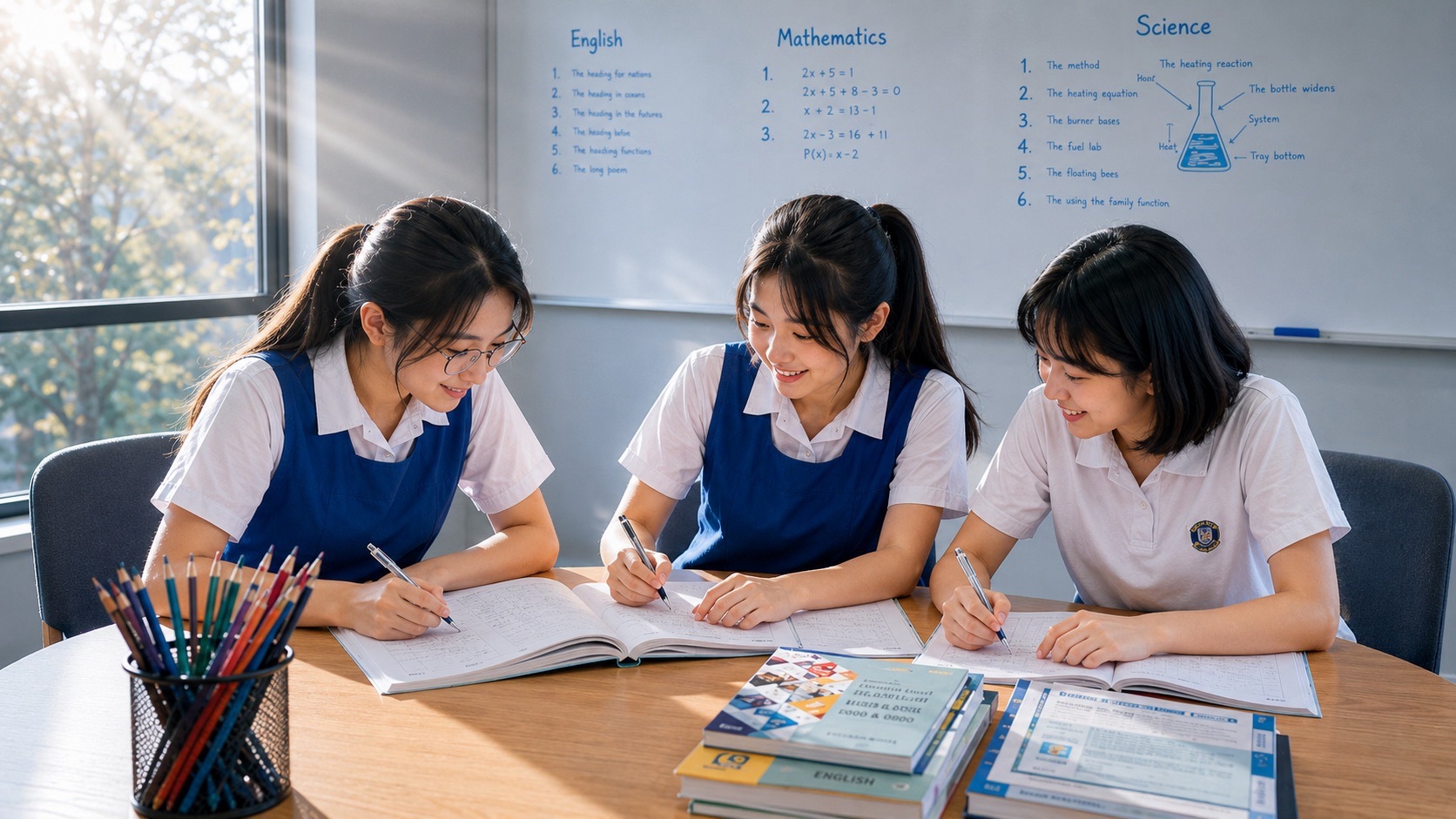
How to Master Vocabulary for Primary School
(A Step-by-Step Guide for Singapore Students & Parents)
A strong vocabulary is one of the most powerful tools for success in primary school. It affects reading comprehension, writing quality, oral communication, and even exam performance in subjects like English, Science, and Social Studies.
1. Understand the 3 Tiers of Vocabulary
Before mastering vocabulary, students must know what types of words they need to learn:
- Tier 1: Basic Words – Everyday words like run, happy, eat.
- Tier 2: Academic & High-Frequency Words – Words like predict, examine, enormous that appear across many subjects.
- Tier 3: Subject-Specific Words – Words like photosynthesis, numerator, peninsula that are tied to specific topics.
📌 Tip for Parents: Focus on Tier 2 and Tier 3 words for academic growth — these are tested in PSLE and used in composition writing.
2. Build Vocabulary Daily
Consistency beats cramming.
- Set a word goal: 3–5 new words a day for lower primary, 5–8 for upper primary.
- Use them in conversation: E.g., if the word is enormous, say “Wow, that’s an enormous piece of cake!”
- Write them down: Keep a personal “Word Journal” or vocabulary notebook.
📌 Singapore Example: Use MRT rides to discuss new words from advertising posters or station names (e.g., heritage, innovation).
3. Learn Words in Context
Memorising isolated words is less effective than learning them in meaningful contexts.
- Read books at the right level.
- Watch educational shows (Nat Geo Kids, BBC Earth, local Channel 5 documentaries).
- Play word-based games like Boggle or Scrabble.
📌 Example: Instead of just learning the word orbit, read a story about astronauts, watch a video about planets, and then use the word in a science sentence.
4. Use Multiple Learning Methods
Children learn best when words are taught in different ways.
- Visual: Flashcards with pictures.
- Auditory: Listen to stories or podcasts.
- Kinesthetic: Act out the meaning (e.g., for leap, actually jump).
- Written: Write sentences using the word.
5. Link Vocabulary to Composition Writing
In Singapore’s PSLE, composition marks depend heavily on word choice.
- Keep a “Wow Words” section in a vocabulary book — words that make writing vivid.
- Learn synonyms and antonyms for variety.
- Practise thematic word lists: emotions, nature, weather, action verbs.
📌 Example: Instead of “The boy was sad,” write “The boy’s face crumpled as tears welled in his eyes.”
6. Revise Regularly
Without revision, 80% of newly learned words can be forgotten in a week.
- Review the word journal weekly.
- Quiz in fun ways (e.g., Kahoot, Pictionary).
- Use spaced repetition apps like Anki or Quizlet.
7. Make It a Family Habit
Vocabulary grows faster when parents actively participate.
- Share a “Word of the Day” at dinner.
- Encourage siblings to use the same new word in conversation.
- Reward consistent effort, not just correct answers.
8. Leverage Technology Wisely
The internet can be a huge vocabulary booster if used well.
- Use YouTube Kids playlists with educational storytelling.
- Download free NLB eBooks.
- Play vocabulary games on apps like Wordscapes or Kids Vocabulary Builder.
✅ Key Takeaways:
- Start early — vocabulary gaps widen with age.
- Learn in context — reading and discussion are the best tools.
- Make it active — using words is more powerful than memorising.
- Keep it fun — games, challenges, and family involvement make learning stick.
