
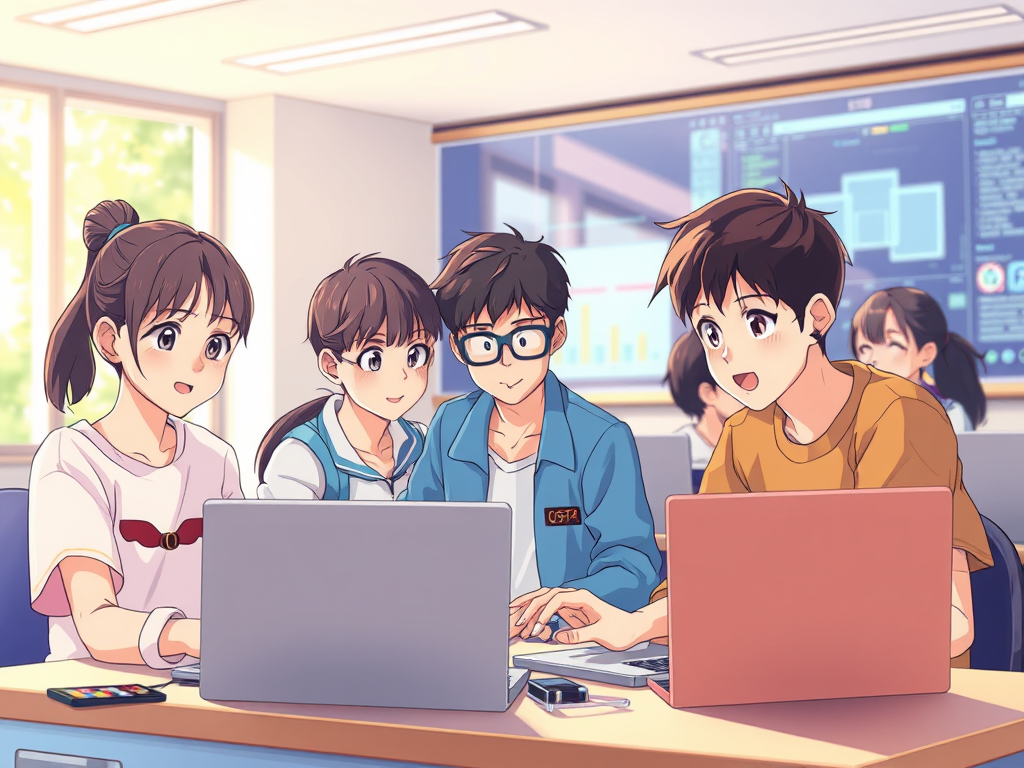
What New Things to Learn in Secondary School? (New Skills for the Next 20 Years)
As we stand in 2025, the world is rapidly evolving due to advancements in artificial intelligence (AI), automation, and global challenges like climate change and digital transformation. Secondary school students, typically aged 12–18, are at a critical stage where acquiring future-ready skills can prepare them for the next 20 years—a period likely to be defined by technological innovation, economic shifts, and societal changes. Drawing from recent research and expert insights, this article outlines key skills secondary students should learn to thrive in the 2040s, emphasizing adaptability, critical thinking, and human-centric abilities that complement AI and automation. These skills are informed by reports from the World Economic Forum, McKinsey, UNESCO, and other sources, ensuring a forward-looking approach.
Why New Skills Matter
The job market and societal landscape are undergoing profound changes. The World Economic Forum’s Future of Jobs Report 2025 estimates that AI and automation will impact 40% of global jobs, creating 97 million new roles while displacing 85 million by 2030. McKinsey projects that AI could add $13 trillion to global GDP by 2030, but it will also demand new skills, with 30% of current jobs requiring significant reskilling (McKinsey, 2024). Additionally, global challenges like climate change and ethical AI use require interdisciplinary knowledge and problem-solving. Secondary education must evolve beyond traditional subjects to equip students with skills that ensure employability, adaptability, and societal contribution in an AI-driven future.
Key Skills for Secondary School Students
Below is a curated list of new skills for secondary students to learn, designed to prepare them for the next 20 years. These skills blend technical, cognitive, and socio-emotional competencies, reflecting the needs of an AI-augmented world.
1. Digital Literacy and AI Fundamentals
Why It Matters: AI is transforming industries, from healthcare to education. Understanding AI basics and digital tools is essential, as 60% of jobs by 2040 will require some AI interaction (IMF, 2025). Digital literacy ensures students can navigate and critically assess technology.
What to Learn:
- Basic Coding and AI Concepts: Learn programming languages like Python or JavaScript, and understand AI concepts like machine learning and neural networks. Platforms like Code.org or Coursera’s AI for Everyone offer accessible starting points.
- Data Analysis: Gain skills in interpreting data using tools like Excel or AI-driven platforms like Google Data Studio. This is crucial, as data scientist roles are projected to grow 36% by 2033 (BLS, 2025).
- Cybersecurity Awareness: Understand online safety, data privacy, and ethical AI use, as cyber threats are expected to rise with AI adoption (TechTarget, 2025).
How to Teach It: Use project-based learning, such as coding a simple AI chatbot or analyzing a dataset to compare renewable vs. non-renewable energy sources. Schools can integrate tools like Scratch or Google’s Teachable Machine for hands-on AI exploration.
2. Critical Thinking and Problem-Solving
Why It Matters: AI excels at routine tasks but struggles with complex, ambiguous problems. The World Economic Forum ranks analytical thinking as the top skill for 2030, as it enables students to evaluate AI outputs and solve novel challenges.
What to Learn:
- Learning by Contrasts: Compare and contrast concepts (e.g., capitalism vs. socialism) to develop analytical skills. AI tools like xAI’s Grok can generate tailored contrast exercises, as discussed in prior responses.
- Systems Thinking: Understand interconnected systems, such as ecosystems or supply chains, to address global issues like climate change.
- Ethical Decision-Making: Evaluate the implications of AI and technology, such as bias in algorithms, to make informed choices.
How to Teach It: Incorporate case studies, such as analyzing the pros and cons of autonomous vehicles, using AI-driven simulations to highlight contrasts. Debate clubs and Socratic seminars can foster critical thinking, supported by AI analytics to track student progress.
3. Creativity and Innovation
Why It Matters: Creative professions, like artists and writers, are among the least automatable, with roles like choreographers projected to grow 29.7% by 2032 (US Career Institute, 2025). Creativity drives innovation, a key skill in an AI-driven economy.
What to Learn:
- Creative Problem-Solving: Develop novel solutions, such as designing sustainable products or crafting unique narratives.
- Digital Content Creation: Use AI tools like Canva or DALL·E to create art, videos, or music, blending human creativity with technology.
- Entrepreneurial Thinking: Learn to identify opportunities and innovate, such as starting a small business or social impact project.
How to Teach It: Offer workshops on digital storytelling or design thinking, where students create projects like a podcast comparing cultural traditions. AI can assist by generating prompts or providing feedback on creative outputs, as seen in platforms like Adobe Express.
4. Emotional Intelligence and Collaboration
Why It Matters: Human-centric skills like empathy and teamwork are irreplaceable by AI. Roles requiring emotional intelligence, such as therapists (22.1% growth by 2032) and social workers, are in high demand (US Career Institute, 2025).
What to Learn:
- Empathy and Communication: Build skills to understand and connect with diverse perspectives, crucial for teamwork and leadership.
- Conflict Resolution: Learn to navigate disagreements, especially in global, multicultural settings.
- Collaborative Problem-Solving: Work in teams to tackle complex issues, such as designing community sustainability projects.
How to Teach It: Use role-playing exercises, such as simulating a United Nations debate on climate policies, with AI tools providing real-time feedback on communication skills. Platforms like Microsoft Teams can facilitate collaborative projects, integrating AI for task management.
5. Sustainability and Global Citizenship
Why It Matters: Climate change and global challenges require informed citizens. The United Nations emphasizes AI’s role in sustainable development, such as optimizing energy use, making sustainability education critical (UN, 2025).
What to Learn:
- Environmental Science: Understand climate systems, renewable energy, and sustainable practices to address global warming.
- Global Awareness: Learn about cultural diversity and global issues, such as migration or resource scarcity.
- Advocacy Skills: Develop abilities to influence policy or community action, such as campaigning for green initiatives.
How to Teach It: Use AI-driven simulations, like those on Labster, to compare sustainable vs. unsustainable practices. Project-based learning, such as designing a school recycling program, can integrate AI tools for data analysis and impact assessment.
6. Adaptability and Lifelong Learning
Why It Matters: With 30% of current skills becoming obsolete by 2030, adaptability is key (McKinsey, 2024). Students must learn to learn, embracing change in a dynamic job market.
What to Learn:
- Growth Mindset: Embrace challenges and learn from failure, as outlined in Carol Dweck’s research.
- Self-Directed Learning: Use online platforms like Khan Academy or Coursera to explore new topics independently.
- Reskilling Readiness: Understand how to acquire new skills, such as through micro-credentials or bootcamps.
How to Teach It: Encourage students to set personal learning goals, such as mastering a new AI tool, and track progress with AI dashboards like Century Tech. Reflection journals and mentorship programs can foster a growth mindset.
7. Financial and Economic Literacy
Why It Matters: AI-driven economic shifts, such as gig economies and cryptocurrency, require financial savvy. Financial advisors, requiring human trust, are expected to remain in demand (CareerAddict, 2025).
What to Learn:
- Budgeting and Investing: Understand personal finance, including budgeting, saving, and basic investing.
- Economic Concepts: Learn about AI’s impact on markets, such as automation’s effect on jobs, as per IMF’s 7% GDP boost prediction.
- Digital Transactions: Navigate cryptocurrencies and blockchain, increasingly relevant in finance.
How to Teach It: Use AI-driven apps like Mint for budgeting simulations or create projects comparing traditional vs. digital economies. Guest speakers from fintech can provide real-world insights.
Implementing These Skills in Secondary Schools
To integrate these skills, schools must adapt curricula and leverage AI tools:
- Curriculum Design: Embed skills across subjects, e.g., coding in math, sustainability in science, and ethics in social studies. UNESCO’s 2025 AI in Education report suggests interdisciplinary approaches.
- AI Tools: Use platforms like Google Classroom, Century Tech, or xAI’s Grok to deliver personalized, contrast-based learning, as discussed in prior responses.
- Teacher Training: Invest in professional development, with 50% of teachers needing AI training (EdTech Magazine, 2025).
- Equitable Access: Ensure all students access AI tools, addressing the digital divide, as recommended by the OECD.
- Assessment: Use AI analytics to evaluate skills like critical thinking, providing real-time feedback, as seen in platforms like Smart Sparrow.
Challenges and Solutions
- Challenge: Over-reliance on AI may reduce independent thinking (Harvard GSE, 2025).
- Solution: Balance AI use with traditional methods, like debates or hands-on projects.
- Challenge: Data privacy concerns with AI tools (UNESCO, 2025).
- Solution: Adopt ethical AI frameworks, ensuring GDPR compliance.
- Challenge: Unequal access to technology in low-income schools (World Economic Forum, 2025).
- Solution: Fund digital infrastructure through government and NGO partnerships.
Conclusion
Secondary school students in 2025 must learn skills like digital literacy, critical thinking, creativity, emotional intelligence, sustainability, adaptability, and financial literacy to thrive in the next 20 years. These skills prepare them for an AI-driven world, where automation will reshape jobs, and global challenges demand innovative solutions. By leveraging AI tools for personalized, contrast-based learning and addressing challenges like privacy and equity, schools can equip students to succeed in the 2040s, balancing human ingenuity with technological progress.
Key Citations
- AI Will Transform the Global Economy
- The Future of Jobs Report 2025
- The age of analytics
- AI Impacts in BLS Employment Projections
- 16 Jobs That Will Disappear in the Future Due to AI
- Embracing Artificial Intelligence in the Classroom
- UNESCO AI in Education Report 2025
- EdTech Magazine: AI in Education Trends 2025
- OECD AI in Education Policy Recommendations
- The 65 Jobs With the Lowest Risk of Automation
- Artificial Intelligence for Sustainable Development
