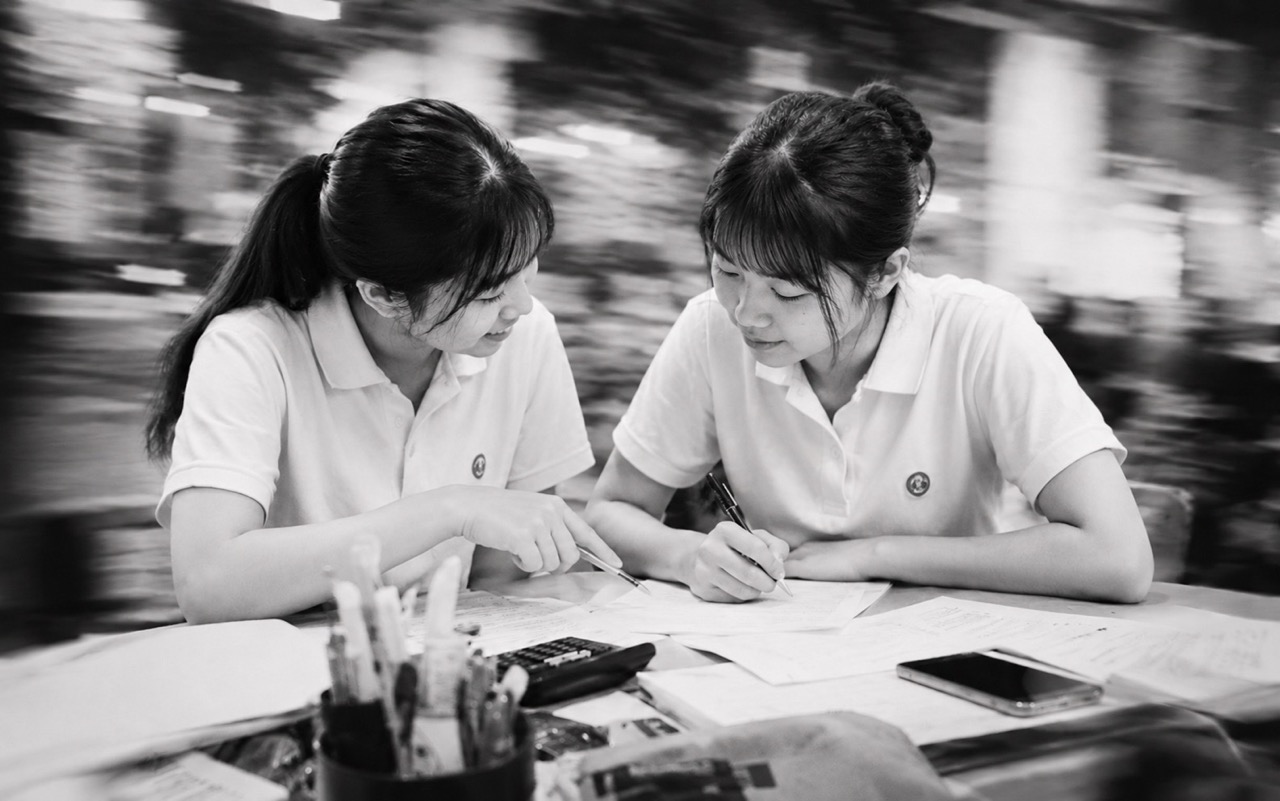
A sign of things to come. The Primary Levels is an early eduKate Singapore reflection on the primary-school years. The title is intentionally preserved because the central idea still matters: what happens in Primary 1 and Primary 2 does not stay in Primary 1 and Primary 2. Habits, misconceptions, confidence, reading ability, mathematical fluency, curiosity, responsibility and the way a child responds to difficulty all travel forward.
The article has therefore been rebuilt as a current Primary 1-to-Primary 6 learning map. The purpose is not to make every child move at the same speed. It is to show how the learning system itself should mature: from supported participation in lower primary, to increasingly independent retrieval and transfer in middle primary, to integration, revision and examination execution in upper primary.
Singapore’s current education direction reinforces this broader view. Primary 1 and Primary 2 have had no weighted assessments since 2019, while MOE’s Desired Outcomes of Education emphasise confident persons, self-directed learners, active contributors and concerned citizens. The absence of early weighted examinations does not make the first two years less important. It makes observation, feedback, curiosity, good habits and genuine understanding more important.
Visit eduKate Singapore for current Primary English, Mathematics, Science and PSLE learning routes.
A More Important Progression Than Six Separate School Years
Parents naturally think in school years.
Primary 1 has its books. Primary 2 has its topics. Primary 3 introduces formal Science. Primary 4 feels like the middle. Primary 5 becomes heavier. Primary 6 leads to PSLE.
The child, however, does not reset in January.
Every new year begins with a brain, a body of knowledge, a set of routines, emotional expectations and learning habits produced by all the years before it.
A Primary 3 student who has weak reading fluency will feel the effect in English, Mathematics word problems and Science instructions. A Primary 5 student with fragile multiplication and fraction knowledge will experience difficulty inside ratio, percentage and more complex problem solving. A Primary 6 student who has never learned to review mistakes systematically cannot suddenly become an efficient examination learner because the calendar says PSLE year.
The useful unit of analysis is therefore not the chapter.
It is the developing learner.
The Hidden Primary-School Problem: Content Grows Faster Than Support Can Remain Constant
In lower primary, adults can compensate for many weaknesses.
A parent can sit beside the child. A teacher can repeat instructions. A tutor can prompt each step. The worksheet is short. The language is relatively concrete. The number of simultaneous demands is manageable.
As the years progress, this external support becomes harder to sustain.
The child has more subjects, denser text, longer assignments, more homework, more decisions and less time per task. Questions increasingly combine several skills. Teachers reasonably expect students to remember earlier learning. Parents cannot reconstruct every lesson each evening.
This creates an important developmental requirement:
support should gradually produce independence.
The best lower-primary help is therefore not the help that makes every task painless today.
It is help that teaches the child how to begin, persist, retrieve, check, ask for help intelligently and learn from errors tomorrow.
What Primary School Is Actually Building
Primary education builds subject knowledge, but it also builds the operating system through which later knowledge is learned.
That operating system includes several connected capabilities.
Attention
Can the child remain with a task long enough to understand it?
Language
Can the child understand instructions, vocabulary, relationships and explanations?
Memory
Can knowledge be retrieved after the lesson rather than only recognised while looking at notes?
Representation
Can the child turn an idea into a sentence, diagram, model, equation, table or explanation?
Reasoning
Can the child connect evidence to a conclusion and distinguish what is known from what is guessed?
Transfer
Can a skill learned in one context be recognised inside another?
Error control
Can the child notice, classify and repair mistakes?
Self-management
Can the child prepare materials, start work, manage time and complete a task with decreasing adult supervision?
Confidence
Does the child believe effort can lead to improvement because there is evidence of improvement?
These capabilities develop together.
A subject mark is one visible outcome of the larger system.
Primary 1: Learning How to Be a Learner
Primary 1 is a transition into formal schooling.
The academic content matters, but the behavioural architecture matters just as much.
A Primary 1 student is learning how school works.
The child learns to:
- listen to multi-step instructions;
- organise materials;
- move between tasks;
- work with classmates;
- read and write for school purposes;
- represent number and quantity;
- tolerate correction;
- complete work within a shared time frame;
- ask for help; and
- recover when something feels difficult.
This is why speed should not dominate the first year.
A child who races through work without learning to check may carry the habit forward. A child who becomes afraid to answer unless certain may avoid useful risk. A child who receives immediate rescue every time may never experience the productive moment of trying, getting stuck and finding a way through.
The Primary 1 goal is not simply “finish the syllabus”.
It is to build a stable relationship with learning.
Primary 2: Fluency Begins to Matter
Primary 2 deepens the foundations.
Reading should become more fluent. Sentence control should become more reliable. Number sense should become more flexible. Addition and subtraction should become more efficient. Multiplication and division begin to form an important network. The child should increasingly understand classroom routines without constant adult mediation.
Because there are no weighted assessments at Primary 1 and Primary 2, parents may be tempted to wait for a later score before checking the foundation.
That can be expensive.
The better evidence is already available:
Can the child explain the work? Can the child remember the method after several days? Can the child begin homework without a long negotiation? Can the child read an instruction independently? Can the child detect an obviously unreasonable answer? Can the child correct a familiar error after feedback?
Primary 2 is a good year to stabilise learning habits before the academic system expands.
Primary 3: The System Becomes Wider
Primary 3 is one of the most important transitions in primary school.
Formal Science begins. Texts become denser. Academic vocabulary expands. Mathematics moves into more complex structures. Students have more information to organise.
A child who previously succeeded through memory and imitation may now discover that the old method is less effective.
Science in particular introduces a different style of thinking.
Students need to observe, compare, classify, identify variables, explain cause and effect and connect evidence to conclusions.
English becomes increasingly important because Science understanding must often be expressed in precise language.
Primary 3 therefore tests whether the learner can integrate skills rather than keep every subject inside a separate box.
A strong transition includes:
- reading questions carefully;
- identifying what is being asked;
- representing ideas visibly;
- retrieving earlier learning;
- using subject vocabulary accurately;
- explaining thinking; and
- checking whether the answer actually addresses the task.
Primary 4: From Learning a Skill to Transferring It
Primary 4 is often the year when “I know how to do it” stops being enough.
Students increasingly encounter questions that use familiar knowledge in less familiar ways.
In Mathematics, the child may know individual procedures but struggle to decide which one applies. In English, the child may understand a passage but fail to infer or express the answer precisely. In Science, the student may remember facts but not use them to explain a new scenario.
This is the beginning of a transfer problem.
Transfer means recognising that a known idea is useful even when the surface changes.
It has to be taught.
A useful Primary 4 lesson does not end when the student can reproduce a demonstrated example.
The tutor should change something.
Change the numbers. Change the wording. Change the context. Remove the chapter heading. Mix the new skill with an older one. Ask for a second method. Ask the student to explain why the method still applies.
This turns knowledge into usable knowledge.
Primary 5: Integration and Workload Become Serious
Primary 5 is not simply “one year before PSLE”.
It is a major expansion year in its own right.
The academic content becomes more demanding, but so does the management problem.
Students have to coordinate:
- more complex subject knowledge;
- revision of older material;
- homework;
- school assessments;
- co-curricular activities;
- sleep;
- family routines; and
- increasing expectations of independence.
Weak foundations become more visible because new topics assume earlier knowledge.
A student may appear weak in Primary 5 fractions when the true problem began with multiplication facts and equivalent fractions years earlier.
A student may appear weak in composition when the deeper issue is limited reading experience, weak sentence control or lack of planning.
Primary 5 therefore needs diagnosis before acceleration.
It is usually more useful to repair the first unstable prerequisite than to force the student through more difficult worksheets.
Primary 6: Integration, Retrieval and Examination Execution
Primary 6 is the year in which the primary-school learning system is asked to perform under examination conditions.
The PSLE matters, but preparation should not reduce six years of education to test drilling.
The most effective preparation builds on a stable system.
Students need to retrieve knowledge without prompts. They need to distinguish familiar from unfamiliar structures. They need to manage time. They need to recover after a hard question. They need to check strategically. They need to know when a method is failing and switch.
This is why PSLE preparation begins long before the final revision period.
The student who has been taught to analyse errors since Primary 3 has a different revision tool from the student who only counts marks lost.
The student who has practised retrieval since Primary 4 has a different memory system from the student who rereads notes repeatedly in Primary 6.
The student who has gradually taken responsibility for homework has a different examination mindset from the student who still waits for an adult to decide what to do next.
Primary 6 exposes the quality of the earlier learning system.
The eduKate First-Principles Learning Method
A strong Primary 1-to-Primary 6 programme should use a consistent learning architecture even though the subjects and difficulty change.
1. Diagnose before adding work
When performance falls, find the first weak link.
Do not begin with “do more”.
Ask:
What does the child misunderstand? What does the child forget? What instruction is misread? Which prerequisite is missing? Where does independence collapse?
The diagnosis should be specific enough to change teaching.
2. Secure understanding
Before asking for speed, make the idea visible.
Use examples, diagrams, manipulatives, models, worked reasoning, comparison and explanation.
A child should know why the method works, not only which steps to copy.
3. Practise deliberately
Practice should target a known skill.
Ten well-chosen questions can be more useful than fifty random questions if each repetition strengthens the correct representation.
4. Retrieve after delay
Students often confuse familiarity with learning.
Looking at notes can make an idea feel known.
Retrieval tests whether it can be produced without the answer in front of the student.
Short delayed recall is powerful because it reveals what remains available.
5. Mix and discriminate
Once a skill is stable, mix it with other skills.
The student must decide which method applies.
This is closer to real assessment and real life, where problems do not arrive under chapter headings.
6. Transfer
Change the surface.
Use a new context, unfamiliar wording, a multi-step problem or a different representation.
Ask whether the same underlying principle still works.
7. Reflect and adjust
The student should know what was learned, what remains weak and what to do next.
This is how responsibility gradually moves from adult to child.
What a 90-Minute Primary Tutorial Can Do
The exact design should match the student and subject, but a useful small-group lesson has a rhythm.
Retrieval warm-up
Begin with previously learned material.
The aim is to check whether knowledge survived the gap between lessons.
Diagnostic check
Use one or two questions to reveal the current bottleneck.
This prevents the lesson from becoming a fixed script disconnected from need.
Core teaching
Explain one important concept or process.
Keep the explanation focused.
Guided practice
Students attempt the skill while the tutor watches the reasoning.
Independent application
Students solve without immediate prompting.
This reveals whether support has transferred into capability.
Mixed practice
Blend old and new work.
The student must identify what kind of problem is present.
Error review
Classify mistakes.
Was it misunderstanding, memory, language, calculation, organisation, or rushing?
Continuation plan
Set a small amount of purposeful follow-up work.
A lesson should end with a clearer next step.
Three Learner Pathways Across Primary School
Not every student needs the same intervention.
Repair
This student has a specific gap that is already affecting current learning.
The priority is to go back to the earliest unstable prerequisite and rebuild it.
Repair is not punishment.
It is structural maintenance.
Stabilisation
This student generally understands but performs inconsistently.
The priority is reliability.
Retrieval, mixed practice, checking routines and better task organisation make performance less dependent on mood or prompting.
Extension
This student has secure foundations and needs greater depth.
Extension should not merely mean racing ahead.
It can mean:
- explaining more deeply;
- solving more than one way;
- applying knowledge in unfamiliar situations;
- comparing methods;
- evaluating evidence;
- creating questions; and
- connecting subjects.
Depth creates flexible intelligence.
Retrieval: The Difference Between “I Saw It” and “I Know It”
A student can read a page repeatedly and feel increasingly comfortable.
That feeling can be misleading.
Recognition is easier than recall.
Retrieval practice asks the brain to reconstruct knowledge.
For a Primary 2 child, retrieval may be recalling number bonds. For a Primary 4 child, it may be explaining a Science concept without notes. For a Primary 6 child, it may be solving a mixed Mathematics problem or outlining a composition plan from memory.
Retrieval should be low-friction and frequent.
It does not need to be a full test.
A few questions at the start of a lesson can show what remains stable.
Spacing: Why Timing Matters
Learning takes time.
A method understood on Monday may feel less accessible on Thursday.
That forgetting is not automatically failure.
The effort required to retrieve after a gap can strengthen memory.
This is why revision should be distributed.
Short returns to material across days and weeks are usually more useful than concentrating everything into one long session before an assessment.
Spacing also gives the tutor better evidence.
If the student can perform immediately after instruction but not a week later, the problem is retention.
That requires a different response from a student who never understood the idea in the first place.
Interleaving: Learning to Choose the Method
Blocked practice means doing many questions of the same type together.
This is useful while a method is new.
Interleaving means mixing different types after the methods are reasonably stable.
Now the student has to identify the problem before solving it.
That decision is important.
In a real examination, nobody labels each question with the method required.
Interleaving is therefore a bridge from practice to transfer.
Confidence Should Be Built From Evidence
Primary-school confidence is often discussed as if adults can give it to a child through encouragement alone.
Encouragement helps, but durable confidence comes from evidence.
The child needs experiences such as:
I used to need help with this. Now I can start alone.
I used to forget these facts. Now I can retrieve them.
I made the same mistake three times. Now I can explain why it happens and prevent it.
I could not answer this kind of question last month. Now I can.
This is calibrated confidence.
It is connected to real capability.
The Responsibility Transfer Ladder
Independence should not appear suddenly in Primary 6.
It should be built gradually.
A practical ladder can look like this:
Lower primary
The adult helps establish routine.
The child learns to prepare materials, listen to instructions, attempt before asking, and put work away properly.
Middle primary
The child begins to track homework, mark uncertain questions, review corrections and identify recurring mistakes.
Upper primary
The student increasingly plans revision, chooses what needs practice, estimates time, monitors progress and asks for targeted help.
The adult remains available.
The difference is that the student increasingly owns the next action.
What Parents Should Look for Instead of Only Marks
Marks matter, but they are lagging indicators.
Parents can also observe leading indicators.
Ask:
- Does the child start work more independently?
- Are the same errors repeating less often?
- Can the child explain a method?
- Can learning be recalled after several days?
- Is homework becoming more efficient?
- Does the child know when to ask for help?
- Does the child check work?
- Can the child tolerate one difficult question?
- Does the child understand teacher feedback?
- Can the child name the next thing to improve?
These changes often appear before a large score movement.
Common Warning Signs Across the Primary Years
Some signs should trigger a closer look.
Everything takes too long
The issue may be weak fluency, reading difficulty, attention, perfectionism or lack of routine.
The child can do homework only with an adult present
The support may have become part of the task.
Independence needs to be rebuilt gradually.
The child forgets immediately after a topic ends
The system may rely too heavily on recognition and blocked practice.
Add retrieval and spacing.
Marks are acceptable but unfamiliar questions collapse
This suggests weak transfer.
Increase mixed and novel application.
The child says “I am careless” for every error
Carelessness is too broad.
Identify the actual behaviour: copying, sign errors, skipped units, misreading, rushing, or failure to check.
The child is afraid of being wrong
Learning may have become tied too tightly to performance.
Create lower-stakes opportunities to attempt, explain and revise.
Home Practice by Developmental Stage
Home practice should change as the child matures.
Primary 1 and Primary 2
Keep sessions short.
Prioritise reading, number fluency, one current skill and a positive finishing point.
Adults should avoid turning every evening into a second school day.
Primary 3 and Primary 4
Add retrieval of earlier topics.
Ask for explanations. Use mixed questions. Encourage the child to mark uncertainty rather than hide it.
Primary 5
Begin more deliberate weekly review.
Track recurring errors. Protect sleep. Teach the student to prioritise high-value gaps.
Primary 6
Use a planned revision cycle.
Mix subjects and topics appropriately. Include timed work after competence is established. Practise recovery from difficult questions. Review mistakes as data.
The goal is not maximum hours.
It is maximum useful learning per hour.
How English, Mathematics and Science Begin to Interact
A major sign of growth in the primary years is that subjects stop behaving like completely separate compartments.
English increasingly becomes the language through which other subjects are accessed.
A student reading a Mathematics word problem must identify quantities, relationships and conditions. A student answering a Science question must understand the command word and construct a precise explanation. A student reading Social Studies material must identify sequence, cause, viewpoint and evidence.
Mathematics contributes its own habits beyond arithmetic.
Students learn to represent relationships, test whether an answer is reasonable, preserve units, follow logical steps and work from known information toward an unknown. Those habits support disciplined thinking elsewhere.
Science introduces another layer.
Students observe, compare, classify, identify variables, connect cause and effect and distinguish evidence from assumption. These are not merely Science techniques. They are general reasoning habits.
The student therefore becomes stronger when these capabilities reinforce one another.
A tutor can make the connections explicit.
If a Science answer is weak because the student misunderstood “explain”, that is partly a language issue. If a Mathematics problem is wrong because the student ignored a unit, that is partly an attention and representation issue. If a composition lacks logical sequence, the student may benefit from the same cause-and-effect discipline used in Science.
Cross-subject transfer reduces the sense that every new task requires a completely new brain.
It teaches the learner to reuse useful habits.
Why Self-Management Becomes an Academic Skill
By upper primary, organisation is no longer separate from performance.
A student may understand every topic yet still underperform because materials are lost, revision starts too late, homework consumes excessive time or difficult tasks are repeatedly postponed.
Self-management should therefore be taught with the same specificity as subject skills.
A child can learn to:
- estimate how long a task may take;
- break a large task into smaller actions;
- choose a sensible starting point;
- protect short periods of focused attention;
- mark questions that need help;
- return to unfinished work;
- schedule retrieval before forgetting becomes severe; and
- stop when fatigue makes practice unproductive.
These behaviours are not personality traits.
They are trainable actions.
The long-term result is not simply a more organised Primary 6 student.
It is a learner who enters secondary school with a working method.
Why Reading Supports the Whole Primary Curriculum
Reading is not only an English activity.
A student who reads accurately and fluently has more cognitive capacity available for meaning.
In Mathematics, the student can interpret relationships instead of spending all attention decoding the sentence.
In Science, the student can follow cause and effect more accurately.
In Social Studies, the student can compare information and perspectives.
This is why reading difficulty can look like a subject-specific weakness elsewhere.
When a child repeatedly misunderstands questions across subjects, investigate language.
Why Mathematics Fluency Supports Later Problem Solving
Fluency is not the same as rushing.
Useful fluency means basic operations and representations are sufficiently available that the student can focus on the new problem.
If a Primary 5 student has to reconstruct every multiplication fact, working memory is consumed before the harder reasoning begins.
This is why earlier number sense matters.
Foundations should become efficient enough to support higher-level thought.
Why Science Changes the Way Students Need to Explain
Science introduces a discipline of evidence.
A good answer should connect observation, concept and explanation.
Students need to learn the difference between describing what happened and explaining why it happened.
That distinction strengthens reasoning beyond Science.
It teaches the student to support conclusions.
Examination Readiness Is Not the Same as Examination Drilling
Examinations require specific practice, but drilling cannot replace learning.
A good examination programme combines:
- secure subject knowledge;
- retrieval;
- mixed practice;
- time management;
- task reading;
- answer structure;
- checking;
- error analysis; and
- recovery under pressure.
Timed papers are useful when the student has enough knowledge to make timing meaningful.
Before that, they can simply rehearse confusion faster.
The Primary-to-Secondary Bridge
Primary 6 is not an endpoint.
It is a handover.
Secondary school expects more independent reading, more abstract language, more subject-specific vocabulary, longer tasks and more self-management.
A student entering Secondary 1 benefits from several habits built earlier:
- starting without prolonged prompting;
- reading instructions carefully;
- keeping track of materials;
- retrieving old knowledge;
- asking focused questions;
- reviewing errors;
- planning time; and
- adapting when the first method fails.
These habits are portable.
They matter in every subject.
The Role of AI and Digital Tools in Primary Learning
Digital tools can support explanation, practice, access and creativity.
They can also hide weak understanding.
A child may receive an answer quickly without learning how to produce it.
The useful question is therefore not simply whether a tool is allowed.
It is what cognitive work remains with the student.
If an AI system gives an explanation, can the child restate it? Can the child check whether it is correct? Can the child solve a similar problem without the tool? Can the child distinguish help from replacement?
Tools should expand capability.
They should not quietly remove the practice required to build capability.
A Parent-School-Tutor Learning Loop
Support works best when the different environments communicate through evidence.
A useful loop is:
school task → teacher feedback → diagnosis → targeted practice → retrieval → new school task.
Parents do not need to become subject teachers.
They can help organise evidence.
Keep recent marked work. Notice repeated teacher comments. Compare similar assignments across time. Ask the child what changed after correction.
Tutors can then teach against the real pattern rather than an imagined weakness.
Frequently Asked Questions
Is Primary 1 too early to think about long-term learning?
It is too early to create unnecessary examination pressure, but not too early to build routines, reading habits, number sense, curiosity and a healthy response to mistakes.
If P1 and P2 have no weighted assessments, how do parents know whether learning is on track?
Use school feedback, classwork, homework independence, oral explanation, retrieval after a delay and recurring error patterns. MOE removed weighted assessments at these levels to reduce assessment load, not to remove learning feedback.
Which primary year is the most important?
The years depend on one another. Primary 1 and 2 build foundations, Primary 3 widens the system, Primary 4 strengthens transfer, Primary 5 integrates heavier content and Primary 6 brings the system into examination execution. A weakness can become expensive in any year if it is allowed to compound.
Should a strong student race ahead?
Not automatically. Greater depth, explanation, unfamiliar application and connections across topics may build more durable capability than simply covering future chapters early.
What if my child keeps making the same mistake?
Do not repeat the same correction indefinitely. Diagnose why the error recurs. The cause may be a missing prerequisite, memory, language, attention, page organisation or misunderstanding.
How much tuition is enough?
Enough is the amount that helps the student become more capable without creating an unsustainable workload. Support should improve independence, not create permanent dependence.
When should timed practice begin?
When the relevant knowledge and method are reasonably stable. Timing should compress a good process rather than accelerate an unstable one.
How should parents prepare for PSLE years earlier?
Build the systems PSLE will later require: reading, fluency, retrieval, transfer, error analysis, time awareness and increasing responsibility. There is no need to turn lower primary into an extended PSLE rehearsal.
What is the clearest sign that support is working?
The child can do more independently than before and can explain what changed.
Current Education References
MOE states that weighted assessments and examinations were removed for Primary 1 and Primary 2 from 2019 as part of efforts to reduce assessment load and create more space for learning.
MOE’s Desired Outcomes of Education describe learners as confident persons, self-directed learners, active contributors and concerned citizens, supported by values, social-emotional competencies and 21st Century Competencies.
Final Guide: What the Primary Years Are a Sign Of
Every primary year gives signs of what may happen later.
A child who reads with increasing fluency is building future access. A child who retrieves rather than only rereads is building future memory. A child who can explain a mistake is building future self-correction. A child who can work without constant rescue is building future agency. A child who can face a difficult problem without immediately giving up is building future resilience.
These are not predictions carved in stone.
They are signals.
The purpose of good teaching is to read those signals early enough to act.
Primary school should not merely move a child from Primary 1 to Primary 6.
It should progressively hand the learner the tools to learn.
That is what this rebuilt A sign of things to come. The Primary Levels article is designed to make visible.