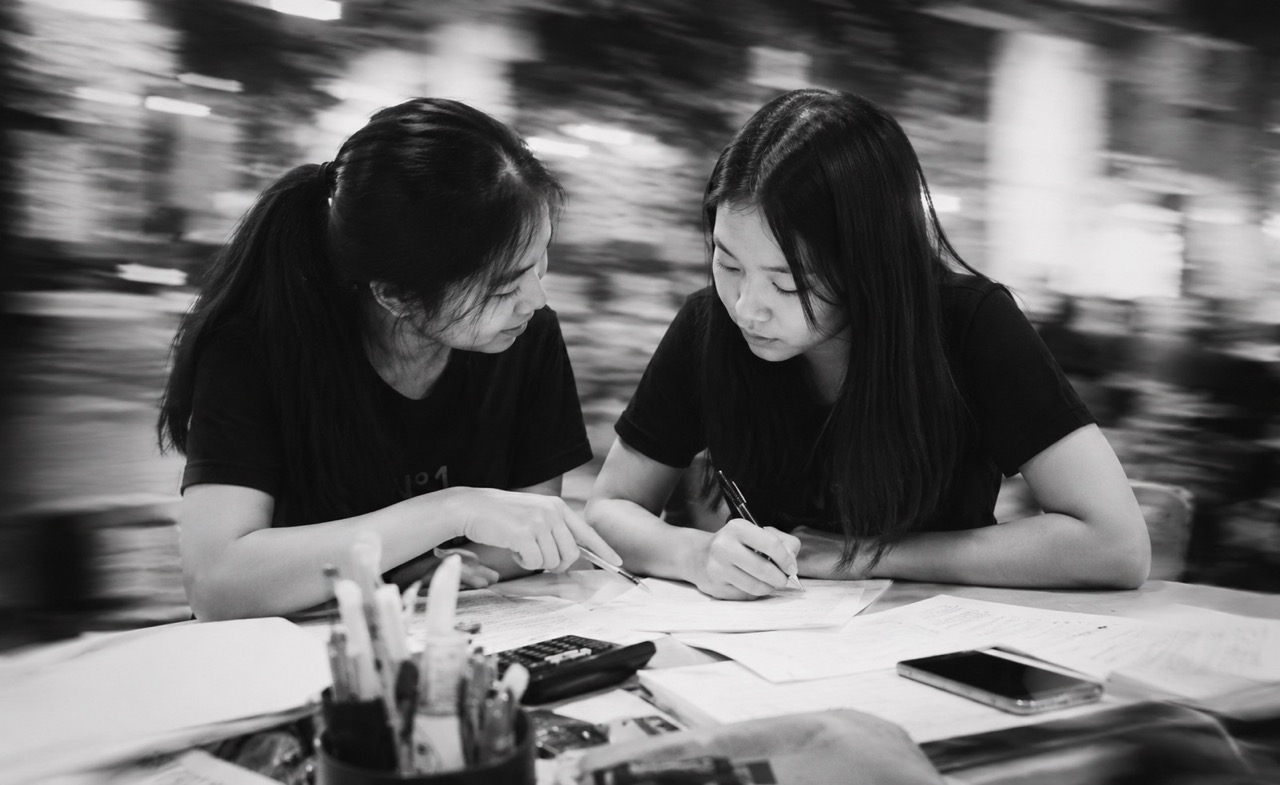
Punggol Secondary 3 Additional Mathematics Tutor
This eduKateSingapore page is a retained educational and routing gateway for Punggol Secondary 3 Additional Mathematics; it is not the current local Punggol programme owner. For the live three-student service route, class fit and present-day Punggol teaching context, use Punggol Secondary 3 Additional Mathematics Tutor | 3-Student Tutorials on eduKatePunggol. Use this page for the A-Math build-year logic, algebraic readiness and library routes below.
Additional Mathematics is not simply “harder Mathematics.” It is a more specialised symbolic system with heavier algebraic demand, longer transformations and new mathematical objects. Students who enter with strong lower-secondary algebra usually experience a very different subject from students who are still trying to stabilise signs, fractions, factorisation or equation manipulation.
The first question is not how fast the student can cover A-Math. It is whether the algebraic engine can carry A-Math.
Who this programme is for
- Students newly entering Additional Mathematics who need the subject installed from first principles.
- Students whose algebra is too fragile for the pace of A-Math.
- Students who understand lessons but cannot reproduce the method independently.
- Students who perform well in routine exercises but struggle when representations or question structures change.
- Strong students who need deeper algebraic control, flexible route selection and examination precision.
A-Math begins with an Algebra Gate
Many A-Math difficulties that appear to be topic-specific are actually algebraic. A student can understand a function, trigonometric relationship or calculus idea and still lose control because the manipulation underneath is too slow or inaccurate.
- Signs and brackets
- Fractions and algebraic fractions
- Factorisation
- Equations and rearrangement
- Indices and surds
- Substitution
- Multi-step symbolic working
If the Algebra Gate is unstable, the first intervention is repair. Racing forward only increases the number of places where the same weakness can reappear.
The teaching route
- Diagnose the algebraic state.
- Repair shared lower-secondary dependencies.
- Install the new A-Math concept from its underlying relationship.
- Model the symbolic working clearly.
- Guide the first applications.
- Fade support and test independent reconstruction.
- Mix representations and problem forms.
- Add timed work only when the method is sufficiently stable.
Why three students works for A-Math
A-Math errors often occur inside long symbolic chains. The tutor needs to see not only whether the final answer is correct, but where the first invalid transformation occurred and why.
A maximum of three students allows close inspection of each learner’s algebra while preserving useful peer comparison. One student may need foundational repair, another may be consolidating the same concept, and a third may be ready for a less familiar extension.
A-Math must not destabilise the main Mathematics route
Secondary 3 students often carry both main Mathematics and Additional Mathematics. The subjects share important infrastructure, but they are not the same subject.
A common failure is to spend almost all available study time on A-Math because it feels harder, while allowing the broader main Mathematics system to decay. The better approach is to identify shared algebraic infrastructure, then protect both subject routes according to actual weakness and assessment load.
What we want to build during Secondary 3 A-Math
- Reliable symbolic manipulation.
- Clear understanding of functions and relationships.
- Ability to reconstruct formulas and methods rather than imitate them.
- Trigonometric reasoning and graph sense.
- Calculus readiness and later calculus control.
- Long-chain working that remains inspectable.
- Independent checking.
- Mixed-topic transfer.
- Enough fluency to operate under examination time.
Continue through the A-Math branch
- How Additional Mathematics Works — the general A-Math system.
- Secondary 3 G3 Additional Mathematics — Algebra Gate → Functions → Trigonometry → Calculus → Examination Readiness.
- How Secondary 3 Mathematics Works — the wider Mathematics runtime carrying the student at the same time.
- Punggol Secondary 3 Mathematics Tutor — the main Mathematics programme gateway.
- Bukit Timah Tutor · Additional Mathematics — specialist A-Math depth beyond this retained local gateway.
- World Mathematics Atlas — wider specialist Mathematics return.
Consultation before placement
Before a current Punggol placement decision, use eduKatePunggol’s Secondary 3 Additional Mathematics Tutor route to confirm the student’s present A-Math progress, algebraic readiness, recent school work, error patterns, programme load, class suitability and current arrangements. This eduKateSingapore page keeps the educational framework and reference route.
The purpose is to identify the smallest useful intervention and build the subject properly from the learner’s actual starting point. For current Punggol Secondary 3 A-Math class suitability, timing, availability and consultation, continue to eduKatePunggol’s Secondary 3 Additional Mathematics Tutor route. This eduKateSingapore page keeps the learning and decision framework; current local arrangements belong to eduKatePunggol.